Benefits of Antiferromagnetic Couplings Over Conventional Couplings
In many industrial power transmission systems, coupling selection directly affects equipment safety, efficiency, and long-term operating cost. Compared with traditional mechanical couplings, an antiferromagnetic coupling offers distinct advantages, especially in applications requiring torque protection, stable operation, and low maintenance. As an experienced antiferromagnetic coupling supplier, SHANGHAI GAOLV E&M Technology Co.,Ltd. provides solutions designed for demanding industrial environments.
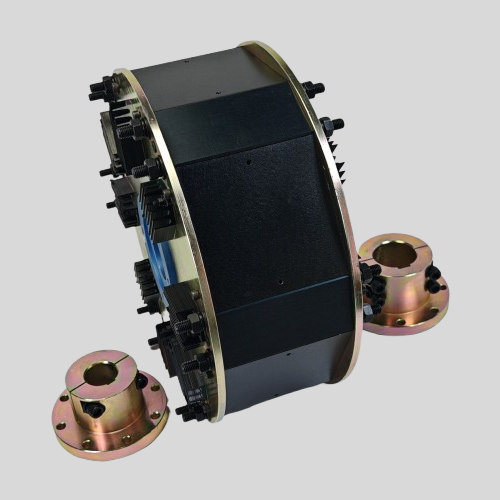
Non-Contact Torque Transmission
Unlike conventional couplings that rely on physical contact, antiferromagnetic couplings transmit torque through magnetic interaction. This non-contact design eliminates metal-to-metal friction, significantly reducing mechanical wear and extending service life.
Built-In Torque Limiting Protection
One of the key benefits over conventional couplings is the fixed-speed torque limiting function. When the transmitted torque exceeds the preset limit, the magnetic coupling automatically slips, protecting motors and driven equipment from overload damage. Traditional couplings often require additional mechanical protection devices to achieve the same function.
Resistance to Iron Powder Contamination
In dust-heavy or metal-processing environments, conventional couplings can suffer from accelerated wear and performance degradation. Anti-iron powder magnetic coupling designs reduce the influence of ferrous particles, helping maintain stable torque transmission and consistent performance over time.
Lower Maintenance Requirements
Mechanical couplings typically require lubrication, regular inspection, and component replacement. Antiferromagnetic couplings operate without direct contact, minimizing maintenance needs and reducing downtime. This leads to lower total cost of ownership throughout the equipment lifecycle.
Tolerance to Misalignment
Compared with rigid mechanical couplings, magnetic couplings can tolerate a certain degree of radial and angular misalignment. This flexibility reduces stress on shafts and bearings, contributing to smoother operation and longer equipment life.
Improved Operational Stability
The smooth torque transfer of antiferromagnetic couplings helps reduce vibration and shock loads during startup and operation. This advantage is especially valuable in conveyors, pumps, fans, and crushers where stable motion is critical.
Energy Efficiency and Reliability
By minimizing friction losses and mechanical wear, antiferromagnetic couplings support efficient power transmission. Over long-term operation, this efficiency contributes to reliable performance and consistent output in industrial drive systems.
Conclusion
Compared with conventional couplings, antiferromagnetic couplings provide clear advantages in overload protection, maintenance reduction, contamination resistance, and operational stability. For industries seeking safer and more reliable power transmission solutions, choosing the right antiferromagnetic coupling supplier is a key step toward improving equipment performance and longevity.
www.magicmag-tech.com
SHANGHAI GAOLV E&M Technology Co.,Ltd.
About Author