Custom Welding Solutions & Fan Manufacturing | PDKJ 3-Axis Laser Welding System for Fan Blades: Empowering Enhanced Quality And Efficiency in Cooling Fan Production
PDKJ Three-Axis Platform Laser Welding Machine for Fan Blades
▷ Application Industry: Cooling Fan Manufacturing
▷ Workpiece: Fan Impellers / Fan Blades
In cooling fan manufacturing, the quality of the connection between fan blades and the rotor core is an important consideration in the welding process. For workpieces with specific structural features and welding position requirements, equipment design must account for workpiece positioning, welding trajectories, and production operations.
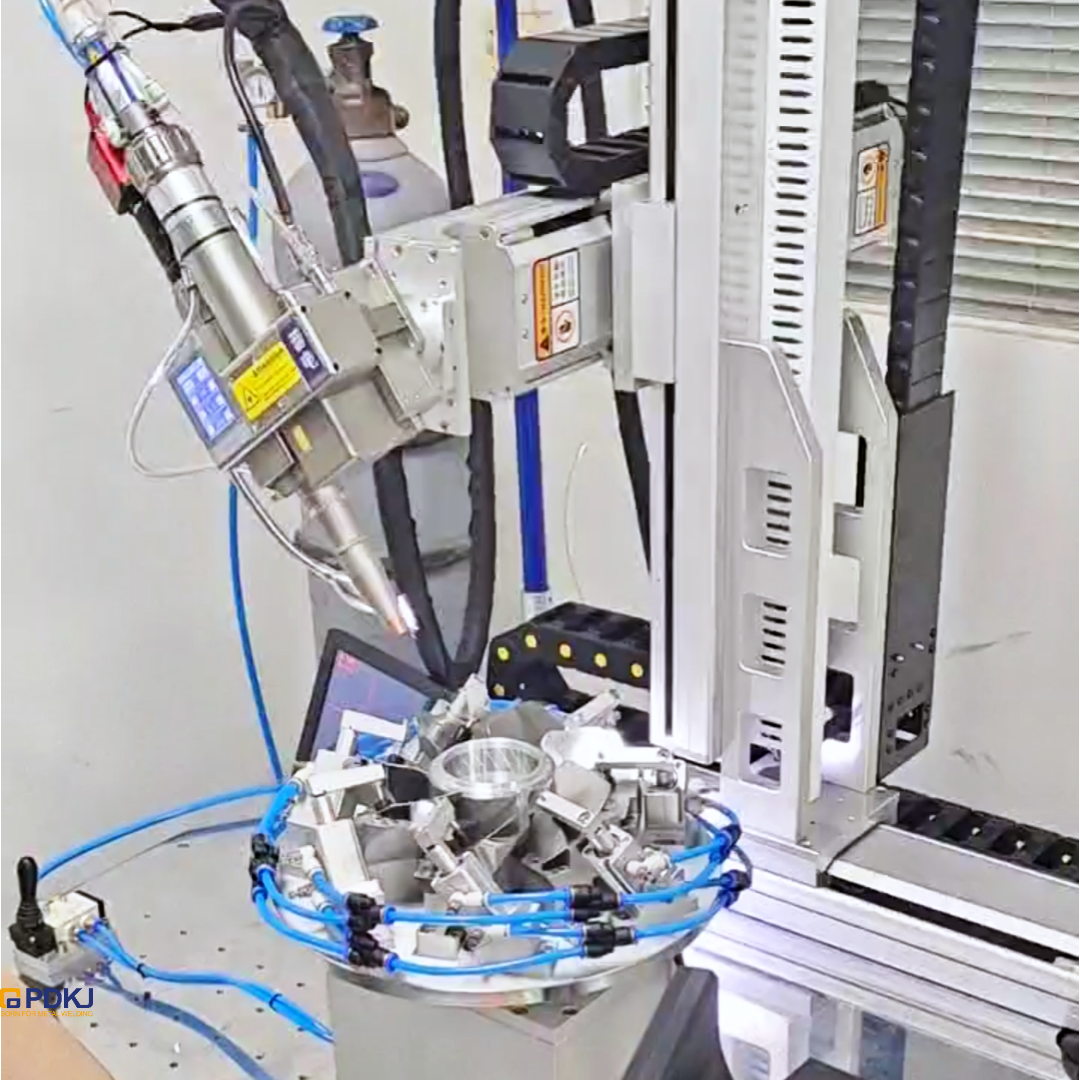
This case features the PDKJ Three-Axis Platform Laser Welding Machine for Fan Blades, developed and manufactured by PDKJ. Using a 1500 W laser welding system, the machine integrates three-axis motion control, positioning fixtures, and a rotary clamping mechanism to provide a customized welding solution for joining fan blades to rotor cores.
1. Project Background
This project was developed for the cooling fan manufacturing industry to address the welding requirements for connecting fan blades to rotor cores.
These workpieces have specific structural and assembly characteristics. During welding, manufacturers must consider not only weld quality but also workpiece positioning, welding locations, and the coordination of operations across multiple blades.
When using general-purpose welding equipment, the operating process may still require adjustments to accommodate the product structure. The customer therefore needed an equipment solution tailored to the characteristics of the workpieces and the specific welding operation.
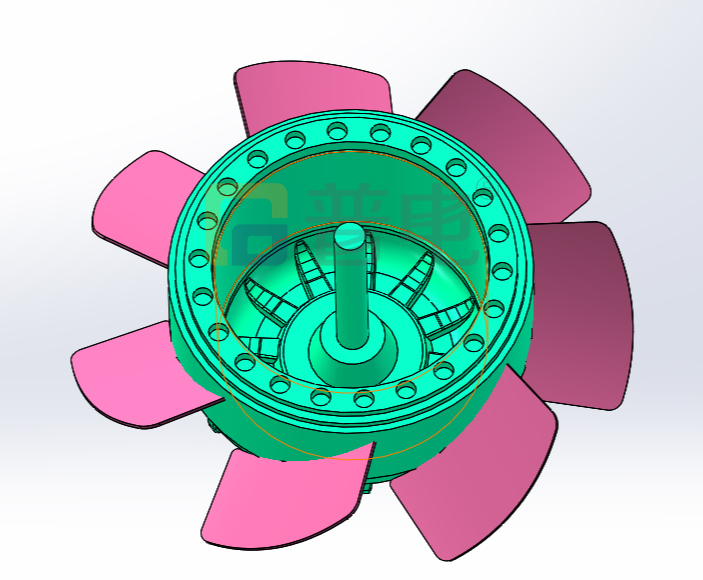
To address these requirements, PDKJ designed a dedicated welding machine around the welding positions, motion paths, and clamping methods required for fan blades. By integrating laser welding with three-axis motion control and a rotary positioning mechanism, the equipment is designed to better match the processing requirements of the specific product.
2. Coordinating Welding Positions, Motion Paths, and Workpiece Positioning
For welding fan blades to rotor cores, the project focused on three main considerations.
① Welding the Connection Between Fan Blades and Rotor Cores
The machine is designed to weld the connection points between the fan blades and the rotor core. Welding paths and process parameters can be determined according to the actual workpiece structure to meet the corresponding joint requirements.
② Positioning Multiple Blades and Coordinating the Welding Sequence
Fan blades must be positioned according to the workpiece structure and welded in sequence. The equipment design needs to account for blade positioning, rotor clamping, and angular indexing after each weld, helping reduce repeated manual adjustments between welding positions.
③ Coordinating Welding Motion with the Operating Sequence
During welding, the laser welding head follows a programmed trajectory while working in coordination with the workpiece positioning and rotary mechanisms to complete welding at different locations. The machine structure and operating sequence must be planned together to meet the processing requirements of the specific product.
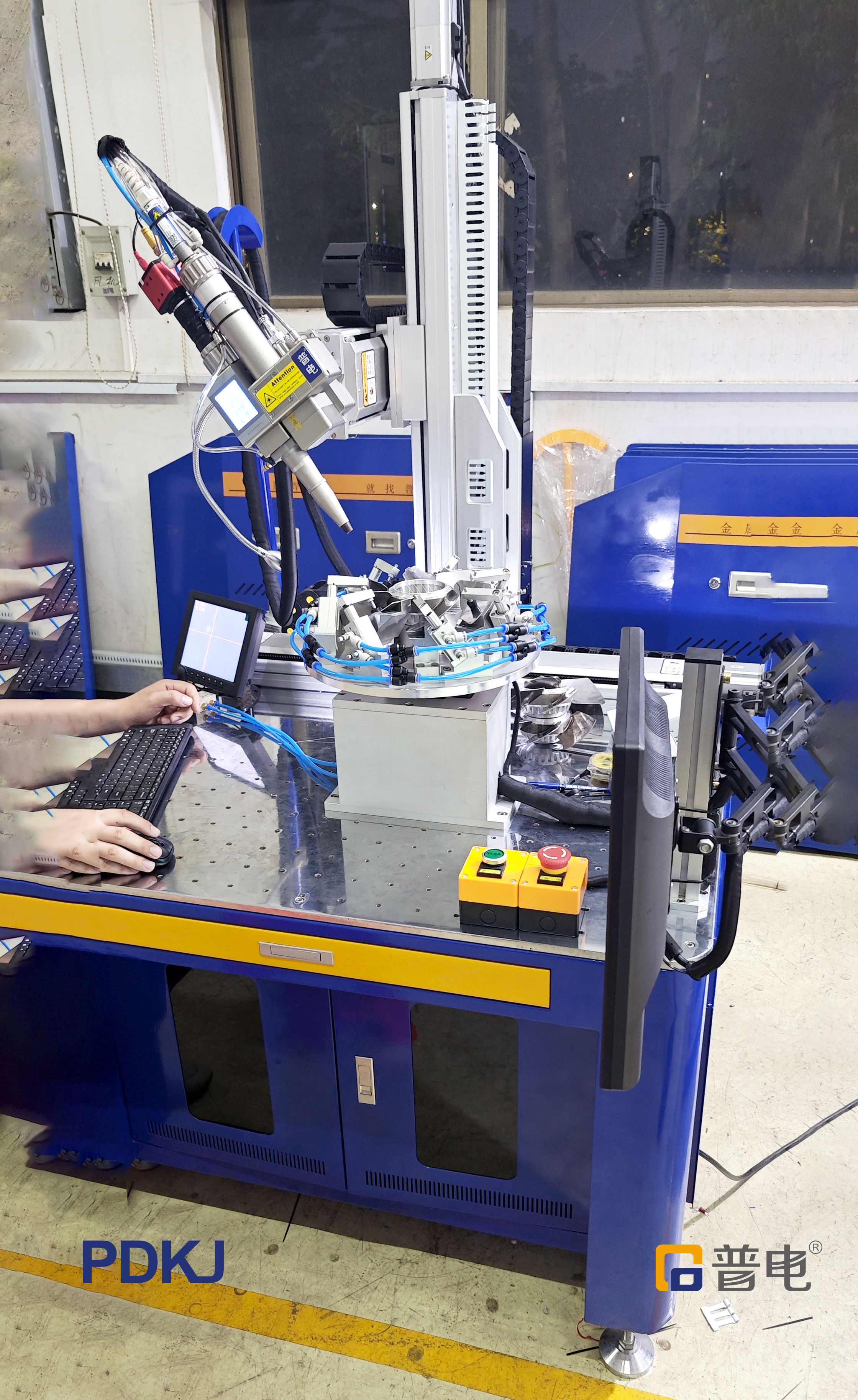
Based on these requirements, PDKJ adopted a solution combining a three-axis platform with a rotary clamping mechanism. Welding motion, workpiece positioning, and angular indexing are integrated into a unified equipment design.
3. Key Features of the PDKJ Three-Axis Laser Welding Machine for Fan Blades
This project uses a 1500 W laser welding system equipped with three-axis motion modules, dedicated workholding fixtures, a laser welding head, and a rotary clamping mechanism. The machine is specifically designed around the fan blade welding process.
3.1 Three-Axis Motion for Programmed Welding Trajectories
The machine uses X-, Y-, and Z-axis motion modules to guide the laser welding head along programmed welding paths.
For the connection points between fan blades and the rotor core, welding trajectories can be planned according to the specific workpiece structure. This reduces reliance on manual handheld welding operations.
3.2 Dedicated Positioning Fixtures for Workpiece Clamping
The machine is equipped with positioning fixtures manufactured to suit the workpiece, together with a rotary clamping mechanism for positioning and securing the components.
Proper fixture design helps establish consistent workpiece loading positions and provides a stable basis for subsequent welding. The actual positioning accuracy and applicable range need to be verified through testing based on workpiece dimensions and clamping conditions.
3.3 Rotary Mechanism for Welding Multiple Blades
According to the machine design, the rotary mechanism changes the workpiece angle to accommodate different blade welding positions. After one blade position is welded, the fixture rotates to a preset angle for the next welding operation, continuing until the required welding sequence is completed.
This design coordinates blade positioning, angular indexing, and welding operations, making it suitable for applications that require sequential welding at multiple locations.
3.4 Dual-Station Design for Welding and Loading/Unloading
The machine adopts a dual-station configuration. While welding takes place at one station, operators can load or unload workpieces at the other.
This layout is intended to improve coordination between welding and material handling while reducing equipment idle time. Actual cycle time and productivity must be verified according to product specifications, operator proficiency, and on-site production conditions.
4. From Equipment Configuration to Production Implementation
For customized welding equipment projects, delivery involves more than simply manufacturing the machine. The equipment must also be configured to address the customer's products and production requirements.
The PDKJ Three-Axis Platform Laser Welding Machine for Fan Blades has been delivered and put into production at the customer's facility. Its transition from equipment design to practical manufacturing demonstrates the value of dedicated welding equipment in specialized production processes.
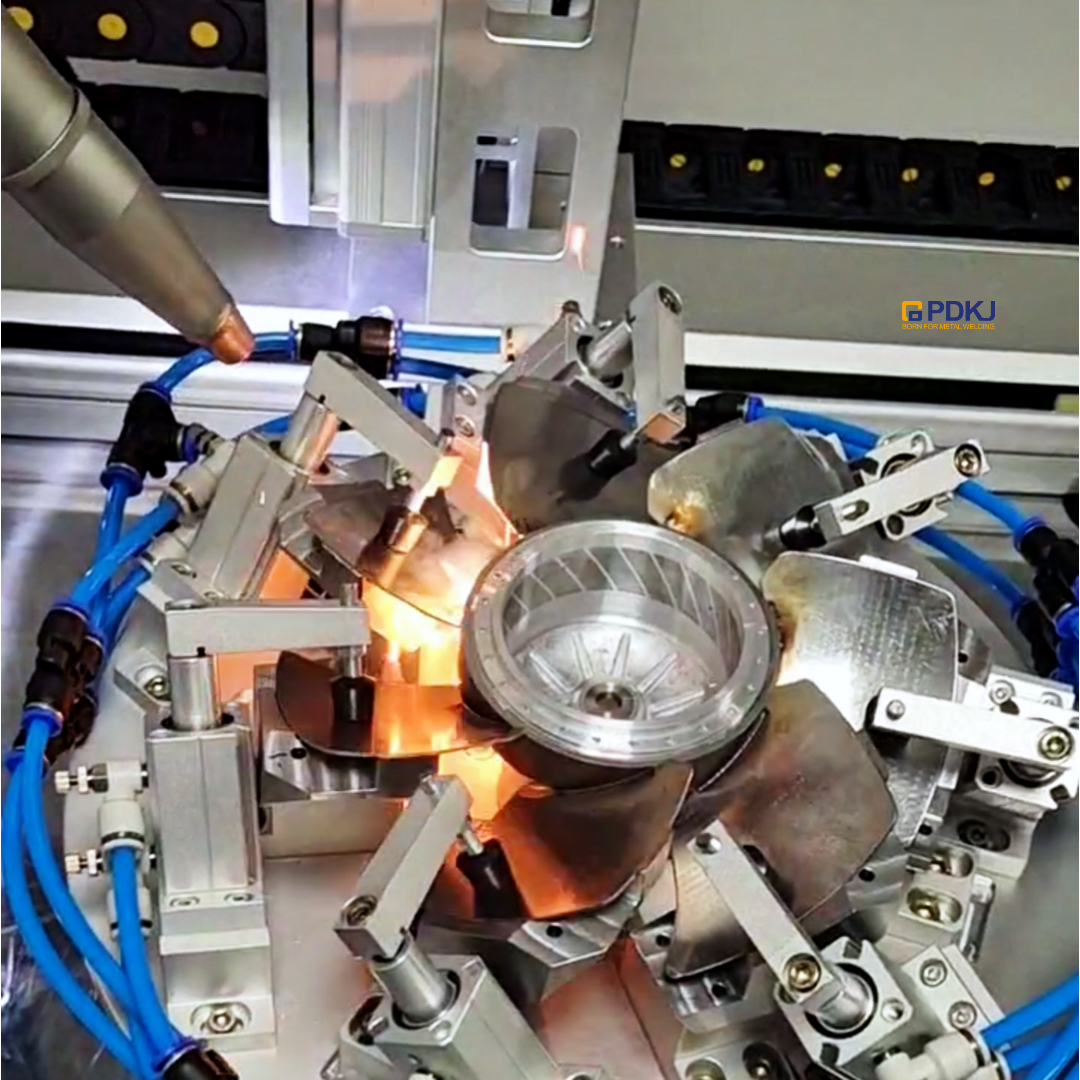
For manufacturers, a suitable dedicated welding machine can help align production operations more closely with product processing requirements. Whether it improves production efficiency, enhances weld consistency, or reduces manual operations must be assessed using actual production data, process validation results, and equipment operating performance.
PDKJ remains focused on customers' practical welding requirements, developing equipment solutions based on workpiece characteristics and specific production processes.
Take Action Now
Choose PDKJ and enjoy five key guarantees for worry-free cooperation:
-
Free Sample Testing – Try Before You Buy
Test your parts first and proceed only when satisfied -
Factory Direct Supply – Cost Savings
No middlemen, direct factory pricing -
Professional Technical Support – Full Guidance
One-on-one engineering support for welding solutions -
Full Machine Warranty – Reliable Service
Original components with comprehensive warranty -
Customized Solutions – Tailored to Your Needs
Professional Services by Guangdong Pudian Automation Technology Co., Ltd.
Guangdong Pudian Automation Technology Co., Ltd.
-
20 years of expertise in resistance welding, laser welding, and automated welding equipment
-
Focus on high precision, high stability, and customized solutions
-
Full coverage of processes including spot welding, projection welding, seam welding, rolling welding, laser welding, and automated production lines
-
One-on-one customized welding solutions based on material, thickness, and production volume
-
Serving multiple industries and solving complex welding challenges
If your company is also facing welding challenges—whether involving fan blades, cooling fan components, automotive parts, sheet metal structures, or various hardware products—and you are in need of resistance welding machines, laser welding machines, or custom-built welding systems, we can help.
PDKJ can evaluate your specific products—considering factors such as welding processes, equipment types, fixture positioning, and automation workflows—to provide a welding solution tailored to your actual production requirements.
Unsure which type of welding machine is best for your products?
Feel free to contact PDKJ:
We offer welding process evaluations, solution consultations, and sample testing. Determine which equipment is the right fit for your products before making an investment, ensuring that your welding equipment truly serves your production needs.
If you have welding machine requirements, please contact Ms. Zhao
E-Mail: pdkj@gd-pw.com
Phone: +86-13631765713
https://www.pdkjwelder.com
Guangdong Pudian Automation Technology Co., Ltd.
About Author