DIN Rail AC MCB Supplier: Matching Circuit Breakers to Real-World Applications
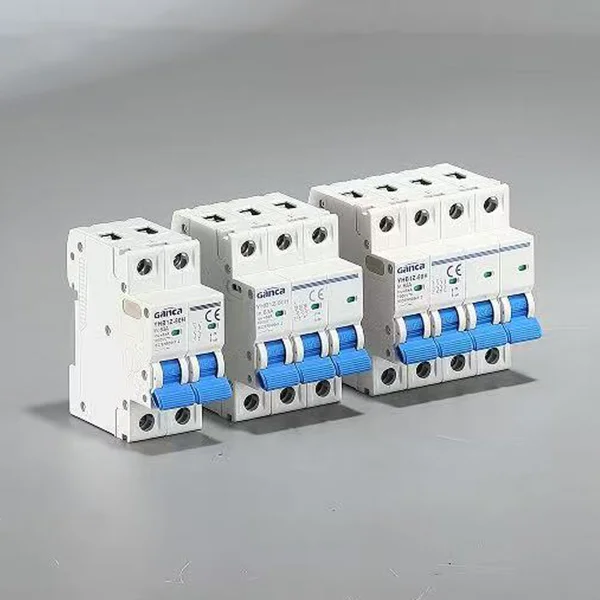
Finding the right DIN rail AC MCB supplier requires an understanding of how miniature circuit breakers perform under different load conditions, electrical distribution architectures, and installation environments. A breaker suitable for a residential lighting circuit may not be the best choice for a motor control panel, a commercial HVAC system, or a machine with high startup current. Selecting the correct product involves balancing overload protection, short-circuit interruption, operational continuity, installation space, and compliance with the requirements of the destination market.
Shanghai Ganchang Electric Technology Co., Ltd., established in 2008, specializes in electrical protection and control products, including miniature circuit breakers, RCBOs, surge protectors, over/under-voltage protectors, transfer switches, and intelligent electrical equipment. For applications involving DIN rail AC MCBs, a systematic approach to circuit conditions and product specifications can help reduce commissioning problems and improve long-term reliability.
Residential and Commercial Distribution Boards
Residential and commercial distribution boards often contain multiple branch circuits serving lighting, socket outlets, air-conditioning units, water heaters, and other electrical equipment. These circuits differ in load demand and startup behavior, so using one breaker configuration across the entire board may not be appropriate.
Lighting circuits with relatively predictable current demand may use lower-rated MCBs, subject to conductor sizing and local installation rules. Socket circuits require consideration of the connected equipment and the design of the branch circuit. Dedicated circuits for air conditioners, pumps, and other equipment may experience higher starting currents and therefore require closer evaluation of the trip characteristic.
The breaker rating must remain coordinated with the protected conductor. Selecting a larger MCB simply to avoid nuisance tripping can leave the cable inadequately protected. If a circuit trips during normal operation, the underlying cause should be investigated. Possible causes include excessive load, startup current, a wiring fault, an unsuitable trip curve, or elevated operating temperature.
A supplier should be able to provide the time-current characteristics needed to evaluate these situations. For example, when a circuit experiences a brief inrush current, the designer needs to determine whether the current magnitude and duration fall within the MCB's non-tripping region. This is more reliable than choosing a C-type or D-type breaker solely because the connected equipment contains a motor.
Industrial Control Panels and Motor-Related Loads
Industrial control panels can present more demanding operating conditions than typical building distribution boards. Contactors, power supplies, control transformers, small motors, solenoid valves, and auxiliary equipment may create different current profiles during startup and normal operation. Panel temperatures may also rise when several components operate continuously within a confined enclosure.
For a motor-related circuit, the first step is to establish the motor's rated current, starting method, expected starting current, startup duration, and the protection already provided by other devices. A conventional MCB may provide branch-circuit overload and short-circuit protection within its intended application, but it does not automatically replace a dedicated motor overload relay or motor protection circuit breaker where these are required.
The distinction is important because motor starting current can be several times the normal running current. A breaker selected without considering this transient may trip during startup. Conversely, selecting a breaker with an excessively high instantaneous trip threshold can create problems if the available fault current is insufficient to ensure the required disconnection time.
A DIN rail AC MCB supplier should provide relevant trip curves, rated operating conditions, and clear information about intended use. The final coordination must account for the motor, cable, contactor, overload protection, and upstream protective device. In industrial applications, the goal is not merely to prevent the breaker from tripping; it is to achieve the required fault protection without unnecessary interruptions during normal operation.
Selecting Breaking Capacity for Different Installations
Prospective short-circuit current can vary substantially between installation points. A small commercial distribution board located far from the supply transformer may have a different available fault current from an industrial panel installed close to a high-capacity distribution source. The required breaking capacity must therefore be based on the electrical system, not selected by habit.
Common MCB breaking-capacity ratings may include 4.5 kA, 6 kA, and 10 kA, depending on the product family and applicable standard. These values should not be treated as universal recommendations for particular building types. The actual selection depends on the calculated or otherwise appropriately determined prospective short-circuit current at the installation point, together with the applicable installation rules and any verified backup-protection arrangement.
For instance, a 6 kA breaker may be suitable for a circuit whose prospective fault current is within its declared capability, but the same model may be unsuitable at a location with a higher available fault current. If an upstream protective device is intended to provide backup protection, the combination must be supported by the manufacturer's verified coordination data and the applicable rules. It should not be assumed that any upstream fuse or breaker will automatically increase the downstream MCB's effective breaking capacity.
Product documentation should identify the rated breaking capacity and the conditions under which it applies. This is especially important for industrial installations, commercial buildings with substantial electrical infrastructure, and projects where panel assemblies must meet defined fault-level requirements.
AC Supply Characteristics and Pole Selection
The supply voltage, frequency, number of phases, and neutral arrangement determine which MCB configuration is appropriate. A single-phase circuit may require a single-pole or line-and-neutral switching arrangement, while a three-phase circuit may require a three-pole or four-pole device. The selection depends on the circuit design, the earthing arrangement, the required isolation, and local electrical regulations.
Voltage compatibility should be verified from the product's declared ratings rather than inferred from the appearance of the breaker or its current rating. Likewise, a product intended for AC applications should not be assumed suitable for DC interruption. AC and DC fault interruption involve different electrical behavior, and DC applications require products specifically rated for the relevant voltage, polarity, and circuit configuration.
Pole configuration also affects the available space in the distribution board. Compact devices can help reduce enclosure dimensions, but physical space savings must be evaluated alongside heat dissipation, terminal access, conductor bending radius, and maintenance requirements. A panel layout that is too crowded may complicate wiring and increase the risk of installation errors.
For projects involving multiple voltage systems or export markets, the technical specification should clearly distinguish rated voltage, frequency, pole configuration, terminal arrangement, and applicable certification requirements. This prevents product substitution based on incomplete descriptions.
Coordination with Surge Protection and Residual Current Protection
MCBs are one part of a broader electrical protection system. They primarily address overcurrent conditions, including overloads and short circuits, within their declared operating characteristics. They do not independently provide all forms of protection against electric shock, transient overvoltage, or abnormal supply voltage.
RCBOs combine residual-current protection with overcurrent protection in one device, subject to their specific ratings and configuration. They may be appropriate where a circuit requires both functions and the selected device meets the installation requirements. Residual-current sensitivity, rated current, number of poles, and type of residual-current detection must be selected according to the application and applicable regulations.
Surge protective devices address transient overvoltages and are typically selected according to the installation's exposure, earthing arrangement, protection concept, and relevant standards. Coordination between surge protection and overcurrent protection must follow the SPD manufacturer's instructions and applicable system requirements.
Over/under-voltage protectors and transfer switches serve different functions again. Voltage protection devices can respond to abnormal supply voltage, while transfer switches change the source supplying a load. These products should not be treated as substitutes for MCBs, and their ratings and operating logic must be coordinated within the complete system.
Shanghai Ganchang Electric Technology Co., Ltd. supplies several categories of electrical protection and switching products. Where a project requires multiple device types, reviewing the overall protection architecture can help ensure that each component performs its intended function without creating unnecessary incompatibility.
Installation Quality, Temperature, and Service Life
Even a correctly selected breaker can perform poorly if installation conditions are not controlled. Ambient temperature, enclosure ventilation, adjacent loaded devices, conductor size, and terminal tightening can affect operating temperature. When a panel contains multiple continuously loaded breakers, the combined thermal load may require derating in accordance with the manufacturer's instructions.
Terminals should be compatible with the conductor material and cross-sectional area. Incorrect stripping, loose connections, or tightening outside the specified torque range can increase contact resistance and cause overheating. These problems are not necessarily visible during initial commissioning, so clear installation instructions and routine inspection practices are valuable.
Mechanical factors also matter. DIN rail retention, secure terminal connections, clear circuit identification, and sufficient wiring space support safer maintenance. In environments with dust, moisture, vibration, or corrosive contaminants, the enclosure and installation method should provide appropriate protection.
For repeated installations, product consistency is particularly important. Stable dimensions, clearly legible markings, reliable terminal construction, and consistent trip characteristics can reduce assembly variation across multiple panels. Traceable batch information and documented quality procedures also make it easier to investigate problems if a field issue occurs.
Evaluating a DIN Rail AC MCB Supplier
A strong supplier relationship combines technical suitability with predictable manufacturing and delivery performance. Product selection should begin with a defined specification covering rated current, voltage, frequency, pole configuration, trip curve, breaking capacity, mounting requirements, operating environment, and applicable standards. The supplier's datasheet and compliance documentation should be checked against each requirement.
For recurring orders, it is also useful to establish packaging requirements, model identification, change-control procedures, lead times, and documentation expectations. If a project serves multiple countries, verify that the exact product model and configuration meet the requirements of each destination market. Certifications held by one product series should not automatically be applied to every model in a manufacturer's catalogue.
Shanghai Ganchang Electric Technology Co., Ltd. has supplied electrical protection and control products since 2008, with a portfolio spanning MCBs, RCBOs, surge protection, voltage protection, and switching equipment. Its products can be evaluated according to the technical and regulatory needs of the intended application.
The most suitable DIN rail AC MCB supplier is one that can support the selection process with accurate specifications, transparent compliance information, and consistent product quality. By matching breaker characteristics to actual load behavior, fault levels, installation conditions, and system protection requirements, businesses can reduce avoidable trips, simplify panel integration, and build more dependable electrical distribution systems.
www.ganchangelec.com
Shanghai Ganchang Electric Technology Co., Ltd
About Author