Enhancing AR/VR Development with Precision Tracking 3D Scanners
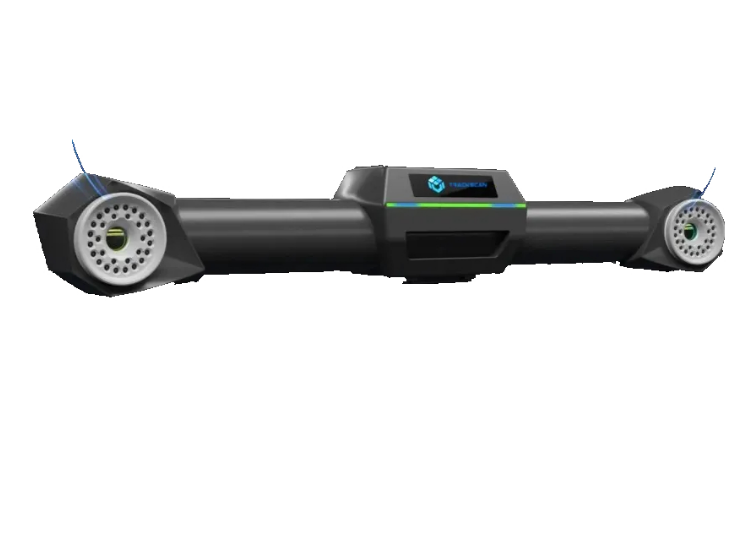
Augmented Reality (AR) and Virtual Reality (VR) technologies are revolutionizing how users engage with digital content. What once served primarily as entertainment tools have now become powerful solutions for industrial training, engineering visualization, product development, healthcare, and smart manufacturing. As these applications continue to evolve, one factor remains fundamental to their success: highly accurate spatial tracking.
To create seamless interactions between physical and virtual worlds, developers increasingly depend on precision tracking 3D scanners. These advanced measurement systems enable the capture of real-world geometry with exceptional accuracy, providing the data foundation required for immersive and reliable AR/VR experiences.
Why Accurate Spatial Data Matters in AR/VR
Every AR or VR application relies on the ability to understand and interpret physical space correctly. Whether tracking user movement, positioning virtual objects, or recreating real-world environments, precision directly affects performance and immersion.
Even small errors in spatial alignment can result in:
-
Reduced realism and immersion
-
Tracking instability
-
Poor user interaction experiences
-
Inaccurate simulations and visualizations
Precision tracking 3D scanners help eliminate these issues by generating highly detailed spatial datasets. Through dense point-cloud acquisition and advanced geometry reconstruction, these systems provide developers with reliable digital representations of physical objects and environments.
This level of accuracy is particularly valuable in applications such as:
-
Industrial training simulations
-
Digital twin development
-
Architectural and construction visualization
-
Medical rehabilitation and modeling
-
Robotics testing and autonomous system validation
In all of these sectors, the quality of spatial data directly influences the effectiveness of the final AR/VR solution.
The Growing Importance of 3D Scanning Technology
As AR and VR platforms move toward spatial computing and mixed-reality environments, the need for precise environment reconstruction has become increasingly critical.
Modern 3D scanning technologies enable developers to:
-
Capture physical environments with high accuracy
-
Create realistic digital twins for simulation purposes
-
Improve object recognition and positioning capabilities
-
Accelerate development by reducing manual measurements
-
Increase visual realism through accurate geometry replication
Without precise spatial information, AR/VR systems often struggle with alignment errors, tracking drift, and inconsistent interactions.
From Precision Measurement to Digital Spatial Intelligence
The advancement of AR/VR technologies parallels developments in industrial measurement solutions. A notable example is Suzhou Evolution Technology Co., Ltd., a company established in 2015 with a strong focus on precision metrology.
The company initially entered the market with CNC tool presetting solutions designed to improve machining precision and production efficiency. As customer demand for advanced measurement technologies increased, the company broadened its expertise.
By 2017, Suzhou Evolution Technology Co., Ltd. had expanded into CNC probing systems and tool-setting equipment, further strengthening its position in precision manufacturing.
The year 2020 marked a period of rapid growth, during which the company significantly expanded its market presence and technical capabilities. Recognizing the industry's growing demand for digital measurement technologies, the company continued to evolve its product portfolio.
A major turning point came in 2022 when the company entered the 3D scanning sector. This strategic expansion represented more than a simple product diversification effort—it signaled a transition toward comprehensive digital measurement and spatial data acquisition solutions.
By integrating advanced scanning technologies into its offerings, Suzhou Evolution Technology Co., Ltd. began supporting industries involved in digital modeling, simulation, reverse engineering, and AR/VR development.
In 2024, the company further strengthened its capabilities by expanding into inspection and analytical instrumentation. Looking ahead, it continues to invest in the development of 3D vision inspection systems, supporting the broader trend toward intelligent manufacturing and smart spatial technologies.
This progression mirrors a wider industrial movement where precision measurement, digitalization, and immersive computing increasingly converge.
How Precision Tracking 3D Scanners Fit into AR/VR Workflows
Today's AR/VR development process often incorporates 3D scanning at multiple stages.
1. Environment Digitization
Physical spaces are scanned to create accurate digital environments that can be imported into AR and VR platforms for simulation, visualization, or training applications.
2. Object Modeling
Real-world products and components are converted into detailed digital assets. These models can then be used for virtual prototyping, product demonstrations, and interactive experiences.
3. Spatial Registration
Precise tracking information ensures that virtual content remains accurately positioned within physical environments, which is essential for mixed-reality applications.
4. System Verification
Engineers utilize scanned data to validate AR/VR performance under actual operating conditions, identifying scale, positioning, or interaction discrepancies before deployment.
5. Ongoing Improvement
Repeated scanning enables continuous updates to digital models, helping maintain accuracy as environments and systems evolve over time.
Key Benefits Driving Industry Adoption
The widespread adoption of precision tracking 3D scanners is driven by several significant advantages:
-
High-resolution point-cloud generation
-
Enhanced real-time tracking performance
-
Seamless integration with major AR/VR software platforms
-
Reduced manual measurement errors
-
Flexibility for both small-scale and large-scale environments
As a result, 3D scanning has evolved from a supporting technology into a critical component of modern immersive system development.
The Future of AR/VR and Spatial Intelligence
The next generation of AR and VR technologies will extend beyond visualization and interaction. Future systems are expected to become intelligent spatial platforms capable of continuously understanding and adapting to their surroundings.
Precision tracking 3D scanners will be central to this transformation. As scanning hardware becomes more compact and software algorithms become more advanced, scanning functionality is likely to be integrated directly into AR headsets, robotic systems, autonomous platforms, and industrial automation solutions.
Companies such as Suzhou Evolution Technology Co., Ltd. are actively participating in this evolution by expanding their expertise from traditional CNC measurement systems into 3D scanning, analytical instrumentation, and intelligent vision inspection technologies.
Their development path reflects the growing demand for unified digital-physical ecosystems where accurate spatial data serves as the foundation for innovation.
Conclusion
The continued advancement of AR and VR technologies depends heavily on accurate spatial information. Precision tracking 3D scanners provide the essential data needed to create realistic, reliable, and highly interactive digital experiences.
As industries increasingly integrate physical operations with digital environments, the role of advanced scanning technology will become even more important. The evolution of companies like Suzhou Evolution Technology Co., Ltd. highlights how precision measurement solutions are adapting to support emerging applications in spatial computing, digital twins, and intelligent manufacturing.
Through ongoing innovation and technological integration, precision tracking 3D scanning is helping drive the future of AR/VR development and shaping the next generation of immersive digital experiences.
www.szevotech.com
Suzhou Evolution Technology Co., Ltd.
About Author