How Large-Capacity Refrigerated Centrifuges Support Efficient Laboratory Work
Laboratories often face a common challenge: how to process increasing numbers of samples without adding unnecessary time to daily testing. Whether working in food quality control, pharmaceutical research, environmental testing, or chemical analysis, laboratory teams need equipment that fits their sample volumes and preparation procedures.
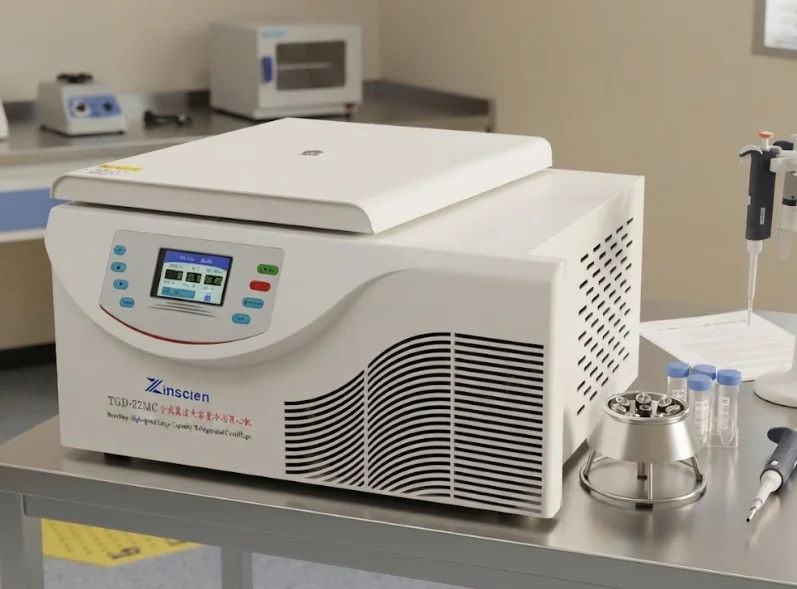
A Benchtop Large Capacity Refrigerated Centrifuge Model can be worth considering when laboratories need to process multiple samples in one run while maintaining suitable temperature conditions. By selecting the right capacity and rotor configuration, laboratories can reduce repeated operations and organize their workflows more efficiently.
Shanghai Zhenxin Technology Co., Ltd. provides laboratory equipment for a range of testing, research, and educational applications.
Why Is Centrifugation Important in Sample Preparation?
Many laboratory samples contain components that need to be separated before further analysis. For example, liquids may contain suspended particles, or a sample may need to be divided into different components for subsequent testing.
A centrifuge uses rotational force to separate components according to their physical properties, including differences in density. The resulting separation can make samples easier to handle and prepare for the next stage of laboratory work.
For laboratories processing large batches, centrifugation is not only about completing an individual separation task. The equipment also needs to fit the overall workflow, from sample loading and parameter selection to unloading and subsequent analysis.
When Does a Large-Capacity Centrifuge Make Sense?
A standard centrifuge may be sufficient for a laboratory handling a small number of samples. However, when sample volumes increase, limited rotor capacity can lead to more operating cycles and additional handling.
A large-capacity laboratory centrifuge allows more samples to be processed in each run, depending on the selected rotor, tube size, and container configuration. This can be useful for laboratories conducting routine testing or managing larger projects.
Potential benefits include:
-
Processing more samples in each cycle
-
Reducing the number of repeated runs
-
Making better use of staff time
-
Supporting batch-based sample preparation
-
Improving the organization of routine laboratory tasks
Actual efficiency gains depend on sample quantity, operating parameters, and the laboratory's procedures. Buyers should therefore assess their typical workload before deciding how much capacity they need.
Why Is Temperature Control Important?
Some samples may be sensitive to temperature changes during preparation. In these cases, controlling the sample environment during centrifugation can be an important part of the laboratory procedure.
A Benchtop Large Capacity Refrigerated Centrifuge combines sample separation with refrigeration, helping maintain a selected temperature during operation within the equipment's specified range. This can be relevant to certain pharmaceutical, food, and research applications where temperature requirements must be considered.
However, refrigeration requirements vary by sample type and testing method. Not every sample needs to be cooled, and a refrigerated centrifuge does not replace other sample-handling or storage requirements. Laboratories should confirm the appropriate temperature settings and operating procedures for their specific applications.
Applications Across Different Industries
The requirements for sample preparation differ between industries, but centrifugation can support a variety of routine laboratory tasks.
Chemical laboratories: Centrifugation can help separate suspended materials from liquids before further analysis, depending on the sample and testing method.
Food testing laboratories: It may be used during sample preparation and quality-control procedures where separation is required.
Pharmaceutical laboratories: Temperature-controlled centrifugation can support workflows involving samples that require specific processing conditions.
Environmental laboratories: Water, wastewater, and other environmental samples may require separation of suspended materials before additional testing.
Mining laboratories: Centrifugation can be incorporated into selected sample-preparation procedures before further analysis.
Teaching and research institutions: Centrifuges support laboratory exercises, experiments, and routine research procedures.
The appropriate equipment configuration depends on the material being processed and the requirements of the relevant method.
What Should You Check Before Choosing a Model?
Choosing a centrifuge involves more than comparing maximum speed or purchase price. Laboratories should evaluate whether the equipment can accommodate their samples, fit their workspace, and meet their operating requirements.
Key considerations include:
-
Sample quantity: Estimate how many samples need to be processed in each run.
-
Sample volume: Check the size and type of tubes or containers used.
-
Rotor configuration: Confirm the available capacity and compatibility with laboratory containers.
-
Temperature requirements: Determine whether refrigeration is necessary and what operating range is required.
-
Daily workload: Consider processing frequency and whether demand may increase.
-
Available space: Check the equipment's dimensions, installation conditions, and operating clearance.
Rotor compatibility deserves particular attention. Different rotors can accommodate different numbers and sizes of containers, and operating limits may vary between configurations. Providing the supplier with sample volumes, container specifications, and expected batch sizes can help identify a suitable setup.
Finding the Right Laboratory Equipment
Shanghai Zhenxin Technology Co., Ltd. offers laboratory equipment for chemical, food, pharmaceutical, environmental, mining, teaching, and research applications. For laboratories considering a large-capacity refrigerated centrifuge, clearly defining the intended use is an important first step.
Before purchasing, buyers should confirm the exact model specifications, rotor options, temperature range, electrical requirements, and after-sales support with the supplier. These details help ensure that the selected equipment is suitable for the laboratory's actual operating conditions.
Conclusion
A Benchtop Large Capacity Refrigerated Centrifuge Model may be suitable for laboratories that need to process larger batches of samples while controlling temperature during centrifugation. Its practical value depends on whether its capacity, rotor configuration, and temperature performance match the laboratory's workflow.
Rather than choosing equipment based on a single specification, laboratories should start with their sample types, daily workload, and testing requirements. This approach supports a more informed purchasing decision and helps make routine sample preparation more efficient.
www.zinscien.com
Shanghai Zinscien Technology Co., Ltd.
About Author