Laser Cleaning Machine Power Selection Explained for Buyers
Understanding Power Requirements in Industrial Laser Cleaning
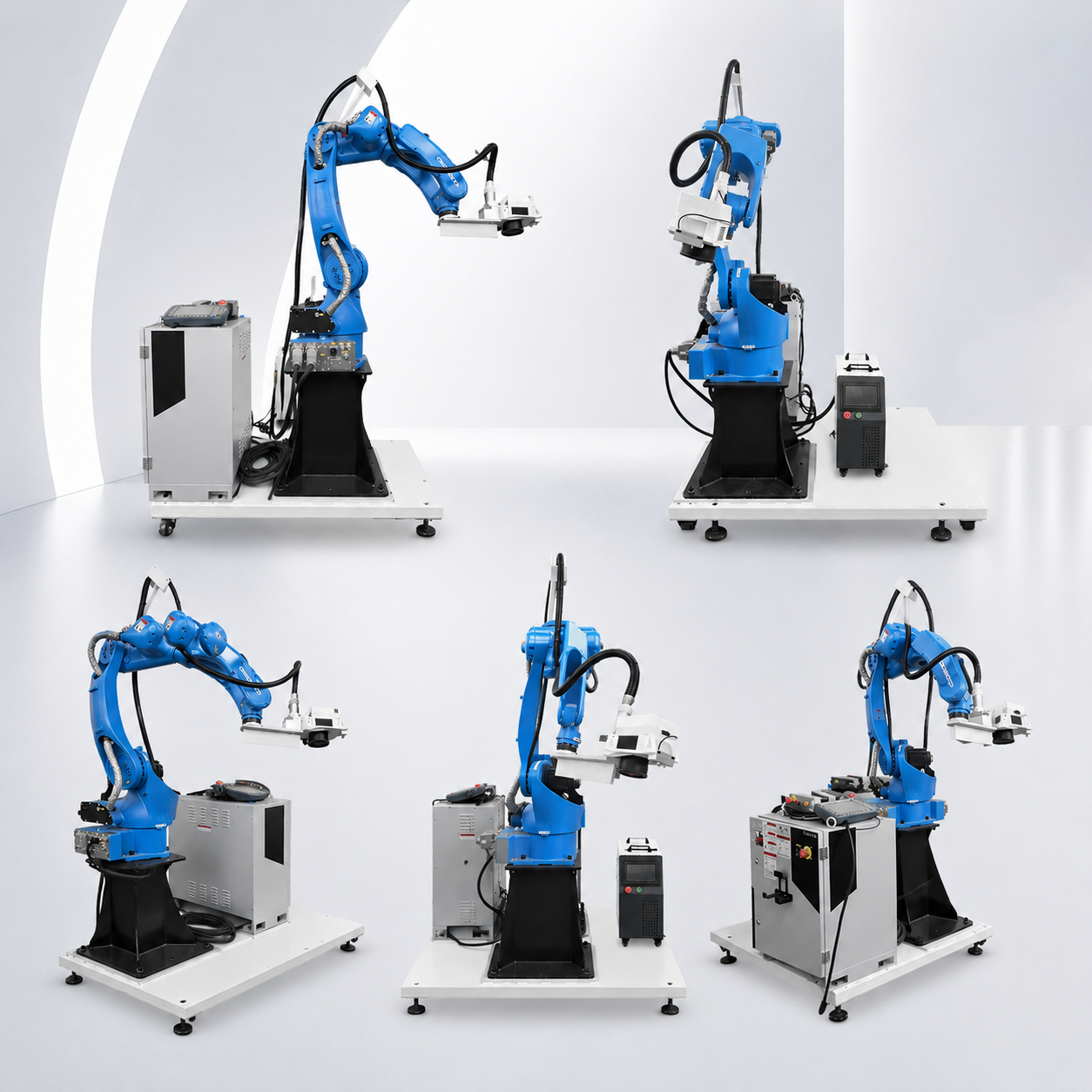
Selecting the correct power output for a laser cleaning machine is one of the most critical decisions a manufacturing buyer will make before integrating this technology into a production or maintenance workflow. Unlike traditional abrasive or chemical cleaning methods, laser cleaning relies on precisely calibrated energy delivery to remove contaminants such as rust, paint, oil, and oxide layers without damaging the underlying substrate. Within the Eco-Friendly Laser Cleaning & Surface Treatment category offered by Zhangjiagang Huinengda Laser Technology Co., Ltd., operating under the HND LASER brand, equipment is organized into distinct power tiers designed to match specific industrial needs rather than offering a one-size-fits-all solution.
This distinction matters because under-powering a cleaning system can result in incomplete contaminant removal and reduced throughput, while over-powering a system for delicate or precision work risks unnecessary substrate damage. HND LASER's product lineup addresses this by separating its cleaning equipment into Pulse Fiber Laser Rust Removal systems and High-Power CW Cleaning Machines, each engineered for a different operational profile.
Pulse Fiber Laser Rust Removal: 200W to 2000W Power Range
For applications requiring precision non-contact cleaning, HND LASER offers Pulse Fiber Laser Rust Removal equipment spanning a power range of 200W to 2000W. This category is specifically positioned for industrial mold cleaning, with tire molds cited as a representative example of the type of intricate, high-value tooling this equipment is designed to service.
The defining characteristic of this power band is its ability to perform cleaning operations without substrate damage. Molds and precision tooling often feature fine surface detailing, engraved patterns, or tight tolerances that cannot tolerate aggressive material removal methods. A pulse-based laser source operating within the 200W–2000W range allows operators to control energy delivery with enough precision to strip away contaminants, residue, or buildup layer by layer while preserving the integrity of the underlying mold surface.
Buyers evaluating equipment within this range should recognize that pulse fiber lasers are not simply a lower-power alternative to continuous-wave systems — they represent a deliberately different approach suited to precision-focused cleaning tasks rather than high-speed bulk material removal.
High-Power Continuous-Wave (CW) Cleaning Machines for Large-Area Tasks
On the opposite end of the operational spectrum, HND LASER provides High-Power CW Cleaning Machines, which utilize continuous-wave laser cleaning systems rather than pulsed energy delivery. This category is built for rapid large-area rust, paint, and heavy oil/oxide layer removal, making it suitable for buyers whose primary challenge is cleaning extensive surface areas efficiently rather than preserving fine surface detail.
The continuous-wave design allows for sustained energy output, which translates into faster processing speeds across broad surfaces. This makes CW systems a logical choice for industrial contexts where throughput and large-scale contaminant removal take priority — for example, facilities dealing with heavy oxide buildup, thick paint layers, or extensive rust coverage that would be time-consuming to address with a lower-power pulsed system.
Matching Power to Application: Mold Cleaning vs. Heavy-Duty Surface Treatment
The core decision-making framework for power selection ultimately comes down to matching the equipment category to the task at hand, rather than simply choosing the highest wattage available. HND LASER's two-tier structure reflects this principle directly:
-
Precision and detail preservation: Buyers working with molds, tooling, or surfaces where fine detail must be preserved should look toward the 200W–2000W Pulse Fiber Laser Rust Removal systems, which are explicitly engineered for non-contact precision cleaning without damaging sensitive substrates.
-
Speed and large-area coverage: Buyers managing heavy rust, paint, or oxide removal across large surface areas should consider the High-Power CW Cleaning Machines, which are purpose-built for rapid, continuous-wave processing of extensive contaminated surfaces.
This segmentation gives buyers a clear, application-driven path to power selection rather than requiring them to interpret wattage figures in isolation. Instead of asking "how much power do I need," the more productive question becomes "what is the nature of the surface and contaminant I am addressing" — pulse-based precision work, or continuous-wave bulk removal.
Quality Assurance and Manufacturing Credibility Behind Power Selection
Power specifications are only meaningful when backed by consistent manufacturing quality and compliance standards. HND LASER operates as a national high-tech enterprise focused on the R&D, production, and application of industrial laser equipment, and its broader equipment portfolio is certified under the ISO9001 International Quality Management System and compliant with CE marking requirements for laser processing machinery. The company also holds U.S. FDA registration for radiation-emitting laser devices and industrial laser cutting machinery, which supports direct entry into North American markets and reflects adherence to recognized safety and quality compliance frameworks for laser-based equipment.
These credentials are supported by a 30,000 m² standardized manufacturing and optical testing facility located in Zhangjiagang, Jiangsu, where equipment undergoes assembly and testing processes. Additionally, the company has been verified as a "Diamond Member & Audited Supplier" on Made-in-China, a status that confirms operational authenticity and export compliance for international B2B buyers evaluating suppliers from overseas markets.
For buyers prioritizing long-term reliability alongside power selection, this combination of certification, facility scale, and audited supplier status provides additional context when comparing laser cleaning equipment options, beyond wattage specifications alone.
Final Considerations for Power Selection
Choosing the right power tier for a laser cleaning machine should begin with a clear assessment of the surface being treated and the nature of the contamination involved. For precision work on sensitive tooling such as molds — including applications like tire mold cleaning — a pulse fiber laser system in the 200W–2000W range offers controlled, non-contact removal without compromising substrate integrity. For large-scale industrial surfaces burdened with heavy rust, paint, or oxide layers, a high-power continuous-wave system delivers the sustained energy output needed for rapid, efficient coverage.
Rather than treating power as a single universal metric, buyers are better served by evaluating it alongside the specific cleaning category it was designed for. HND LASER's segmented approach to pulse and continuous-wave cleaning equipment reflects this application-specific philosophy, offering a structured way for industrial buyers to align their surface treatment requirements with the appropriate laser cleaning solution.
hnd-laser.com
Zhangjiagang Hndlaser
About Author