Mobile BESS Chargers for Industrial Fleets Needing Reliable DC Fast Charging During Grid Outages
An industrial site that has electrified its vehicles has also made its operation dependent on electricity in a way it was not before. A diesel vehicle rides out a power cut; an electric one does not, and the outage that once stopped production now also stops the vehicles that move material around it. A mobile battery energy storage charger addresses that exposure because it holds energy on site. MPMC POWERTECH CORP., established in 2008 and headquartered in Shanghai Pudong, publishes a BCH range with 70 kWh to 1,075 kWh of onboard storage and rated DC output from 80 kW to 600 kW.
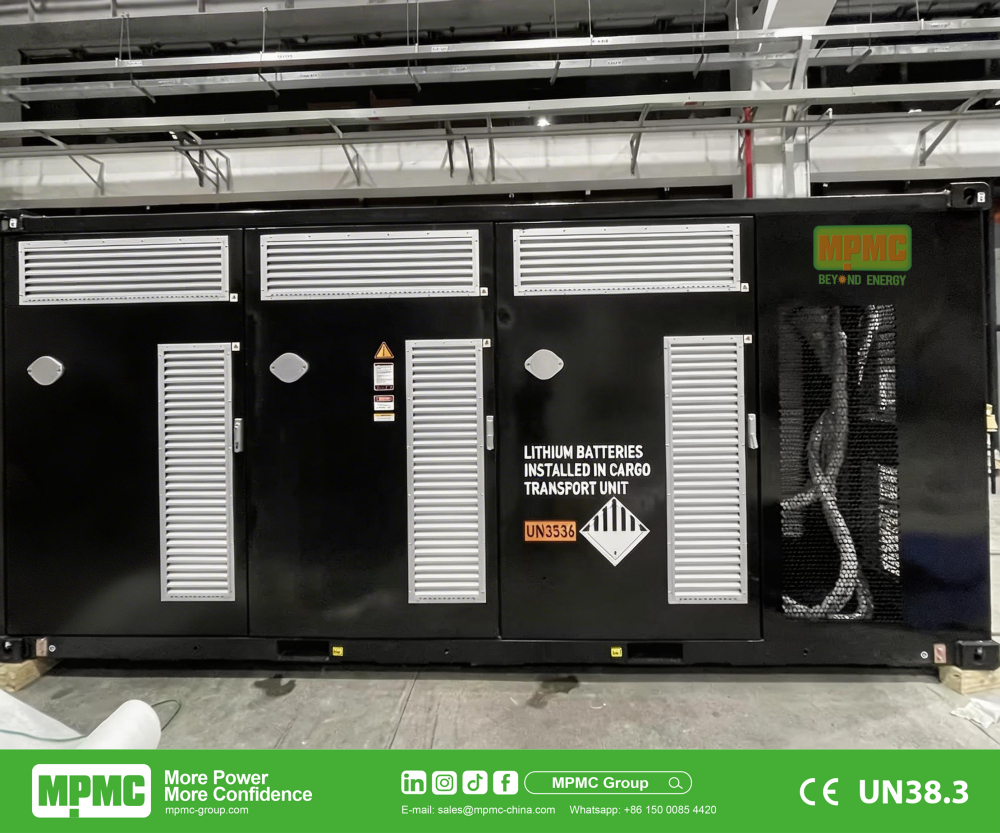
MPMC BCH Series mobile BESS charger — BCH-800-600
Not All Outages Are the Same Problem
Three interruption types get filed under one heading, and a stored-energy charger answers them very differently.
|
Interruption type |
What the unit covers |
What still has to be planned |
|
Brief dip or momentary loss |
Charging continues from stored energy uninterrupted |
Nothing further, provided state of charge was adequate |
|
Planned shutdown, known in advance |
Unit charged to full beforehand; vehicles served through the window |
Reserve policy so stored energy is not spent the night before |
|
Extended unplanned failure |
Vehicles served until stored energy is exhausted |
A recharge source — generator or solar — or the operation stops |
|
Weak supply, not a true outage |
Charging decoupled from the constrained connection |
AC input sized to what the supply can actually spare |
The distinction that most often goes unplanned is the third. A charger holds energy; it does not produce it, so on a site facing long failures the honest design pairs it with generation rather than relying on capacity alone.
The Reserve Conflict Nobody Specifies
Storage bought for outage cover is usually also used for daily charging, and those two purposes compete for the same kilowatt-hours. Energy discharged into vehicles on Tuesday afternoon is not available for the failure that happens on Tuesday evening.
The resolution is a reserved state of charge below which routine charging stops, leaving that portion available for interruption cover only. That threshold is a control setting rather than a hardware feature, and it should be agreed and demonstrated at commissioning rather than assumed to exist.
Serving Site Loads as Well as Vehicles
During an outage the vehicles are frequently not the only thing that has stopped. MPMC lists AC output on models from the BCH-60-70 upward, rated from 30 kW to 500 kW depending on model, through CEE sockets and PowerLock connections, which allows one asset to support critical site loads alongside charging.
That flexibility carries the same caveat as everything else on a stored-energy product: site loads and vehicle charging draw from one reservoir. Deciding in advance which has priority is part of the specification, because during an interruption is the wrong time to discover the answer.
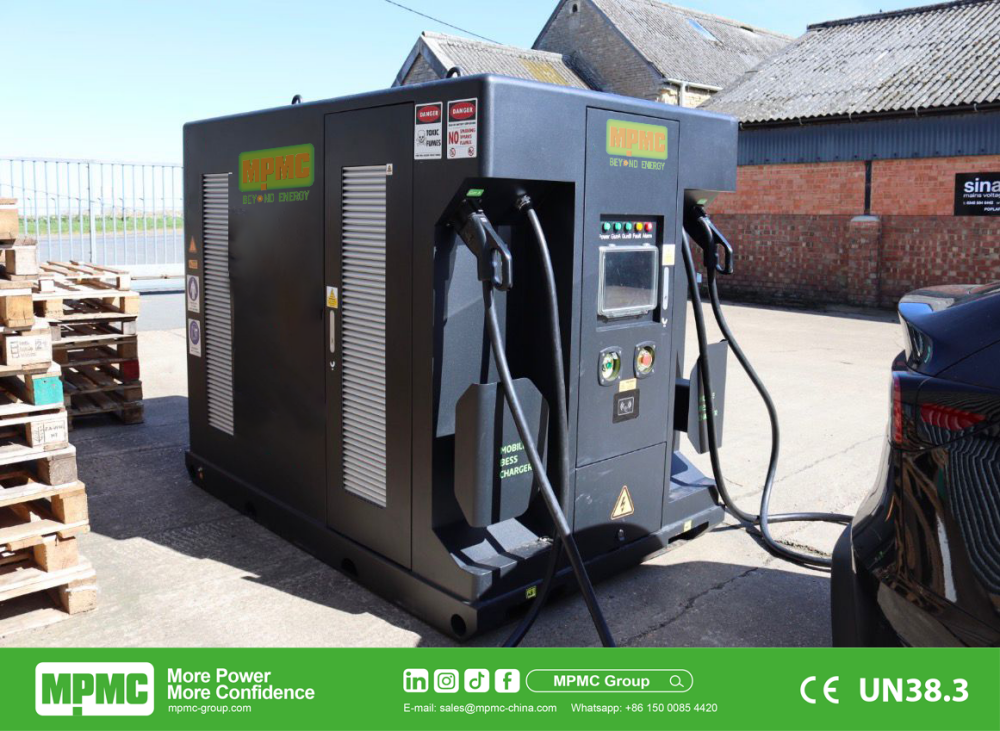
MPMC BCH Series mobile BESS charger — BCH-275-200
Recovering After the Supply Returns
The period immediately after restoration is when a site is most exposed, because stored energy is depleted and a second interruption would find nothing in reserve. Recharge rate therefore matters as much as capacity.
MPMC lists AC input from grid, generator or solar at 80 kW to 560 kW depending on model, and a CCS2 DC input allowing recharge from a fast-charging point, listed at approximately one hour for the BCH-275-200. Where the site supply is itself weak, recharging competes with everything else the operation is trying to restart, and the sequence should be planned rather than improvised.
Sizing Against the Interruption, Not the Day
Routine sizing works from energy per shift. Outage sizing works from a different question: how many vehicle movements must continue during a failure, and for how long. Those are usually a subset of normal operation, since a site in an outage is rarely running at full tempo.
Naming that subset is what makes a sensible capacity choice possible. MPMC's published range spans 70 kWh on the BCH-80-70 through 203.5 kWh, 407 kWh and 610.6 kWh to 1,075 kWh on the BCH-500-1000, and the correct model follows from the critical movements rather than from total fleet demand. Sizing against the full operation produces an asset that is oversized for the outage it was bought to cover.
Environmental Limits and Compliance
MPMC lists an operating range of −20°C to +50°C for the BCH-275-200 and above with derating above 45°C, and −20°C to +55°C for the compact models with derating above 40°C, with maximum altitude of 3,000 m and 4,000 m respectively. Cycle life is listed at 6,000 cycles at 90% depth of discharge, with aerosol fire suppression to CE on the BCH-275-200 and above.
Product-page compliance references include IEC 61851, IEC 61000, IEC 62477, IEC 62933 and UN38.3 depending on model. These apply by model and market, so the applicable documents should be requested for the exact configuration and destination.
Finally, an outage plan that exists only on paper is not a plan. The reserved state of charge, the priority between vehicles and site loads, and the recharge sequence should all be exercised at least once under normal conditions, so the behaviour is known before it is needed rather than discovered during a failure.
Outage Readiness Confirmations
• Establish the outage profile: typical duration, frequency and whether failures are planned or unplanned.
• Specify the reserved state of charge for interruption cover, and require it to be demonstrated.
• Decide priority between vehicle charging and site loads during an interruption.
• Confirm the recharge source and rate, and plan the restart sequence after restoration.
• Request derated output across the site's expected ambient range, not the peak figure alone.
• Confirm which compliance documents apply to the exact model and destination market.
https://www.mpmc-group.com/
MPMC Powertech Corp.
About Author