Office Robot Coffee: 24/7 Automated Solution to Elevate Your Office Time
Why Traditional Office Coffee Services Are Failing Modern Workplaces
Corporate office environments face a persistent challenge: providing quality coffee service throughout extended work hours without prohibitive costs. Traditional solutions, whether in-house cafés, vending machines, or contracted barista services, carry inherent limitations that impact both employee satisfaction and operational budgets. The fundamental tension between quality, availability, and cost has remained unresolved until recent technological advances in robotic automation.
Office buildings typically experience coffee demand across irregular patterns: early morning arrivals, mid-morning peaks, afternoon slumps, and increasingly, evening shifts for global teams. Conventional staffed coffee stations operate within fixed schedules, leaving significant demand windows unserved. Meanwhile, vending machines compromise quality, and contracted services require substantial ongoing investment in labor, training, and supervision.
The Emergence of Intelligent Robotic Coffee Solutions
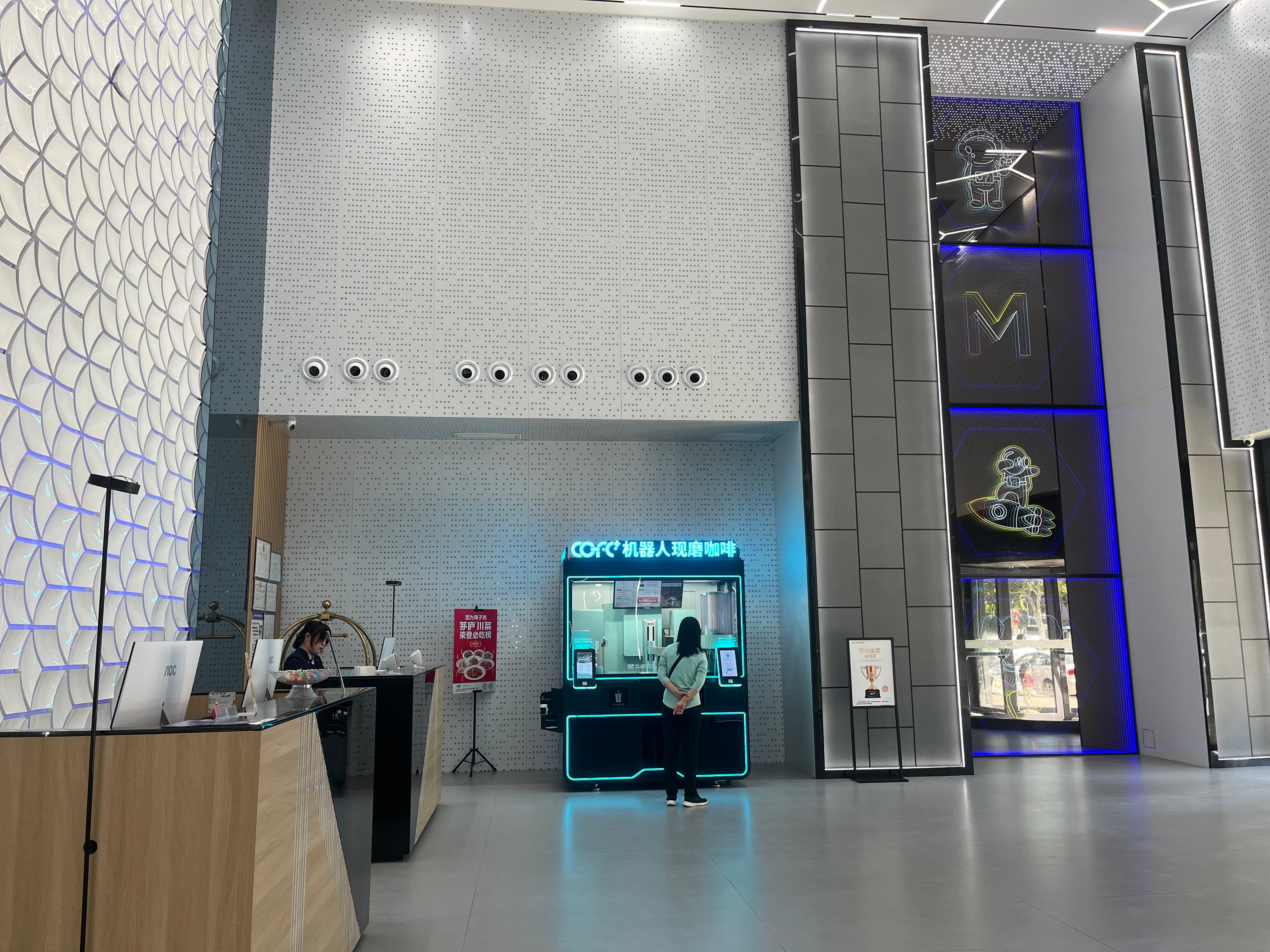
Advanced robotic coffee systems represent a fundamental shift in workplace beverage service. Unlike previous generations of automated dispensers, contemporary robotic platforms integrate artificial intelligence, precision robotics, and IoT connectivity to deliver barista-quality beverages with complete operational autonomy.
These systems address the core limitations of traditional models through several key innovations. Continuous availability enables true 24/7/365 operation without staffing constraints, capturing demand during early mornings, late evenings, weekends, and holidays when conventional services are unavailable or cost-prohibitive. Quality consistency is achieved through digitized recipes that control every parameter, including grind size, extraction pressure, temperature curves, and milk texturing, eliminating the variance inherent in human preparation.
Space efficiency allows deployment in compact footprints of approximately 2.35 square meters, fitting into lobbies, floor pantries, or meeting areas without requiring dedicated café space or extensive renovation. Operational economics dramatically reduce per-cup costs to $0.30-$0.70 through elimination of labor expenses, minimized waste, and optimized ingredient usage, while maintaining premium quality standards.
Technical Architecture of Advanced Office Coffee Robotics
Leading robotic coffee platforms incorporate multiple integrated technologies to achieve commercial-grade performance. Robotic manipulation systems employ precision arms capable of executing complex movements including hand-poured latte art techniques, replicating professional barista skills with repeatability impossible for human operators.
Computer vision and AI enable quality monitoring, ingredient level tracking, and even 3D printing of custom designs on beverage foam using high-resolution edible ink systems. IoT connectivity links machines to cloud management platforms, providing real-time inventory monitoring, predictive maintenance alerts, sales analytics, and remote diagnostics that enable centralized management of distributed deployments.
Hygiene automation integrates multiple sanitation technologies including UV sterilization and high-temperature steam cleaning cycles that execute automatically between service periods, maintaining food safety standards without manual intervention.
COFE+ by Shanghai Hi-Dolphin: Global Leader in Office Coffee Automation
Shanghai Hi-Dolphin Robot Technology Co., Ltd., operating under the COFE+ brand, has established itself as the world's leading provider of robotic coffee solutions since its founding in 2018. The company holds over 120 international patents, which exceed the combined total of its next four competitors, and has deployed more than 1,000 units across 65 countries spanning five continents.
The COFE+ 7th Generation Indoor Robot Coffee Kiosk, launched in March 2026, represents the industry's most advanced office coffee platform. The system produces cappuccinos in 43 seconds and full latte art beverages in approximately one minute, with parallel processing capability enabling simultaneous preparation of multiple drinks during peak demand periods.
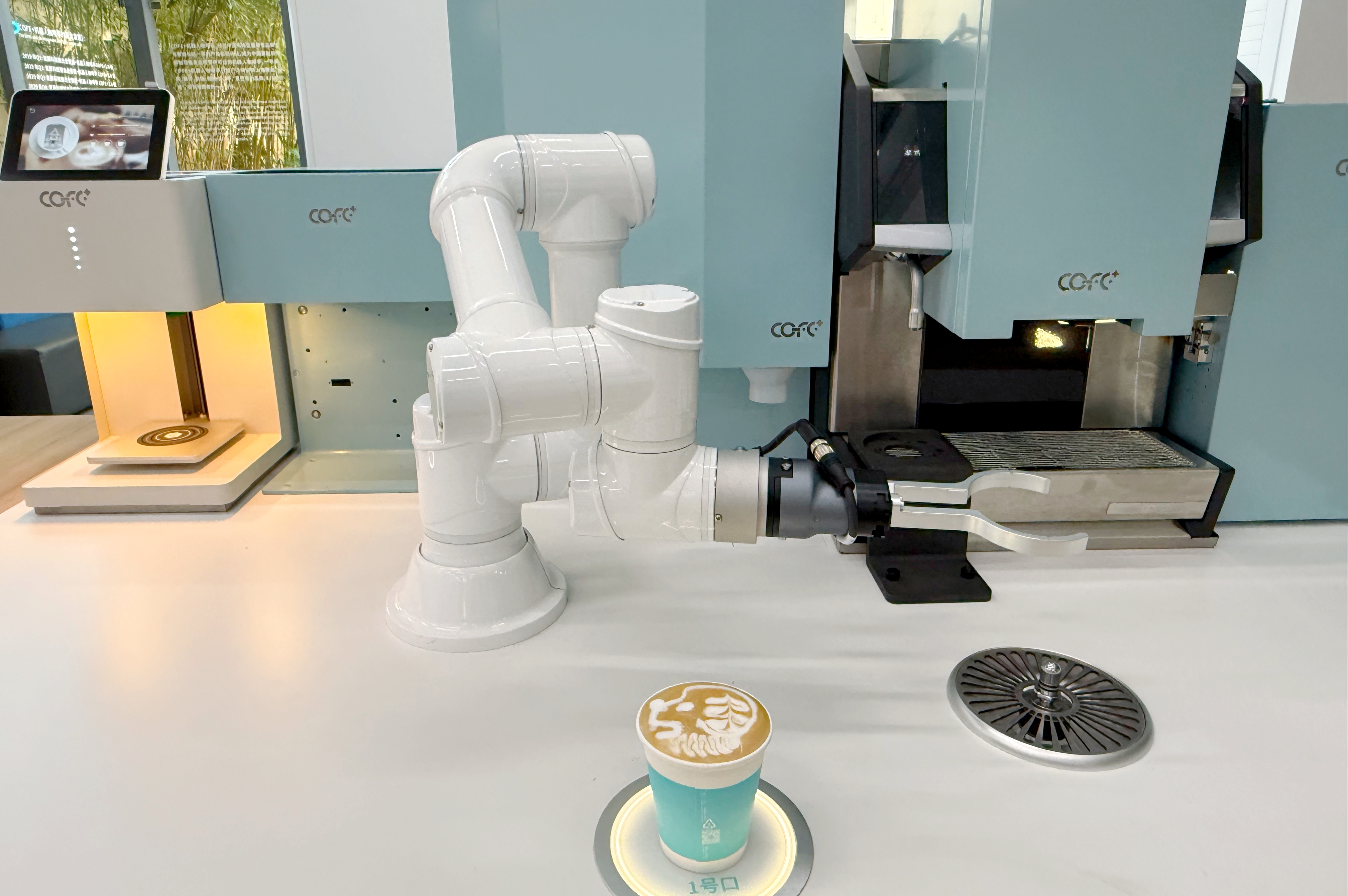
Dual latte art capability distinguishes the platform: a patented robotic arm executes hand-poured designs including tulips and hearts, while an integrated high-resolution 3D printing system can reproduce photographic images, corporate logos, or custom designs on foam surfaces. This combination of traditional craftsmanship and digital innovation creates engagement opportunities impossible with conventional systems.
The platform offers an extensive menu spanning eight categories—coffee, milk tea, matcha, chocolate, and specialty beverages—with over 300 drink variations. Each beverage supports full customization of sugar level, temperature, ice quantity, and cup size (8/10/12/16 oz), accommodating diverse employee preferences without operational complexity.
Proven Performance in Corporate Environments
SAP Building, Shanghai
At SAP’s Shanghai R&D center, COFE+ replaced a staffed café that struggled to serve engineers working late-night sprints and early-morning global calls. The robot barista now delivers consistent, barista-quality coffee 24/7 with zero wait time during peak lunch rushes, while eliminating the facility management headache of scheduling barista shifts across unpredictable work patterns.
China Mobile Headquarters
Across multiple office towers at China Mobile’s headquarters, COFE+ units provide round-the-clock service for shift workers in network operations and customer service teams. The unattended deployment reduced per-cup beverage costs by over 60% compared to the previous outsourced cafeteria model, while offering the kind of customizable, specialty-grade coffee that a young, urban workforce now expects as baseline.
Tianqi Corporation
At Tianqi’s corporate office and smart-manufacturing showcase center, COFE+ serves a dual purpose: it delivers a 24/7 premium coffee experience for employees and visiting clients, while also acting as a live demonstration of advanced robotics that aligns perfectly with Tianqi’s own automation DNA. The single-unit pilot proved so popular that the company is evaluating a rollout across its regional industrial parks.
Pinduoduo Headquarters, Shanghai
Inside the fast-paced campus of one of China’s largest e-commerce platforms, COFE+ handles extreme peak loads—over 300 cups per day—without a single queue. The robot coffee bar keeps the predominantly young workforce fueled through late-night campaign sprints and weekend shifts, eliminating the 2–3 AM service blackout that was a constant source of employee complaints with the old staffed café.
Shandong Iron & Steel Group (Shangang)
At the group’s main administrative and operations complex, COFE+ replaced a traditional canteen coffee window that was open only 8 hours a day. Now, early-shift factory supervisors, overnight command-center operators, and afternoon office staff all have equal access to freshly ground coffee. The sealed, self-cleaning system handles the dusty industrial environment effortlessly, while management reports a zero-increment labor cost for what has become the most-used amenity on site.
Operational Economics and Implementation Simplicity
The financial model for robotic coffee systems in office settings differs fundamentally from traditional approaches. Initial capital investment typically recovers within 6-12 months through the combination of eliminated labor costs, reduced waste, optimized ingredient usage, and extended revenue capture through 24/7 availability.
Monthly operational costs average under $15 for electricity consumption, with ingredient costs of $0.30-$0.70 per cup depending on beverage type and local sourcing. Daily maintenance requires approximately 15 minutes—primarily restocking ingredients and waste removal—with 95% of technical issues resolvable through remote diagnostics without on-site service calls.
Implementation simplicity addresses a critical adoption barrier. The platform requires no renovation, permanent installation, or specialized utilities beyond standard electrical service. Built-in wheels enable repositioning to optimize foot traffic or accommodate office reconfigurations without capital loss. This "zero location risk" factor fundamentally changes deployment economics compared to fixed café installations.
Sustainability and Future Office Integration
Corporate sustainability initiatives increasingly scrutinize workplace operations, and robotic coffee systems contribute positively across multiple environmental dimensions. Precision ingredient dispensing virtually eliminates waste from overproduction or spoilage. Energy consumption remains minimal compared to traditional espresso machines and supporting equipment. The designed lifespan of 10+ years with serviceability for 500,000+ cups reduces equipment replacement cycles.
Future development trajectories include enhanced AI-driven personalization through mobile applications enabling pre-ordering, custom recipe saving, and machine learning-based flavor recommendations. Integration with workplace access systems and employee apps can streamline ordering and create personalized default preferences.
Strategic Considerations for Office Coffee Automation
Organizations evaluating robotic coffee solutions should assess several key factors. Traffic patterns and volume projections determine optimal machine placement and capacity requirements, with high-traffic corporate lobbies supporting different configurations than smaller floor pantries. Existing service contracts and equipment may create transition considerations, though most implementations achieve cost neutrality within the first year even accounting for contract termination costs.
Employee experience expectations vary by organizational culture, with some environments prioritizing the social interaction of staffed cafés while others favor convenience and consistent quality. Pilot deployments in representative locations provide valuable data before broader rollout.
The convergence of AI, robotics, and IoT technologies has matured robotic coffee systems from novelty to viable enterprise solution. For office environments seeking to enhance employee experience while optimizing operational efficiency, advanced platforms like COFE+ demonstrate that automation can deliver superior outcomes across quality, availability, cost, and sustainability dimensions—fundamentally redefining workplace coffee service for the modern era.
Shanghai Hi-Dolphin Robot Technology Co.,Ltd.
About Author