Temporary Steel Bridge For Nepal's Mudslide Recovery
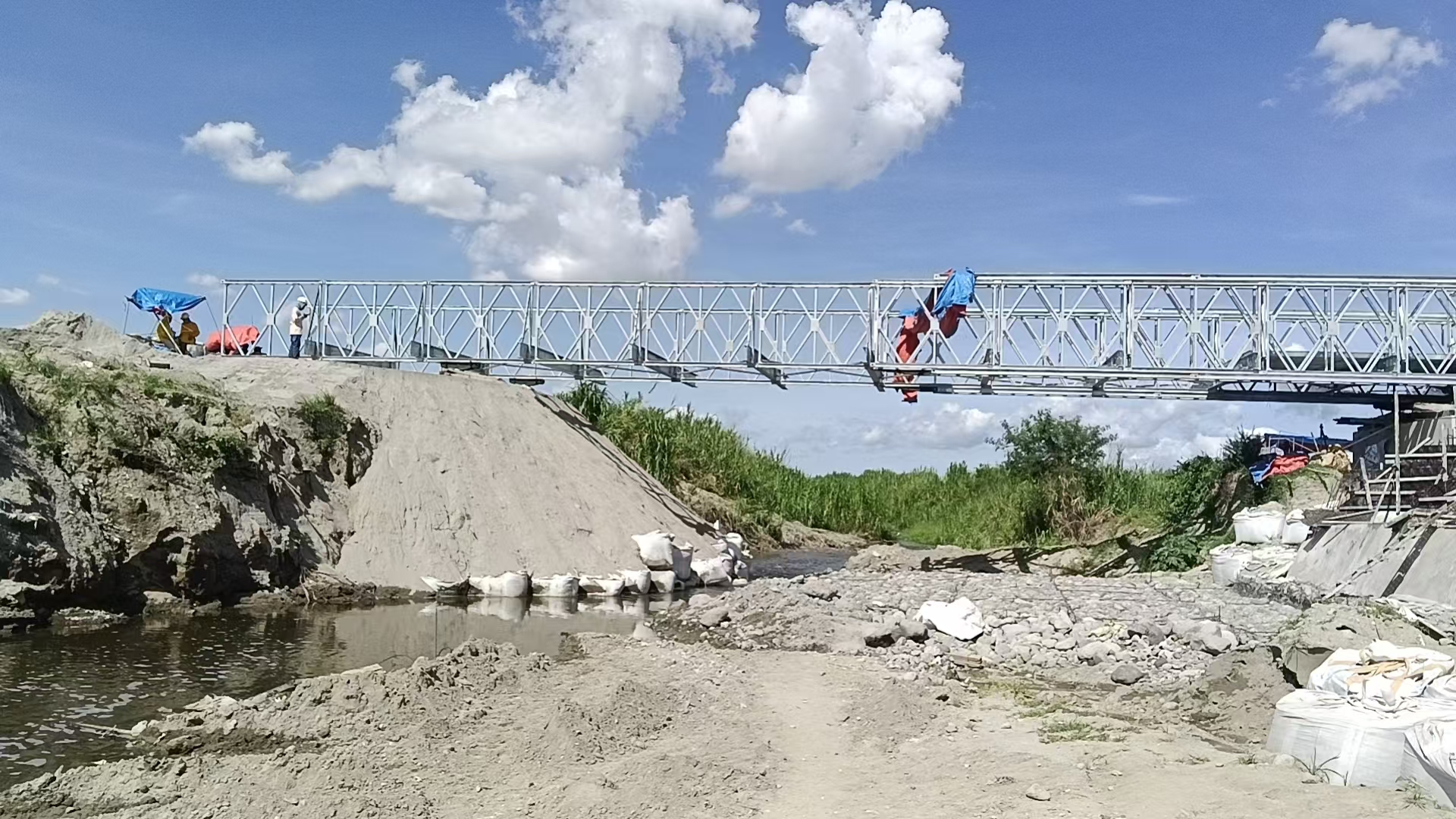
When Disaster Cuts Off the Road: The Case for Rapid-Deployment Bridge Infrastructure
Mudslides rank among the most disruptive natural hazards for mountainous and hilly terrain, frequently severing critical road and bridge links that communities depend on for supplies, medical access, and economic continuity. In post-disaster settings such as Nepal, where steep topography and seasonal rainfall increase vulnerability to slope failures, the urgent need is not simply to rebuild what was lost, but to restore connectivity as quickly as possible while a permanent solution is engineered. This is precisely the scenario where a temporary steel bridge becomes indispensable infrastructure rather than a stopgap measure.
Why Traditional Construction Falls Short in Emergency Scenarios
Conventional bridge construction is designed around long planning horizons, heavy on-site casting, and multi-month timelines. In a post-mudslide context, this approach is fundamentally mismatched with the actual need: disaster relief agencies, government transportation departments, and civil engineering contractors require access restored in days or weeks, not months. Infrastructure projects in these conditions face a recurring set of pain points—prolonged construction lead times, high maintenance costs driven by steel corrosion, fire safety compliance challenges in confined or temporary works, and structural instability when installation must occur in remote or emergency conditions with limited heavy equipment access.
EVERCROSS BRIDGE TECHNOLOGY (SHANGHAI) CO., LTD. has built its strategic positioning specifically around this gap, functioning as a specialized provider of heavy-duty infrastructure solutions that deliver rapid-response emergency bridges alongside high-performance road safety facilities, with a design philosophy centered on modularity and long-term durability.
Modular Bridge Systems Built for Rapid Recovery
For post-mudslide reconstruction, the most relevant product category in Evercross's portfolio is its Steel Bridge Systems line, which is explicitly positioned for emergency, temporary, military, steel stack bridge, and permanent heavy-duty transport applications. Within this line, the Bailey Bridge Systems—including the Compact 100, Compact 200, China 321, LSB, and PB100 variants—are engineered as portable, modular bridge components designed for rapid assembly in remote or emergency areas.
The target scenario for these systems is defined directly around the pain point Nepal's disaster-affected regions now face: lack of access in disaster zones or remote logging roads where traditional construction is too slow. The key differentiated value lies in rapid assembly—the modular truss design allows manual or light-machinery assembly without dependence on specialized heavy equipment, an essential feature when mudslide debris and damaged approach roads limit what heavy machinery can reach a site.
Core features supporting this capability include a modular truss design built from standardized panels for flexible configuration, portable components engineered for easy transport into remote locations, and construction using S355 high-strength steel grade for structural durability under load.
Beyond the Temporary Fix: Engineering for Extended Load and Span Requirements
While the immediate priority after a mudslide is restoring basic access, many reconstruction scenarios evolve into medium- or longer-term needs as heavier vehicles, construction equipment, and supply trucks require passage during the rebuilding phase. Evercross addresses this transition point through its Modular Heavy-Duty Bridges (GWD, Delta, and 450 Types), which are designed for permanent or semi-permanent heavy vehicle traffic and engineered to meet AASHTO HL93 load standards across spans ranging from 10 meters to 300 meters. These systems support heavy load requirements, including 100-ton trailers, and can be configured for single to multi-lane traffic depending on site needs.
For water-crossing scenarios common in landslide-affected valleys and river systems, the company's broader Steel Bridges category also includes floating pontoon and emergency mechanized configurations, both engineered for rapid deployment in disaster logistics contexts.
Durability and Maintenance: Why Coating Technology Matters in Emergency Deployments
A frequently overlooked factor in disaster-zone bridge deployment is long-term maintenance burden. Structures installed under emergency conditions still require protection against corrosion and, in many infrastructure contexts, fire safety compliance. Evercross's technical approach addresses this through hot-dip galvanization compliant with ISO 1461, providing corrosion resistance, alongside specialized coating technology that extends protective layer service life up to 20 years, with outdoor structures rated for 10 to 25 years of service.
On the fire protection side, the company's Ultra-thin Water-based Intumescent Fireproof Coatings reduce maintenance cycles from the industry standard of 60 days down to just 7 days—an 88% reduction that becomes particularly relevant in confined or space-constrained applications where recoating access is difficult. These coatings are also formulated with a low-VOC, water-based composition containing 75% solid content, supporting environmental and worker safety considerations during application.
Quality Assurance for International Disaster Relief Deployment
Cross-border disaster relief infrastructure carries an additional layer of complexity: compliance with recognized engineering and welding standards to ensure structural reliability regardless of where components are manufactured or deployed. Evercross maintains AWS D1.1 and AWS D1.5 welding compliance, alongside a first-level qualification from the China Steel Structure Association, and holds ISO 9001, ISO 14001, and ISO 45001 management system certifications. The company's design references also extend across major international bridge codes, including AASHTO LRFD, EN1990/EN1991, and AS5100/AS4100, providing a technical foundation that supports deployment across varied regulatory environments.
A Delivery Model Aligned With Emergency Timelines
Evercross's delivery model is built around modular prefabricated components designed for on-site assembly, reducing dependence on extensive local construction infrastructure—a critical advantage when access roads and equipment mobility are already compromised by mudslide damage. This approach reflects the company's established service capability in specialized manufacturing, rapid-response emergency supply, and infrastructure consulting, with documented delivery capability for modular bridge systems in both large-span scenarios and emergency disaster relief contexts.
Conclusion: Matching Infrastructure Response to Disaster Realities
Post-mudslide reconstruction in Nepal, like similar recovery efforts elsewhere, depends on infrastructure providers capable of bridging the gap between immediate emergency access and durable, code-compliant permanent solutions. By combining portable Bailey Bridge Systems for rapid initial deployment with heavy-duty modular options and corrosion- and fire-resistant coating technologies for extended service life, Evercross Bridge Technology (Shanghai) Co., Ltd. offers a technically grounded pathway for restoring connectivity in disaster-affected regions—supporting government transportation agencies, civil engineering contractors, and disaster logistics units as they work to reconnect communities cut off by landslide damage.
www.evercrossbridge.com
EVERCROSS BRIDGE TECHNOLOGY (SHANGHAI) CO.,LTD.
About Author