Thin Frameless Transparent LED Screens For 4S Stores
Why Transparent Display Technology Matters for Automobile 4S Stores
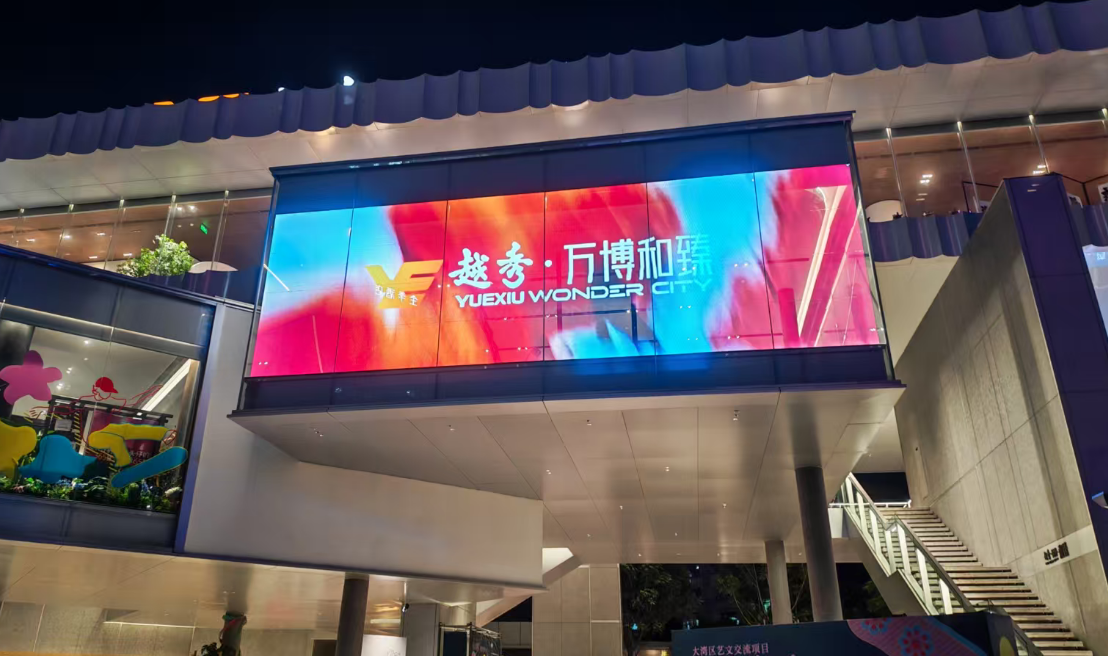
Automobile 4S stores rely heavily on glass-fronted showrooms to showcase vehicles in natural light while simultaneously communicating brand stories, promotions, and model specifications to passersby. Conventional LED displays, however, are often heavy, thick, and block light — a direct conflict with the open, transparent architecture that modern car dealerships favor. This tension between visual communication and architectural transparency is precisely the pain point that Shenzhen Showho (Whaley-LED) set out to address through its LED Holographic Transparent Screen product line.
Understanding the Core Technology: Frameless, Thin, and Light
The LED Holographic Screen, developed under the Whaley-LED brand, is engineered as a film-type transparent display rather than a conventional panel. Its defining characteristic is a frameless design that keeps the screen body visually light while measuring a screen thickness below 2 mm. Combined with a screen weight under 3 kg/m² across the series, the display significantly reduces structural load requirements — an important consideration for glass curtain walls and showroom windows that were not originally designed to support heavy signage.
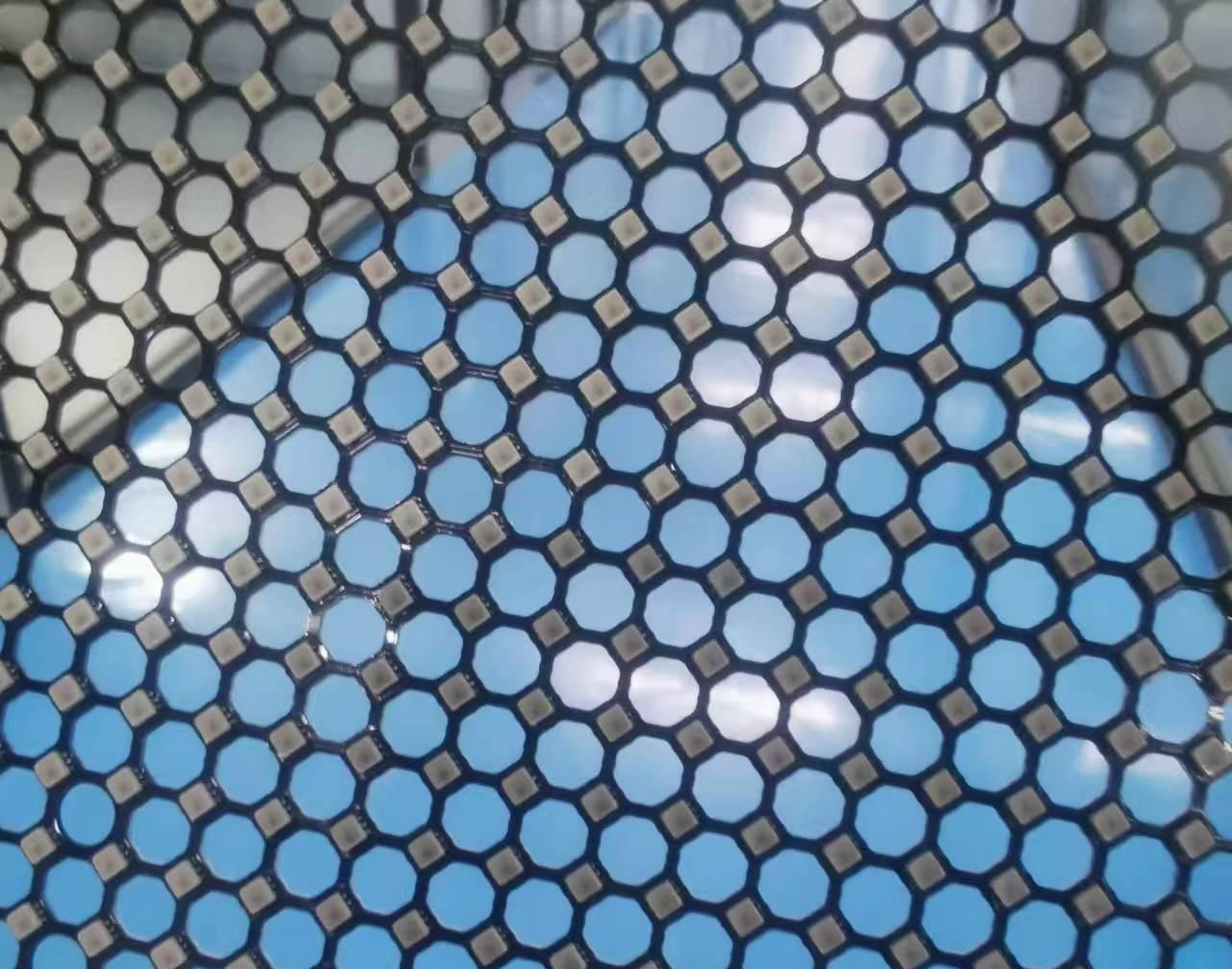
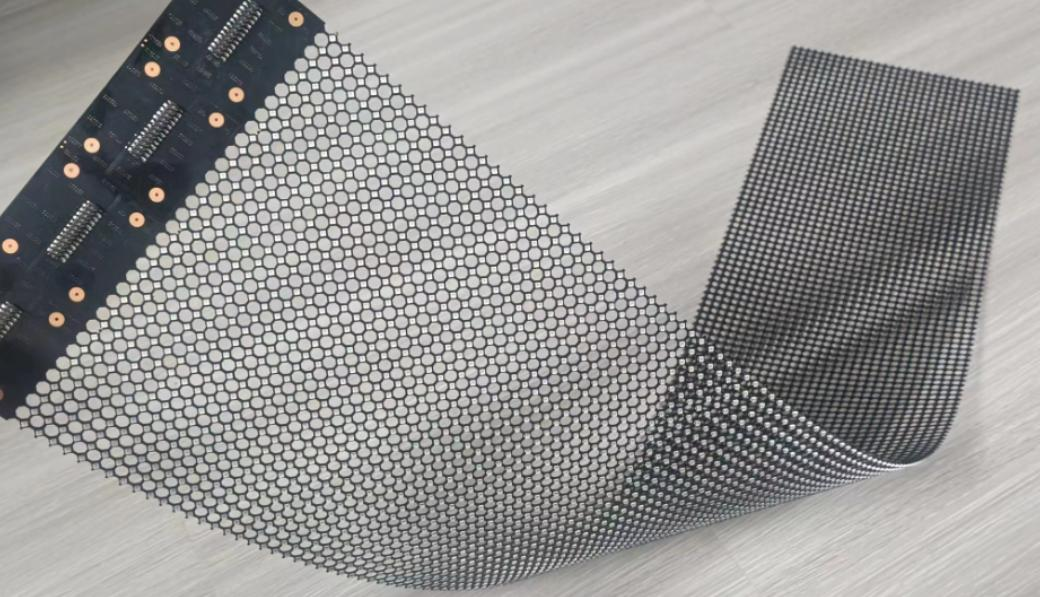
This thinness is made possible by a PCB board with hollow mesh circuit design and lamp-driver integrated LED architecture, which allows the lighting and driving components to be combined into a single compact unit rather than relying on bulky separate drivers. The result is a sensory permeability over 80% across the entire series, with model-level visual permeability ranging from more than 70% to more than 99%, depending on pixel pitch. For a 4S store environment, this means the display can remain largely see-through when powered off, preserving the showroom's natural daylight and unobstructed sightlines to the vehicles on display.
Flexible Installation for Showroom Architecture
Automobile showrooms frequently feature curved glass facades, corner windows, and irregular architectural lines rather than flat rectangular walls. The LED Holographic Screen is designed to accommodate these conditions through flexible installation methods: it can be bent, cut, affixed to glass, hung, or fixed. Specifically, the screen supports curved installation with radius R > 600 mm, enabling coverage of corner screens, cylindrical surfaces, and S-shaped inner and outer arcs — geometries that are common in contemporary dealership design.
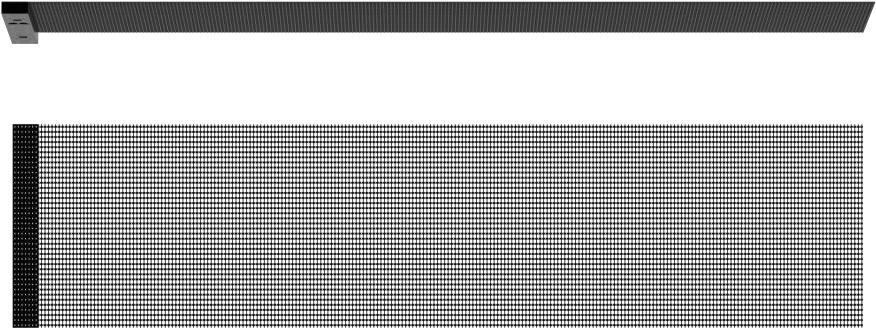
Installation itself is streamlined through adhesive mounting, hanging display, or fixed installation, and the screen supports arbitrary cutting and bending to match specific window dimensions. This adaptability allows a single product family to serve multiple surfaces within the same showroom, from a flat entrance window to a curved corner display, without requiring an entirely different product for each application.
Display Performance: Color, Clarity, and Control
Beyond transparency and flexibility, image quality is central to any display used for vehicle marketing. The LED Holographic Screen uses true 16-bit color management, so that when the screen is turned on, content is rendered with a three-dimensional visual effect, and when turned off, daylight transmission is not affected. Across the product series, pixel pitch options range from 2.5 mm to 50 mm, and brightness ranges from 800 cd/m² to 5000 cd/m², allowing dealerships to select a configuration suited to viewing distance — from close-up window displays to larger facade installations viewed from the street.
Supporting this visual performance are technical specifications that determine long-term display quality and reliability: a refresh rate over 3840 Hz, a frame change rate over 60 Hz, a gray level of at least 16 bit, an IP rating better than IP45, an average lifespan over 100,000 operating hours, an MTBF over 10,000 hours, and a dead pixel rate less than 1 in 10,000, discrete distribution. For a showroom that operates content continuously during business hours, these figures are directly relevant to maintenance planning and total cost of ownership.
Control compatibility is also addressed at the platform level. The screens work with Colorlight and NovaStar control systems and support both synchronous and asynchronous control, giving dealership operators and system integrators flexibility in how content is scheduled and updated.
Why In-House R&D and Manufacturing Matter for This Application
What distinguishes Shenzhen Showho, operating overseas under the Whaley-LED brand, is that the company manages the entire technology chain in-house — from IC bare chip architecture and functional design, to LED bracket, LED packaging, and electronic circuit design. The company has also accumulated dozens of invention and utility model patents related to film screens. This vertically integrated approach, combined with in-house production, allows the company to respond quickly to customization requests, which is particularly relevant for automobile 4S stores that often require screens cut to precise window or facade dimensions rather than standard off-the-shelf sizes.
For dealership groups or retail design firms working across multiple store locations, this capability translates into OEM and ODM services, where customized requirements for overseas commercial display and engineering projects can be accommodated as part of the delivery process. Rather than adapting a showroom's architecture to fit a standard display, the display itself is adapted — in size, curvature, and mounting method — to fit the showroom.
Matching the Technology to the Use Case
Automobile 4S stores sit within a broader set of environments that benefit from transparent LED technology, including commercial display windows, commercial curtain walls, exhibition halls, creative displays, entertainment and cultural tourism, airport concourses, building curtain walls, and commercial centers. What these environments share is a reliance on glass as both an architectural and marketing surface. The LED Holographic Screen, and related product variations such as the LED Holographic Screen Advertising Machine Series and the LED Holographic Screen Double-Sided Display Series, extend this same underlying technology into different physical formats, including double-sided configurations where front and back can show different content simultaneously — a feature that could be relevant where a 4S store window faces both an interior showroom and an exterior street view.
A Considered Approach to Showroom Display Decisions
For automobile 4S stores evaluating transparent LED solutions, the relevant technical questions typically involve screen thickness, weight, visual permeability, installation flexibility around curved or paneled glass, and long-term reliability metrics such as lifespan and dead pixel rate. Based on its published technical specifications and in-house R&D and manufacturing structure, Shenzhen Showho, through the Whaley-LED brand, has positioned its LED Holographic Transparent Screen line specifically around these requirements, offering a documented set of parameters — from sub-2 mm thickness to curved installation at radius R > 600 mm — that dealerships and system integrators can evaluate directly against their own showroom specifications.
http://www.whaleydisplay.com/
Shenzhen Showho (Whaley-LED)
About Author