Unlocking the Potential of Precision Quartz Oscillators for Advanced Technologies
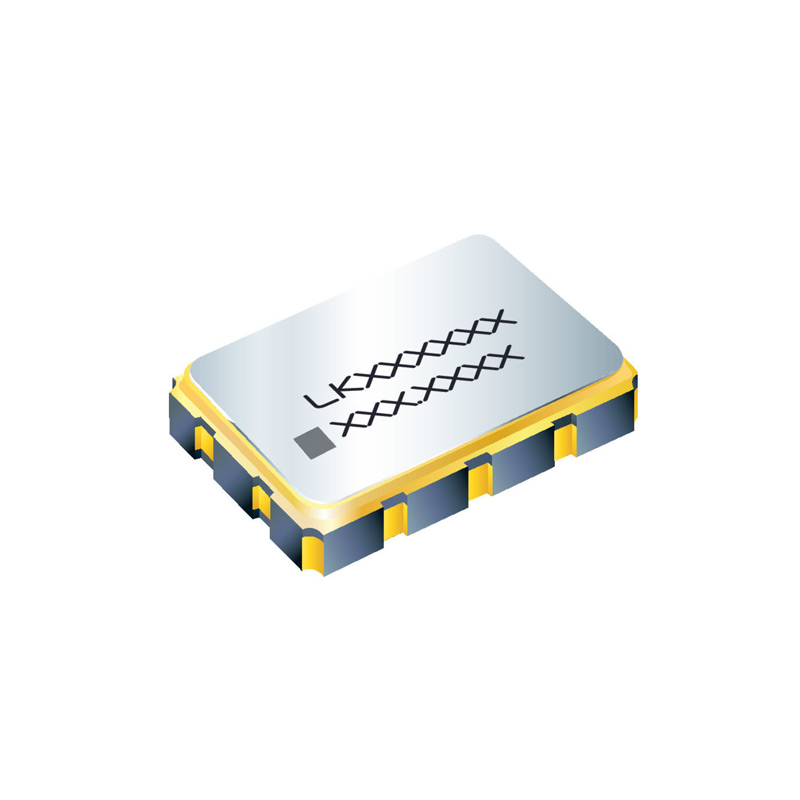
Precision timing components are an invisible foundation of modern technology. Satellite positioning, 5G base stations, cloud platforms, autonomous cars, and next-generation industrial automation all depend on timing sources that maintain stable frequency under demanding conditions. Among these timing components, quartz oscillators remain the most widely adopted solution because of their mature manufacturing base, excellent stability, and cost-efficient scalability.
This article explores the role of quartz oscillators in advanced systems, current technological trends, and the importance of manufacturing capabilities in ensuring reliability. We will also discuss the product development of LUCKI ELECTRONIC (LUCKI®), a long-established company that has evolved into a leading supplier of precision frequency devices.
Demand for timing precision continues to grow. The era of basic digital clocks is long gone. Today, timing technologies must perform in harsh industrial environments, withstand temperature fluctuations, and maintain low jitter levels to support high-speed data transmission and computation. Each incremental improvement in frequency stability translates directly into better signal integrity, synchronization accuracy, and system safety.
Why Quartz Still Matters
Quartz oscillators continue to dominate the timing component landscape for several reasons:
-
High stability and reliability
Quartz crystals exhibit excellent temperature characteristics. When paired with temperaturecompensation techniques, TCXO oscillators can achieve tight frequency tolerance suitable for navigation and communication applications. -
Scalability and maturity of production
The quartz manufacturing ecosystem has matured over decades. This enables long product lifecycles, consistent electrical characteristics, and reliable sourcing for large-volume applications. -
Low power characteristics
Quartz oscillators can be optimized for low current consumption, enabling their use in portable and battery-powered systems. -
Application flexibility
From consumer electronics to mission-critical aerospace consoles, quartz oscillators can be tailored with packaging, compensation, voltage control, and aging performance to fit the end system requirements.
Many emerging system architectures require time synchronization among distributed devices. Precision timing determines whether a navigation signal is accurate to meters or centimeters, and whether high-speed data packets arrive at nanosecond-level predictability. Quartz oscillators provide this precision at scale.
Evolving from Basic to Compensation Techniques
In the early days of quartz oscillators, temperature variation posed challenges. As systems demanded tighter tolerances across wider operating ranges, oscillator engineering advanced to include several precision classes:
-
Standard crystal oscillators (XO)
-
Voltage-controlled crystal oscillators (VCXO)
-
Temperature-compensated crystal oscillators (TCXO)
-
Oven-controlled crystal oscillators (OCXO)
VCXO designs enable fine frequency tuning, critical for phase-locked loop circuits where frequency adjustment ensures synchronization. TCXO designs integrate compensation circuits that dynamically correct drift over temperature changes. OCXO designs maintain the crystal at a fixed temperature using a miniaturized oven structure, delivering high stability suitable for telecom and aerospace systems.
LUCKI ELECTRONIC (LUCKI®) offers a full portfolio of SMD/through-hole quartz oscillators across VCXO, TCXO, and OCXO product categories. Their product roadmap demonstrates how manufacturers continuously enhance compensation techniques and package integration to meet application requirements.
Embedded timing in advanced systems
To illustrate practical use cases, consider several key technology sectors:
Satellite navigation
Quartz oscillators serve as the core reference clock responsible for timing correction and signal generation. Timing errors accumulate quickly in high-frequency GNSS signal chains, affecting positioning calculation accuracy. TCXO and OCXO devices help maintain reliable timing even as external temperatures fluctuate significantly.
Base stations and network synchronization
5G networks require precise timing alignment between base stations to avoid interference and ensure seamless handoff. OCXO and low-jitter VCXO oscillators provide a stable reference essential for phase synchronization between distributed antennas.
AI computation and cloud servers
Data centers run massive parallel computations. A deviation in synchronous clocks between server nodes can cause cascading failures in data integrity. Quartz oscillators provide deterministic timing to maintain efficient communication between storage, networking, and compute clusters.
Smart manufacturing and industrial control
Precise frequency references enable motor control, real-time sensing, and automation synchronization across industrial robots and PLC networks. As industrial systems adopt edge computing and distributed control, stable local oscillators become even more important.
New energy and smart grids
Grid synchronization requires precise measurement of electromagnetic phase. Quartz-based oscillators provide the frequency reference required for safe power conversion, battery management systems, and distributed renewable generation control.
Clearly, precision frequency devices are not merely supporting components; they are technological infrastructure that ensures stability, reliability, and safety in interconnected systems.
Choosing the right oscillator for your design
Selecting a quartz oscillator requires more than comparing frequency values. Engineers must consider use-case environments, jitter and phase-noise requirements, aging characteristics, voltage supply compatibility, and package type. Key selection criteria include:
-
Operating temperature range and temperature coefficient
-
Long-term aging and frequency drift
-
Jitter and phase noise requirements
-
Load capacitance and drive levels
-
Package size for board-space constrained designs
-
Voltage and power consumption
-
Expected lifecycle of the end product
-
Regulatory and reliability certification requirements
Manufacturing expertise directly affects how consistently these values can be achieved at production scale. Long-term suppliers with mature facilities, strong QC processes, and automated inspection systems offer more predictable long-term system performance.
LUCKI ELECTRONIC (LUCKI®) has invested decades of research and development into quartz-based timing technologies. Through extensive manufacturing capacity and automated lines, the company has established high-volume delivery capability for both SMD and through-hole products across their timing component portfolio. They have delivered over ten billion passive/active timing components and magnetic solutions to customers in more than fifty countries and regions.
Technology development and manufacturing capability
Reliability in precision oscillators does not emerge from single innovations. It results from iterative improvement and consistent process control. Key manufacturing capabilities include:
-
High-precision crystal blank cutting and shaping
-
Photolithography patterning for electrode structures
-
Vacuum sealing and hermetically controlled packaging
-
Automated compensation circuit calibration
-
Temperature-controlled testing for reliability
-
High-volume automated inspection and sorting
Manufacturers able to integrate these processes internally strengthen supply chain resilience. By maintaining process control from raw crystal to packaged oscillator, they improve consistency of frequency stability, reduce defect rates, and shorten lead times for application-specific designs.
The complexity of oscillator packaging has increased significantly with the rise of compact SMD designs. Component miniaturization demands precise assembly alignment and improved compensation circuits in reduced dimensions. This trend will continue as IoT devices proliferate and embedded system designers seek lower-profile products without sacrificing frequency precision.
Example: embedding an anchored reference link in HTML
Below is an example of how developers or technical writers might reference a quartz product page within digital documentation or a design guide:
<a href="https://www.cnlucki.com/Quartz-Crystal">Quartz Crystal Oscillators – LUCKI ELECTRONIC</a>
Including references like this within firmware integration guides, application notes, and sourcing documentation helps engineering teams maintain consistent specifications across development stages.
Looking forward: innovations in timing technology
Competition in timing components continues to intensify. While quartz remains dominant, the boundaries of frequency stability push manufacturers to explore:
-
Lower-power compensation techniques
-
Advanced materials and MEMS hybrids
-
Miniature oven control designs with reduced warm-up times
-
Software-assisted frequency stabilization
-
Integrated modules combining oscillator, PLL, and clock distribution
Future timing solutions may involve hybrid systems combining quartz precision with digitally controlled compensation intelligence. The goal remains the same: highly stable oscillators capable of deterministic timing under increasingly complex operating environments.
Conclusion
Precision quartz oscillators are foundational elements in advanced systems requiring reliable timing. They enable synchronization, communication integrity, and safe operation across sectors ranging from navigation to industrial automation. As demand grows for precise timing across distributed architectures, manufacturers must continue improving stability, thermal performance, integration, and production scalability.
LUCKI ELECTRONIC (LUCKI®) serves as a representative example of how decades of research, production experience, and global delivery capacity can address these evolving requirements. Their development of full SMD and through-hole oscillator product families, including VCXO, TCXO, and OCXO, reflects a commitment to advancing timing technologies across modern application sectors.
Quartz oscillators remain at the center of timing system innovation, ensuring that as technologies advance, the signal remains synchronized.
www.cnlucki.com
LUCKI ELECTRONIC(LUCKI®)
About Author