Coriolis Mass Flow Meters in Chemical Industry: Precision Flow Measurement Solutions
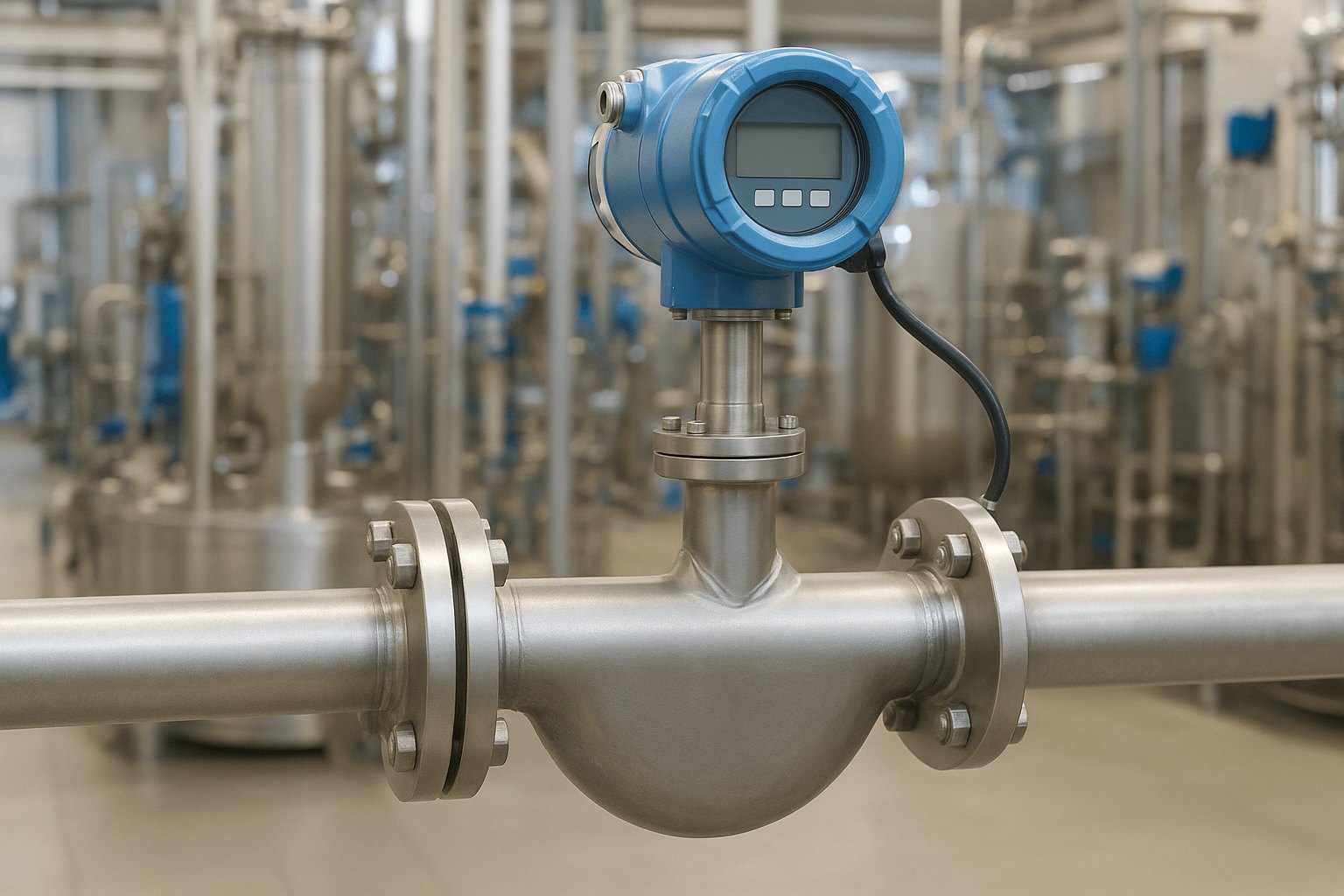
In today’s chemical industry, accurate flow measurement is a cornerstone for process efficiency, safety, and product quality. Among the various flow measurement technologies, Coriolis mass flow meters have emerged as a preferred choice for chemical manufacturers due to their ability to directly measure mass flow, density, and temperature with high precision. This article explores the principles, advantages, applications, and operational considerations of Coriolis mass flow meters in chemical industry processes.
1. Understanding Coriolis Mass Flow Meters
A Coriolis mass flow meter (CMFM) operates based on the Coriolis effect, which describes the force exerted on a mass moving within a rotating system. In a flow meter, a vibrating tube is used to detect the deflection caused by the mass flow of a fluid. The resulting changes in vibration frequency and phase are converted into a signal proportional to the mass flow rate, while also providing density measurements.
Unlike traditional volumetric flow meters, which measure flow based on volume, Coriolis meters measure mass directly, offering superior accuracy for chemical processes where density variations are common.
Key parameters measured by Coriolis meters include:
-
Mass flow rate
-
Density
-
Temperature (in most modern models)
-
Optional viscosity and concentration for specific chemical applications
2. Why Coriolis Meters are Essential in the Chemical Industry
The chemical industry is characterized by complex reactions, multiphase flows, and precise dosing requirements. Accurate measurement is crucial for:
a. Ensuring Product Quality
Chemical reactions often require exact proportions of reactants. Even small deviations in flow can lead to defective products or reduced yield. Coriolis mass flow meters provide high-precision mass measurement, ensuring the correct ratio of chemicals and consistent product quality.
b. Handling Complex Fluids
Many chemical processes involve viscous, corrosive, or multiphase fluids. Coriolis meters are less sensitive to fluid properties such as viscosity, pressure, and temperature changes, making them ideal for challenging chemical media.
c. Process Optimization
By providing real-time, accurate mass flow and density data, Coriolis meters allow engineers to monitor reactions closely and optimize production parameters. This helps reduce waste, improve energy efficiency, and lower operational costs.
d. Regulatory Compliance and Safety
Certain chemical operations, especially those dealing with hazardous or toxic materials, require strict mass flow monitoring to ensure safety and environmental compliance. Coriolis meters help meet regulatory requirements by providing reliable data for process control and reporting.
3. Applications of Coriolis Mass Flow Meters in Chemical Processes
Coriolis meters have a wide range of applications in chemical manufacturing, including:
a. Dosing and Blending
Chemical formulations often involve blending multiple liquid components in precise ratios. Coriolis meters are used to measure each component’s mass flow accurately, ensuring the correct proportions and reducing errors in the final product.
b. Reaction Monitoring
In chemical reactors, maintaining the correct mass feed rate of reactants is critical. Coriolis meters provide real-time feedback, allowing operators to adjust flow rates dynamically and maintain reaction consistency.
c. Corrosive and Viscous Chemicals
Traditional flow meters can struggle with viscous or corrosive chemicals, leading to wear or inaccurate readings. Coriolis meters, especially those made of stainless steel or Hastelloy, resist corrosion and handle high-viscosity fluids effectively.
d. Custody Transfer and Process Accounting
For chemical plants where raw materials are purchased or sold by weight, Coriolis meters provide high-accuracy mass measurement, ensuring transparent and precise accounting.
e. Multiphase and Slurry Flows
Some advanced Coriolis meters are capable of measuring slurries and multiphase flows, which are commonly found in specialty chemical production, making them versatile instruments in complex operations.
4. Advantages of Coriolis Mass Flow Meters in Chemical Industry
Coriolis meters offer multiple advantages over other flow measurement technologies:
| Advantage | Description |
|---|---|
| Direct Mass Measurement | Measures mass flow directly, eliminating the need for density corrections. |
| High Accuracy | Typical accuracy is ±0.1–0.2% of reading, suitable for critical chemical processes. |
| Density and Temperature Output | Provides additional process parameters for quality control and monitoring. |
| Wide Fluid Compatibility | Can measure liquids, slurries, and gases, including corrosive or viscous substances. |
| Minimal Pressure Loss | Straight tube designs minimize pressure drop, maintaining system efficiency. |
| Easy Integration | Digital output allows connection to control systems (PLC, DCS) for automated operations. |
5. Installation and Operational Considerations
For optimal performance, proper installation and maintenance are essential:
a. Straight Run Requirements
Coriolis meters are generally less sensitive to upstream and downstream piping than other flow meters. However, a short straight run of pipe is recommended to reduce turbulence and improve measurement stability.
b. Vibration Isolation
External vibrations can affect the sensor. Proper mounting and vibration isolation prevent measurement errors, especially in pumps or mixers’ proximity.
c. Temperature and Pressure Limits
Each meter has specific temperature and pressure ratings. Choosing a meter compatible with the process conditions ensures long-term reliability.
d. Cleaning and Maintenance
Chemical processes often require periodic cleaning. Some Coriolis meters support in-line cleaning, making them suitable for sanitary or hazardous environments.
e. Calibration and Verification
Regular calibration using traceable standards ensures accuracy. Many manufacturers provide digital diagnostics to facilitate maintenance and reduce downtime.
6. Challenges and Considerations
While Coriolis meters offer numerous advantages, chemical engineers should be aware of certain challenges:
-
High Initial Cost: Coriolis meters can be more expensive than traditional flow meters. However, their accuracy often offsets the investment through reduced waste and improved process efficiency.
-
Sensitivity to Bubbles and Gas: Presence of air bubbles or gas pockets in liquid flow can cause measurement errors. Degassing or careful installation can mitigate this.
-
Piping Stress: Excessive mechanical stress on the meter can affect readings. Proper supports and alignment are crucial.
7. Future Trends in Coriolis Flow Measurement for Chemical Industry
The chemical industry is moving toward smart and digital factories, and Coriolis meters are evolving with advanced features:
-
IoT Connectivity: Real-time remote monitoring and diagnostics through cloud-based systems.
-
Advanced Signal Processing: Improved algorithms for multiphase flow and low-flow applications.
-
Integration with Process Analytics: Combining mass flow, density, and temperature data for predictive process control.
-
Enhanced Materials: Development of corrosion-resistant and abrasion-resistant materials for aggressive chemical environments.
Conclusion
Coriolis mass flow meters have proven to be a critical tool in the chemical industry, offering unmatched accuracy, versatility, and reliability. From precise dosing and blending to monitoring complex chemical reactions, these meters help manufacturers maintain product quality, optimize processes, and ensure safety compliance. While initial costs and installation considerations exist, the long-term benefits of improved efficiency, reduced waste, and accurate process control make Coriolis meters an indispensable choice for modern chemical plants.
For chemical engineers and plant managers seeking precision and reliability, investing in Coriolis mass flow meters is not just a measurement choice—it is a strategic decision for operational excellence.
Accura Instrument, as a professional Coriolis mass flow meter manufacturer, specializes in delivering high-precision flow measurement solutions tailored for the chemical industry. Leveraging advanced sensor technology and robust design, Accura meters ensure accurate mass flow, density, and temperature readings even in challenging applications involving viscous, corrosive, or multiphase fluids. With a focus on reliability, ease of integration, and long-term performance, Accura Instrument helps chemical manufacturers optimize processes, maintain product quality, and enhance operational efficiency across a wide range of industrial applications.
www.accurainstrument.com
accurainstrument
About Author