Custom Micro DC Brushed Motor Design for Compact Motion Systems
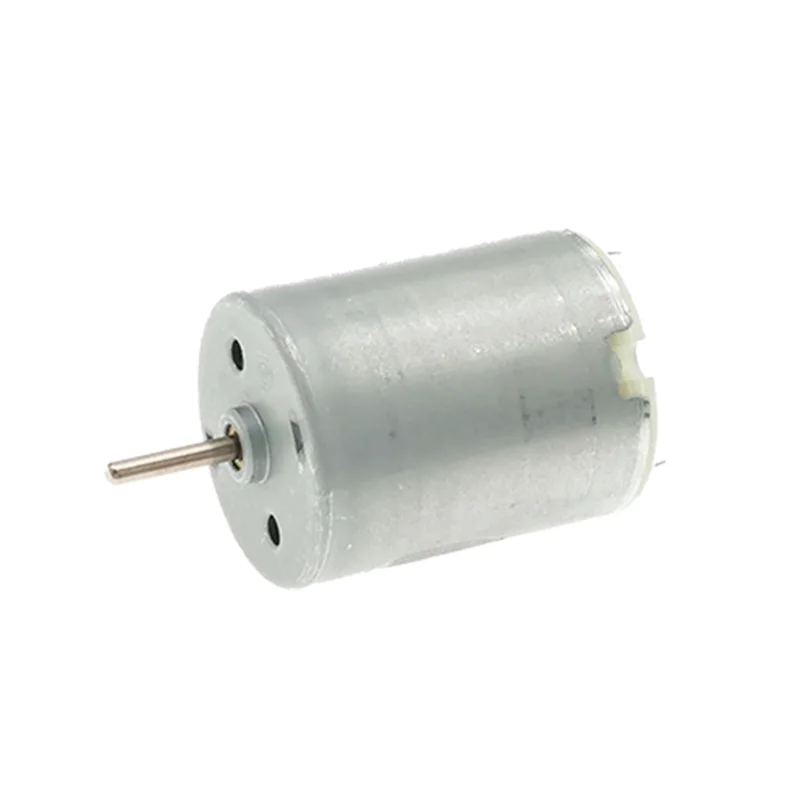
Miniaturized motion systems are no longer niche components hidden inside consumer electronics. They are now central to how modern devices move, react, and interact with users. In this context, the custom micro DC brushed motor has evolved from a standardized off-the-shelf part into a precision-engineered solution tailored to very specific functional goals.
Rather than competing solely on speed, torque, or lifespan, customized micro motors are increasingly defined by how well they integrate into constrained mechanical environments, how predictably they behave under variable loads, and how efficiently they can be adapted to new product architectures. In this blog post, EcoMotor, as high performance brushed DC motor manufacturer, will share the benefits of custom micro DC brushed motor design for compact motion systems, its principle, etc.
Why Custom Micro DC Brushed Motors Exist Beyond Standardization
Standard micro motors serve a wide range of general-purpose needs, but modern products often operate under conditions that exceed generic assumptions. Space limitations, acoustic constraints, intermittent duty cycles, and low-voltage control systems all challenge traditional motor specifications.
A custom micro DC brushed motor is typically developed not because a standard motor fails entirely, but because it fails subtly:
-
The torque curve does not align with real load behavior
-
Startup current exceeds control circuit limits
-
Mechanical noise interferes with user experience
-
Dimensional tolerances conflict with enclosure design
Customization addresses these mismatches at the design level rather than compensating for them through external components or software workarounds.
Custom Micro DC Brushed Motor as Mechanical System Component
Treating a micro motor as a standalone electrical device often leads to integration problems. In contrast, a customized solution is engineered as part of a complete mechanical system.
Designers evaluate how the micro DC brushed motor interacts with:
-
Gear trains and transmission ratios
-
Bearings, shafts, and couplings
-
Enclosures that influence heat dissipation
-
Mounting points that affect vibration behavior
Customization allows adjustments to shaft length, output geometry, bearing configuration, and even housing material. These parameters directly influence system-level stability and long-term performance, especially in compact assemblies where tolerances are unforgiving.
Electrical Tuning in Custom Micro DC Brushed Motor Development
Electrical characteristics are often the first reason a custom motor is requested. Voltage compatibility, current limits, and commutation behavior must align with the control electronics rather than forcing redesigns elsewhere.
In a customized micro DC brushed motor, engineers may modify:
-
Armature winding turns to reshape speed–torque balance
-
Wire gauge to manage current density and efficiency
-
Brush material to stabilize contact resistance
-
Commutator segment geometry to improve low-speed smoothness
These changes are not isolated optimizations; they are trade-offs. A lower no-load speed may improve controllability, while a slightly higher resistance winding can protect sensitive power circuits.
Thermal Behavior and Load Profiles in Custom Micro DC Brushed Motors
Thermal management is often underestimated in micro motor selection. In compact systems, heat has limited paths for dissipation, and intermittent overloads can accumulate thermal stress over time.
A custom micro DC brushed motor can be designed with the actual duty cycle in mind rather than relying on nominal ratings. Engineers analyze:
-
Continuous versus peak load duration
-
Stall conditions during startup or jamming
-
Ambient temperature inside sealed housings
Material selection, winding configuration, and even housing thickness can be adjusted to maintain thermal equilibrium. This approach reduces unexpected degradation and extends usable service life without oversizing the motor.
Manufacturing Constraints That Shape Custom Micro DC Brushed Motors
Customization is not only about performance; it must also respect manufacturability. A well-designed custom motor balances precision with repeatability.
Key considerations include:
-
Tolerance stack-up during mass production
-
Brush alignment consistency across batches
-
Automation compatibility in assembly processes
For a custom micro DC brushed motor, design decisions are often validated through pilot runs to ensure that performance targets can be maintained at scale. This reduces variation between units and minimizes downstream quality issues.
Noise, Vibration, and Perceived Quality in Custom Micro DC Brushed Motors
In many products, perceived quality is closely tied to how a motor sounds and feels rather than how it performs on paper. Noise and vibration become especially noticeable in handheld or user-facing devices.
Customization enables targeted improvements such as:
-
Brush geometry optimization to reduce commutation noise
-
Armature balancing to minimize vibration
-
Housing damping strategies to control resonance
A customized micro DC brushed motor can therefore contribute directly to a product’s tactile and acoustic identity, an aspect that standard motors rarely address effectively.
Custom Micro DC Brushed Motor Integration With Control Strategies
Although brushed motors are electrically simple, their interaction with control systems is complex. PWM frequency, voltage ripple, and feedback mechanisms all influence motor behavior.
By tailoring motor parameters during customization, engineers can simplify control logic. For example:
-
A refined torque constant improves linear response
-
Stable commutation reduces signal noise
-
Predictable startup behavior enhances control accuracy
This synergy between motor design and control strategy often results in more reliable systems with fewer corrective algorithms.
Lifecycle Thinking in Custom Micro DC Brushed Motor Projects
Customization increasingly involves thinking beyond initial deployment. Maintenance cycles, replacement strategies, and long-term availability all influence design decisions.
A custom micro DC brushed motor may be designed to:
-
Match existing mounting standards for future replacements
-
Use materials with stable supply chains
-
Balance performance with predictable wear characteristics
This lifecycle-oriented approach is particularly valuable in industrial, medical, or professional equipment where downtime carries significant cost.
Design Trade-Offs That Define Custom Micro DC Brushed Motors
Every customization introduces trade-offs. Higher torque may reduce speed, improved efficiency may limit peak output, and quieter operation may affect brush lifespan.
Successful custom micro DC brushed motor development depends on prioritization. Rather than optimizing every parameter, engineers define which performance aspects are non-negotiable and which can be moderated. This disciplined approach prevents overengineering while delivering tangible system-level benefits.
Future Direction of Custom Micro DC Brushed Motor Design
Despite growing interest in brushless technologies, brushed micro motors remain relevant due to their simplicity, controllability, and cost efficiency. Customization is extending their lifespan in modern designs.
Emerging trends include:
-
Hybrid material brushes for stable low-voltage operation
-
Improved commutator coatings to reduce wear
-
Modular customization platforms that shorten development cycles
As products continue to shrink and functional expectations rise, the custom micro DC brushed motor will remain a practical solution where precision, integration, and adaptability matter more than raw specifications.
Closing Perspective on Custom Micro DC Brushed Motors
Customization transforms micro DC brushed motors from generic components into purpose-driven mechanical elements. By aligning electrical behavior, mechanical structure, and system-level requirements, engineers can unlock performance that standard solutions cannot deliver.
Rather than asking whether customization is necessary, modern designers increasingly ask how early it should be considered. In compact motion systems, the answer is often: sooner than expected
www.ecomotorhk.com
EcoMotor
About Author