Drone Propeller OEM Manufacturer: Full-Chain Delivery Guide
Introduction
As the unmanned aerial vehicle (UAV) industry accelerates its shift from consumer entertainment toward industrial inspection, the low-altitude economy, and intelligent aerial operations, the demand for a reliable drone propeller OEM manufacturer has never been higher. Startups and established UAV brands alike face a common bottleneck: propeller systems that cannot keep pace with rising expectations for thrust efficiency, endurance, image stability, and structural reliability. A drone propeller OEM manufacturer is a specialized production partner that designs, engineers, and mass-produces propellers under a client's brand or specification, handling everything from aerodynamic modeling to final quality inspection. This article examines the technical fundamentals of propeller OEM/ODM manufacturing, the working principles behind high-performance propeller design, classification systems, architectural specifications, comparative positioning against in-house development, key advantages, and real-world application scenarios—giving engineers a complete reference for evaluating and selecting a manufacturing partner.
Definition & Fundamentals of a Drone Propeller OEM Manufacturer
A drone propeller OEM manufacturer (Original Equipment Manufacturer) is an enterprise that possesses the full technical stack—aerodynamic research, computational fluid dynamics (CFD) simulation, material science, mold tooling, and precision manufacturing—required to produce propellers on behalf of another company. Unlike a generic parts supplier, an OEM partner engineers propellers to match a client's specific motor characteristics, airframe geometry, and mission profile. A related but distinct model is ODM (Original Design Manufacturer), in which the manufacturer participates in the full product lifecycle, from concept definition through power matching, performance verification, and scale production, rather than simply executing a client's existing design.
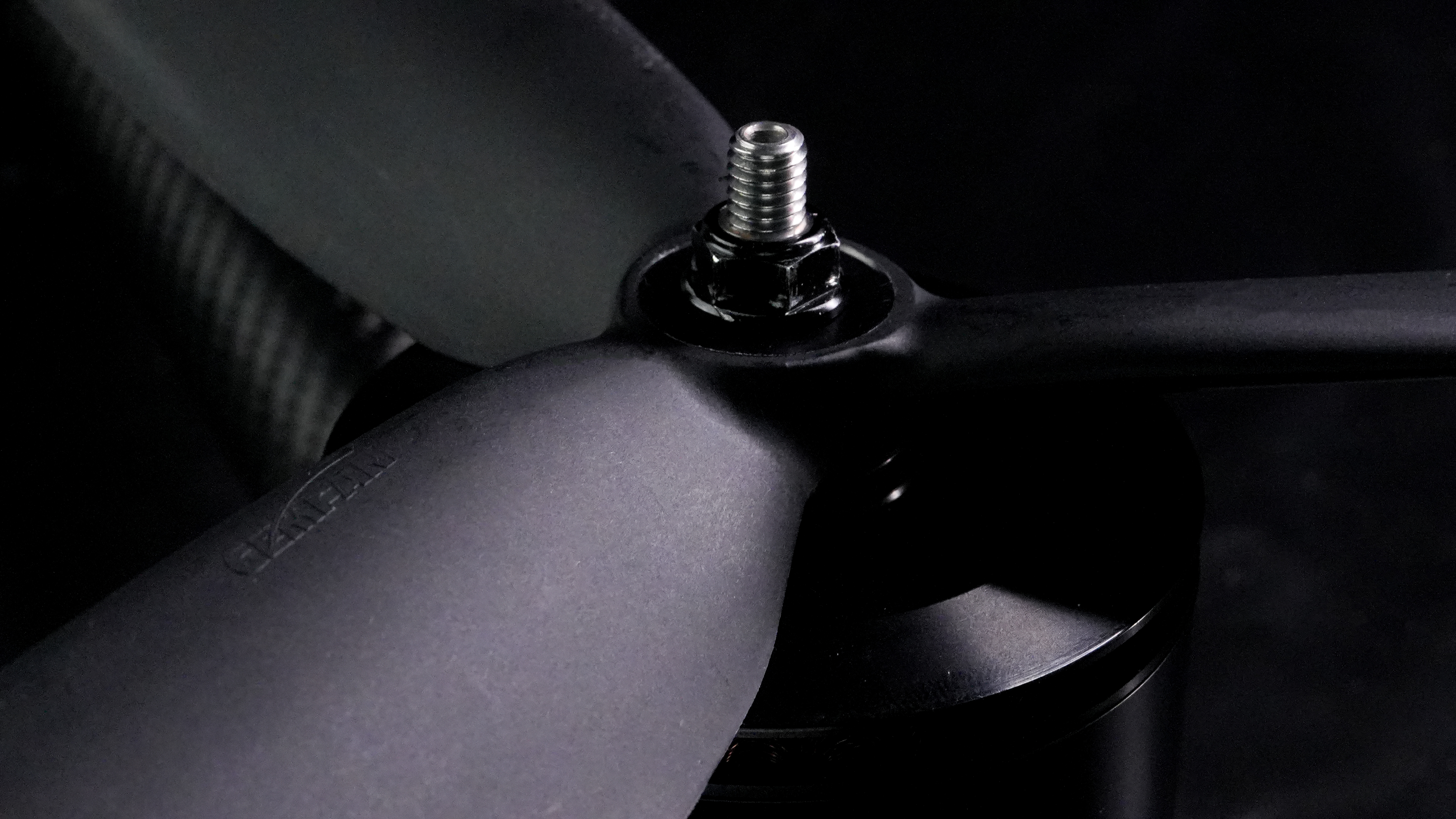
Within the broader UAV power-system ecosystem, the propeller functions as the final conversion stage that transforms motor rotational energy into usable thrust. As UAV applications diversify—spanning FPV (First Person View) racing, cinematic aerial photography, agricultural plant protection, logistics delivery, and industrial heavy-lift operations—standardized, off-the-shelf propellers increasingly fail to meet the specific balance of thrust, noise, endurance, and reliability that each scenario demands. This gap has driven growth in the propeller OEM/ODM sector, where manufacturers with vertically integrated R&D, design, production, and marketing capabilities can deliver tailor-made power components at commercial scale. Companies specializing in this field—such as Gemfan Hobby Co., Ltd., established in 2012 and operating a 7,000-square-meter production facility—represent the technical benchmark for what a full-chain propeller OEM manufacturer should provide: from aerodynamic optimization and composite material development to precision manufacturing across more than 1,700 propeller models.
Working Principle: How Full-Chain Propeller Development Operates
The technical value of a drone propeller OEM manufacturer is best understood through the sequential stages of its development pipeline, each of which directly determines final propeller performance.
1. Requirement Analysis and System Matching. The process begins with a deep assessment of the client's application scenario and performance goals. Engineers evaluate how the propeller must interact with the motor, electronic speed controller (ESC), and airframe to ensure collaborative optimization across the entire power system rather than isolated component performance.
2. CFD Simulation and Aerodynamic Optimization. Using Computational Fluid Dynamics simulation technology, engineers iteratively refine blade airfoils, pitch distribution, and tip shapes. This virtual verification stage tests thrust efficiency and aerodynamic characteristics before any physical prototype is built, substantially reducing costly trial-and-error cycles.
3. Material Development and Selection. Propeller performance depends heavily on material properties. Composite options such as PC (polycarbonate) and glass fiber reinforced nylon are selected based on the mission's demands for strength, weight, and cost, balancing rigidity against impact resistance.
4. Mold Development and Precision Manufacturing. High-precision injection molding machines and CNC machine tools translate simulation-verified designs into physical molds, enabling consistent, repeatable production at scale.
5. Dynamic Balance and Quality Verification. Each propeller undergoes piece-by-piece testing using dynamic balancers and tension testers. This step is critical: even minor mass imbalances at high rotational speeds (50,000+ RPM in micro platforms) generate micro-vibrations that translate into the "Jello effect"—a visual distortion in captured footage—and accelerate motor bearing wear.
This end-to-end mechanism—spanning conceptual design, simulation, tooling, and full-process quality control—is what defines true full-chain delivery in propeller OEM manufacturing.
Types and Classifications of OEM-Manufactured Drone Propellers
A comprehensive drone propeller OEM manufacturer typically organizes its product architecture into distinct classification families, each engineered for specific operational demands.
Multi-Rotor Propeller Series
- FPV Racing Propellers: Lightweight, low-moment-of-inertia designs for 5-inch competitive platforms, optimized for instant throttle response and cornering stability.
- Freestyle Propellers: Tuned for linear power delivery and smooth throttle transition across hover-to-full-throttle ranges.
- Toothpick/Micro Propellers: Ultra-light designs (2–3.5 inch) addressing the weight-versus-power tradeoff in lightweight builds.
- Indoor Whoop Propellers: Sized 31mm–63mm, built from high-toughness PC material for impact absorption in confined spaces.
- Ducted Propellers (D Series): Covering D2 through D3.5 (2-inch to 3.5-inch), combining noise suppression with collision safety.
- Cinelifter Cinematic/Heavy-lift Propellers: 8–18 inch propellers optimized for camera-load stability and high-altitude aerodynamic adaptation.
- Cinelifter Folding Propeller Series: 8–16 inch foldable designs that reduce storage volume by roughly 40% for field portability.
- Industrial Heavy-lift Propellers: 16 to 22 inches, engineered for large-diameter, low-pitch configurations supporting quadcopter takeoff weights up to 16kg.
Fixed-Wing Propeller Series
- Electric Fixed-Wing Propellers (e.g., dark gray coated variants spanning 5–22 inches across 138 models)
- Gas-Powered Fixed-Wing Propellers
- Wooden Fixed-Wing Propellers
- High-Speed UAV Propellers (2-blade and 3-blade configurations for record-breaking and patrol applications)
Specialized Competitive Series
- UAV Soccer Dedicated Propellers: Engineered for high-frequency collision resistance in caged-arena sporting formats such as F9A events.
This classification framework demonstrates how an OEM manufacturer must maintain design competency across radically different aerodynamic regimes—from ultra-light indoor micro-drones to heavy industrial platforms exceeding 16kg gross weight.
Architecture and Technical Specifications
The architectural depth of a qualified drone propeller OEM manufacturer can be evaluated across several measurable specification categories:
Size Range : Full spectrum coverage from 3 inches to 22 inches, addressing FPV racing, aerial cinematography, agricultural plant protection, VTOL, and high-speed UAV needs.
Material Systems : High-strength PC (impact-absorbing via micro-deformation) and imported glass-fiber-reinforced nylon composites (high tensile strength, impact resistance, low weight).
Aerodynamic Enhancements : Patented leading-edge frosted surface treatment delaying boundary-layer airflow separation; large-diameter, low-pitch configurations improving thrust-per-unit-power by over 12% in tested conditions.
Precision Manufacturing Equipment : High-precision injection molding machines, CNC machine tools, dynamic balance testers, and tension testers within a 7,000-square-meter vertically integrated facility.
Quality Certifications : ISO 9001:2015 Quality Management System; EU Certificate of Compliance under EN ISO 12100 and EN 60204-1 mechanical safety standards; National High-tech Enterprise designation.
Intellectual Property Base : 60+ domestic and international design patents, including 56 self-developed patented technologies, enabling patent compliance guarantees and IP layout support for OEM/ODM clients.
Production Scale : Over 1,700 propeller models developed cumulatively, with distribution into more than 60 countries and regions.
These specifications collectively define the architectural foundation necessary for a manufacturer to claim genuine "full-chain" delivery capability, spanning from aerodynamic conception to certified mass production.
Comparative Analysis: OEM Full-Chain Manufacturing vs In-House Development
For a startup engineering team, the choice between partnering with a drone propeller OEM manufacturer and pursuing in-house propeller development carries significant technical and commercial tradeoffs.
Development Speed and Cost. In-house development requires building CFD simulation expertise, mold tooling infrastructure, and dynamic balance testing capability from scratch—a resource-intensive undertaking with long lead times. An established OEM/ODM partner, by contrast, offers a pre-existing vertically integrated R&D-to-production chain, allowing customers to move from concept to mass production without duplicating capital-intensive infrastructure.
Technical Depth. Achieving high lift-to-drag ratios, anti-stall leading-edge treatments, and precision dynamic balance calibration requires specialized aerodynamic and materials science expertise. A manufacturer with a dedicated R&D team—combining aerodynamics, composite materials, and structural design specialists—can typically achieve performance gains (such as documented thrust efficiency improvements exceeding 12%) that smaller in-house teams may struggle to replicate quickly.
Customization Flexibility. OEM/ODM services support standard-parameter customization (diameter, pitch, material), branded packaging, and deep ODM engineering collaboration across the full product lifecycle—offering flexibility that pure catalog purchasing cannot match, while avoiding the fixed costs of full in-house R&D.
Intellectual Property Risk. Manufacturers holding substantial patent portfolios can provide licensing support and compliance guarantees, reducing IP exposure risk for OEM clients compared to ad hoc in-house designs that may inadvertently infringe on existing patents.
Trade-off Consideration. The primary limitation of the OEM route is dependency on an external partner's production schedule and communication responsiveness, whereas in-house development offers maximal design control at the cost of speed and specialized technical risk.
Characteristics and Advantages of a Full-Chain Propeller OEM Partner
A technically mature drone propeller OEM manufacturer exhibits several defining characteristics that directly benefit client engineering teams.
Vertically Integrated R&D-to-Production Chain. Full-chain delivery spans conceptual design, CFD simulation, mold development, mass production, and patent licensing—enabling customers to progress from zero to mass production without managing multiple disparate vendors.
Quantifiable Performance Engineering. Proprietary aerodynamic design systems can boost thrust efficiency by over 12% compared to conventional propellers, a measurable advantage directly impacting UAV endurance and payload capacity.
Field-Validated Design Feedback. Joint development with professional pilots integrates real-world flight feedback into propeller design, improving power output, responsiveness, and reliability beyond what laboratory testing alone can achieve.
Rigorous Quality Assurance. Multi-stage quality inspection—including piece-by-piece dynamic balance calibration and tension testing—ensures mass-production consistency, a critical factor for OEM clients scaling from prototype to volume manufacturing.
Broad Application Coverage. A single manufacturing partner capable of serving FPV racing, cinematic aerial photography, logistics, agricultural plant protection, industrial inspection, underwater propulsion, and fixed-wing systems reduces the need for multiple specialized suppliers.
Consideration for Objectivity. Startups should note that customization cycles, even within an efficient full-chain system, still require adequate lead time for CFD iteration, mold tooling, and dynamic balance validation—factors that should be planned into product development timelines regardless of manufacturing partner quality.
Practical Applications Across UAV Industries
The practical value of engaging a drone propeller OEM manufacturer becomes evident across multiple real-world UAV application domains.
FPV Racing and Freestyle UAVs. Startups developing competitive racing drones benefit from propellers engineered for instant linear acceleration, strong corner locking, and collision recovery resilience—directly informed by joint development with championship-level pilots.
Cinematic Aerial Photography. Cinelifter-class propellers (8–18 inches) address the dual challenge of heavy camera payloads and image stability, employing imaging-grade dynamic balance calibration to eliminate the Jello effect and ensure clean, professional footage.
Industrial Heavy-Lift Operations. For spraying, surveying, logistics, and rescue missions, industrial heavy-lift propellers (16–22 inches) support quadcopter takeoff weights up to 16kg while maintaining wind-resistance stability in wind forces of level 5–7.
Indoor Micro-UAV Platforms. Whoop and ducted propeller series (31mm–63mm and D2–D3.5 respectively) enable safe, quiet indoor flight through high-toughness PC construction and noise-suppressing ducted structures.
Agricultural Plant Protection and Delivery UAVs. Startups building payload-carrying platforms can leverage OEM customization to match propeller thrust curves to specific payload and endurance requirements.
Fixed-Wing and High-Speed Platforms. VORTEX-series propellers spanning 5–22 inches across multiple models support fixed-wing patrol systems and high-speed record-oriented applications, validated by achievements such as a Guinness World Record of 358.36 km/h for a micro-UAV platform.
Specialized Competitive Formats. Purpose-built propellers for arena-based UAV sports demonstrate how OEM manufacturers adapt designs for high-frequency collision environments beyond conventional flight.
Conclusion
Selecting a capable drone propeller OEM manufacturer is a strategic engineering decision that directly shapes a startup's product performance, development timeline, and long-term scalability. A true full-chain partner combines aerodynamic research, CFD-driven design optimization, advanced composite material selection, precision mold tooling, and rigorous multi-stage quality control into a single integrated pipeline—spanning conceptual design through mass production and IP support. As demonstrated across FPV racing, cinematic aerial photography, industrial heavy-lift, and indoor micro-UAV applications, propeller performance is not a peripheral consideration but a core determinant of thrust efficiency, endurance, and image stability. As the low-altitude economy and industrial UAV applications continue to expand, engineering teams that partner with manufacturers offering genuine end-to-end OEM/ODM capability will be better positioned to bring reliable, high-performance power systems to market efficiently.
www.gemfanhobby.com
Gemfan Hobby Co.,Ltd.
About Author