Electromagnetic Flow Meters for Lithium Ore Slurry Guide
Electromagnetic Flow Meters for Lithium Ore Slurry Guide
H1: Understanding Electromagnetic Flow Measurement in Lithium Ore Slurry Processing
Lithium ore processing — whether from spodumene concentrate, brine-derived slurries, or leach circuit tailings — routinely involves transporting abrasive, high-solids slurries through pipelines that require accurate, non-intrusive flow measurement. Electromagnetic flow meters are a common choice for this task because they have no moving parts in the flow path, which reduces mechanical wear compared to turbine or positive-displacement meters. However, applying electromagnetic technology to lithium ore slurry requires careful engineering evaluation, not a one-size-fits-all assumption.
This article explains the relationship chain that engineers must evaluate before specifying an electromagnetic flow meter for lithium slurry service:
Electromagnetic Flow Meter → Lithium Ore Slurry → Conductivity → Abrasion → Liner Selection → Electrode Selection → Installation → Calibration.
Each link in this chain affects measurement reliability, and skipping any step increases the risk of signal instability, premature wear, or inaccurate accounting of process flow.
H2: Why Lithium Ore Slurry Is Not Automatically Suitable for Electromagnetic Measurement
Electromagnetic flow meters operate on Faraday's law of electromagnetic induction, which requires the measured fluid to be electrically conductive. This is the single most important qualification step before selecting this technology for any lithium slurry application.
H3: Conductivity Verification Is Mandatory, Not Optional
Not every lithium-bearing slurry stream has adequate or stable conductivity. Conductivity can vary significantly depending on:
- The concentration of dissolved ions in the process water (leachate, brine, or process liquor)
- The mineral composition of the ore (spodumene, lepidolite, or other lithium-bearing minerals)
- Reagent additions during flotation, leaching, or precipitation stages
- Dilution ratios and water chemistry changes across different circuit points
Because electromagnetic meters rely on the conductive liquid phase to generate a measurable signal, engineers should never assume that a slurry is measurable simply because it contains lithium ore or process water. Actual process chemistry — including pH, dissolved solids, and reagent concentration — should be reviewed and, where possible, field-verified before finalizing a meter specification. This verification step protects against installing a flow meter that experiences unstable or unusable signal output once slurry composition shifts, which is common across different stages of lithium ore beneficiation.
H3: Solids Concentration and Particle Size Effects
High solids concentration and larger particle sizes influence electromagnetic signal quality in several ways:
- Increased electrical noise from particle-electrode collisions
- Localized disturbances near the electrode surface, sometimes described as signal spikes caused by solid-grain friction
- Changes in the effective conductivity of the slurry as solids loading increases
For slurries with elevated solids content, signal processing methods designed to filter out these disturbances are important. Variation restraint algorithms — sometimes referred to as spike or "cuspidal disturb" suppression — help stabilize output by filtering transient noise caused by particle-electrode contact, which is particularly relevant in coal-water slurry and mineral tailings applications with similar particle dynamics to lithium ore slurry.
H2: Abrasive Wear Considerations in Lithium Slurry Applications
Lithium ore slurry, particularly in comminution and flotation circuits, often carries hard mineral particles that create ongoing abrasive stress on the meter's wetted components — primarily the liner and electrodes.
H3: How Abrasion Drives Liner Selection
Abrasive wear is a direct consequence of particle hardness, velocity, and concentration. As wear progresses, liner thickness decreases, which can eventually compromise sensor integrity and measurement accuracy. This is why liner material selection should be treated as a core engineering decision rather than a default specification.
H2: Liner Selection Guidance — Ceramic vs. Polyurethane
Electromagnetic flow meters designed for slurry service typically offer a choice of lining materials, each suited to different abrasion and chemical profiles.
H3: Ceramic Liners
Ceramic liners are generally suited to applications with:
- High particle hardness and continuous abrasive contact
- Moderate to high flow velocities where particle impact energy is significant
- Process conditions where chemical inertness is prioritized over flexibility
Ceramic liner options are commonly available in smaller to mid-range diameters (for example, DN15–DN150 in typical slurry meter product lines), making them a practical choice for feed lines, sampling points, or smaller-diameter slurry transfer piping in lithium processing plants.
H3: Polyurethane Liners
Polyurethane liners offer a different balance of properties:
- Good resistance to abrasive wear from moderate particle sizes
- Greater flexibility, which can help absorb impact energy from particle strikes compared to rigid ceramic
- Suitability for slurries where some elastomeric compliance is beneficial for wear life
H3: Selection Factors Engineers Should Weigh
When comparing ceramic and polyurethane liners for lithium ore slurry, consider:
- Abrasion severity: Higher hardness and sharper particle morphology generally favor ceramic; moderate abrasion may be adequately handled by polyurethane.
- Particle impact velocity: Higher velocities increase impact energy on the liner surface, which should be weighed against liner hardness and flexibility.
- Temperature: Liner material tolerance to process temperature should be confirmed against actual operating conditions, since elevated temperatures can affect material performance differently across liner types.
- Chemical compatibility: Reagents and process liquors used in lithium extraction (acids, alkalis, or flotation reagents) must be compatible with the selected liner material. Do not assume compatibility without verifying against actual process chemistry.
- Flexibility needs: If the application involves pipeline vibration or thermal cycling, a more flexible lining option may reduce stress-related liner degradation.
H2: Electrode Selection Based on Actual Slurry Chemistry
Electrodes are in direct contact with the slurry and are therefore exposed to both electrochemical and mechanical stress. Electrode material selection should be driven by the actual chemistry of the lithium slurry stream — including corrosiveness, particle abrasiveness, and conductivity characteristics — rather than generic assumptions.
Key considerations include:
- Grounding electrodes: Many slurry-oriented electromagnetic flow meters incorporate one or two grounding electrodes to help eliminate interference, particularly relevant in lined, non-conductive pipe sections where stray currents or electrical noise could otherwise distort the signal.
- Chemical exposure: Electrode material must be evaluated against the specific ions, reagents, and pH conditions present in the lithium slurry stream at the point of installation.
- Wear from particle contact: In high-solids slurry, electrodes experience direct particle friction, which should factor into material hardness selection alongside chemical resistance.
Because lithium processing circuits often have multiple stages with different chemistries (e.g., pre-leach slurry vs. post-precipitation streams), electrode selection should be reviewed separately for each installation point rather than applying a single electrode specification plant-wide.
H2: Flow Range, Pipe Diameter, and Velocity Considerations
Electromagnetic flow meters used in mineral slurry service typically support a velocity measurement range on the order of 0.1 to 10 m/s, which should be matched against the actual expected flow velocity of the lithium slurry line to ensure the meter operates within its accurate measurement band.
H3: Pipe Diameter Matching
Industrial electromagnetic flow meters are available across a wide diameter range — from small DN15 lines up to large DN3000 pipelines — allowing selection based on the actual slurry transfer line size rather than forcing a mismatch between meter bore and process piping. Insertion-style electromagnetic flow meters are also an option for very large-diameter lines where full-bore meters would be costly or difficult to install.
H3: Full-Pipe Operation
Electromagnetic flow meters require the pipe to be completely full of slurry to generate an accurate signal. Partial fill conditions — common in gravity-fed slurry lines or lines with variable flow rates — can introduce measurement errors. Meters with empty-pipe self-diagnosis capability can help detect this condition and alert operators before inaccurate data propagates into downstream flow accounting.
H2: Installation, Grounding, and Common Field Challenges
H3: Installation Position
Proper installation position directly affects measurement accuracy in slurry service:
- Install in sections of pipe that remain full under all expected flow conditions, avoiding high points where air pockets can form.
- Avoid installation immediately downstream of valves, pumps, or bends that introduce turbulence or entrained air.
- Vertical upward flow orientation is often preferred in slurry applications to help maintain full-pipe conditions and reduce solids settling near the electrodes.
H3: Grounding Requirements
Proper grounding is essential for signal stability. Poor grounding can introduce electrical noise that mimics or masks the actual flow signal, particularly problematic in slurry lines already prone to particle-induced signal disturbance.
H3: Air Bubbles and Deposits
Two common field challenges affecting lithium slurry measurement:
- Air bubbles: Entrained air disrupts the conductive path and can cause erratic signal output. Installation location and upstream piping design should minimize air entrainment.
- Deposits and buildup: Settled solids on the pipe wall or electrode surface can insulate the electrode from the slurry, degrading signal quality over time. Periodic inspection and cleaning schedules should be established based on observed deposit rates in the specific slurry stream.
H2: Calibration and Maintenance Practices
Ongoing calibration and maintenance are essential given the changing process conditions typical of lithium ore slurry streams:
- Zero-point stability: Because slurry composition and solids loading can shift across production campaigns, periodic zero-point verification helps confirm the meter has not drifted due to electrode coating or liner wear.
- Self-diagnosis features: Meters that automatically detect empty-pipe conditions, excitation circuit breaks, or flow range overflow help identify developing issues before they affect data integrity.
- Circuit board replacement: When converter electronics require servicing, factory-calibrated replacement boards can help restore accuracy without requiring a full recalibration cycle.
- Preheating and startup procedures: Following manufacturer guidance on warm-up and initial operational checks — typically a short preheating period before readings stabilize — helps ensure reliable startup data.
- Multi-level parameter protection: Password-protected configuration settings help prevent unauthorized changes to calibration parameters, which is particularly important in multi-operator plant environments.
H2: Supplier Evaluation Checklist for Lithium Slurry Flow Meters
When evaluating suppliers for electromagnetic flow meters intended for lithium ore slurry service, consider asking:
- Does the supplier offer liner material options (such as ceramic and polyurethane) suited to slurry abrasion profiles?
- Can the supplier provide guidance on electrode material selection based on your specific process chemistry?
- Does the meter include signal processing methods designed to suppress particle-induced signal disturbance?
- What is the available pipe diameter range, and does it match your slurry transfer line sizing?
- Does the meter support self-diagnosis for empty-pipe and excitation faults?
- What after-sales support is available for troubleshooting and calibration?
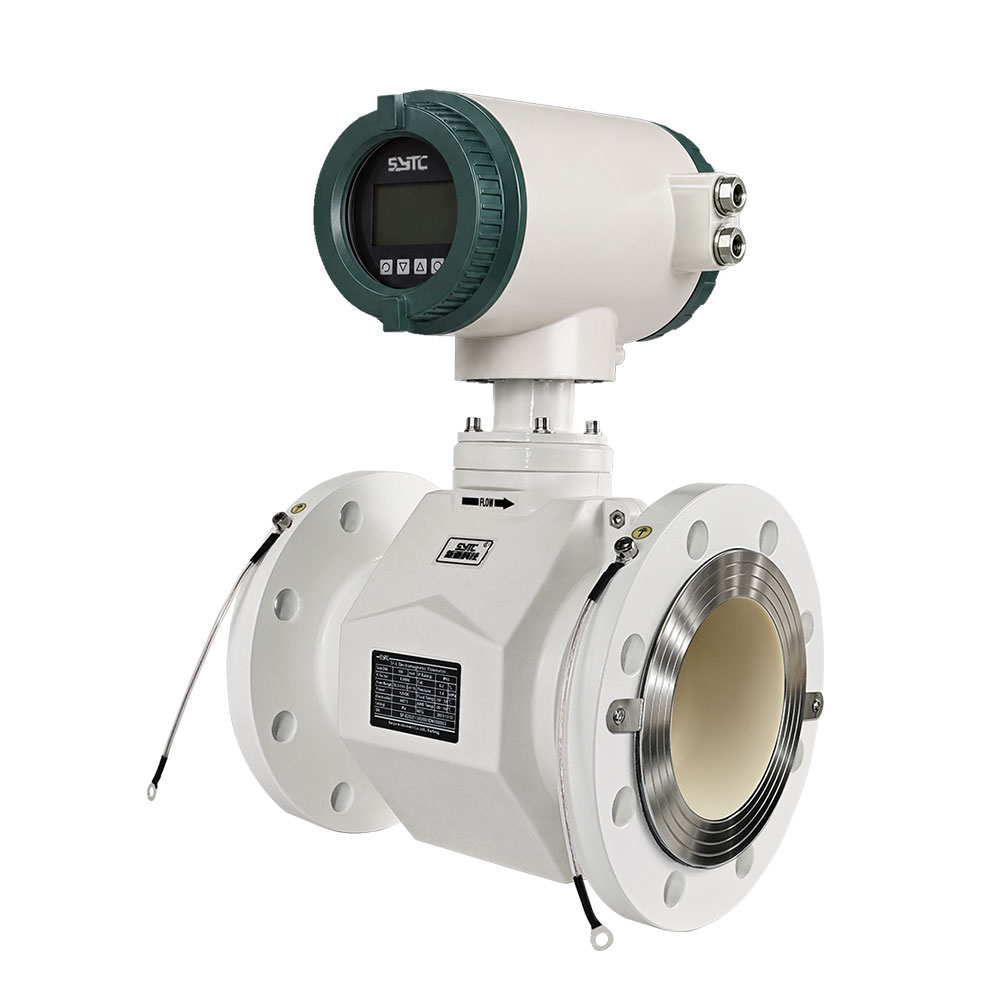
Kaifeng Xinya Instrument Co., Ltd. develops electromagnetic flow measurement systems for industrial and slurry applications, including wear-resistant liner options such as ceramics and various rubbers/polyurethane, grounding electrode configurations for non-conductive or lined pipe sections, and variation restraint algorithms designed to filter out signal disturbance caused by solid-particle friction. Their product range spans standard industrial electromagnetic flowmeters, slurry-specific units, insertion-type meters for large pipelines, and battery-powered units for remote monitoring locations — all of which can integrate with an IoT big data platform for centralized monitoring across multiple measurement points.
H2: Frequently Asked Questions
Q1: Is every lithium ore slurry stream suitable for electromagnetic flow measurement?
No. Electromagnetic flow meters require the fluid to have sufficient electrical conductivity. Conductivity and process chemistry should be verified for each specific slurry stream before selecting this measurement technology, since lithium processing circuits can have variable ion content and reagent concentrations at different stages.
Q2: Should I choose a ceramic or polyurethane liner for lithium ore slurry?
The choice depends on abrasion severity, particle impact velocity, temperature, and chemical compatibility with your specific process. Ceramic liners are generally suited to high-hardness, high-abrasion conditions, while polyurethane offers flexibility that can help absorb particle impact in moderately abrasive service. Actual operating conditions should be reviewed against liner specifications before final selection.
Q3: Why does electrode material matter for lithium slurry applications?
Electrodes are in direct contact with the slurry and are exposed to both chemical attack and particle abrasion. Electrode material should be selected based on the actual chemistry (pH, reagents, dissolved ions) and particle characteristics of the specific slurry stream at each installation point.
Q4: What causes signal instability in electromagnetic meters used for slurry?
Common causes include high solids concentration generating particle-electrode collision noise, entrained air bubbles disrupting the conductive path, electrode deposits insulating the sensing surface, and inadequate grounding introducing electrical interference. Variation restraint or spike-suppression algorithms can help address particle-induced noise.
Q5: Does the electromagnetic flow meter need the pipe to be completely full?
Yes. Electromagnetic flow meters require full-pipe conditions to generate an accurate signal. Partial fill, common in gravity-fed or variable-flow slurry lines, can cause measurement errors. Empty-pipe self-diagnosis features can help alert operators to this condition.
Q6: How does particle size affect electromagnetic measurement accuracy in lithium slurry?
Larger particle sizes and higher solids concentration increase the likelihood of particle-electrode contact disturbances, sometimes described as signal spikes. Signal processing algorithms designed to filter these disturbances help maintain stable output in high-solids slurry applications.
Q7: What installation practices help maintain accuracy in lithium slurry flow measurement?
Install in pipe sections that remain full under all flow conditions, avoid locations immediately downstream of turbulence sources like valves and pumps, ensure proper grounding, and establish periodic inspection schedules to check for electrode deposits or liner wear based on observed slurry behavior.
H2: Conclusion
Electromagnetic flow meters can be an effective measurement solution for lithium ore slurry applications, but successful implementation depends on working through the full engineering chain: verifying slurry conductivity and process chemistry, understanding abrasion characteristics, selecting appropriate liner and electrode materials, matching pipe diameter and flow range, ensuring correct installation and grounding, and maintaining a disciplined calibration and inspection routine. Engineers and equipment buyers evaluating suppliers such as Kaifeng Xinya Instrument Co., Ltd. should request specific technical guidance on liner options, electrode compatibility, and signal processing features relevant to their actual lithium slurry composition rather than relying on generic slurry flow meter specifications.
https://www.sytcflowmeter.com/
Kaifeng Xinya Instrument Co., Ltd.
About Author