Fiber Laser Cutting Machine Makers With CE Certification
Industry Background and the Export Compliance Problem
Sheet metal fabricators pursuing export orders face a recurring dilemma: production equipment must deliver high-volume throughput while meeting safety standards recognized abroad, chief among them CE certification required for the European market. Within fiber laser cutting, this translates into concrete operational pain points documented across the product line of Nanjing Jinqiu CNC Machine Tool Co., Ltd., operating under the brand KingBall: operator exposure to laser radiation, elevated dust and noise levels on the shop floor, idle time during table loading and unloading, uncertainty in selecting cutting power relative to material and thickness, and the ongoing burden of balancing capital cost against safety and throughput. For exporters, these are not abstract concerns—failing to resolve them can stall certification, slow delivery timelines, or compromise worker safety compliance in destination markets. KingBall's twelve-product matrix, spanning laser welding, laser cutting, grooving, shearing, and press brake equipment, reflects an engineering response built around these specific constraints rather than generic industry assumptions.
Authoritative Analysis: Engineering Logic Behind CE-Compliant High-Volume Cutting
Full-Cover Exchange Table Sheet & Tube Integrated Laser Cutting Machine KCL-DT Series
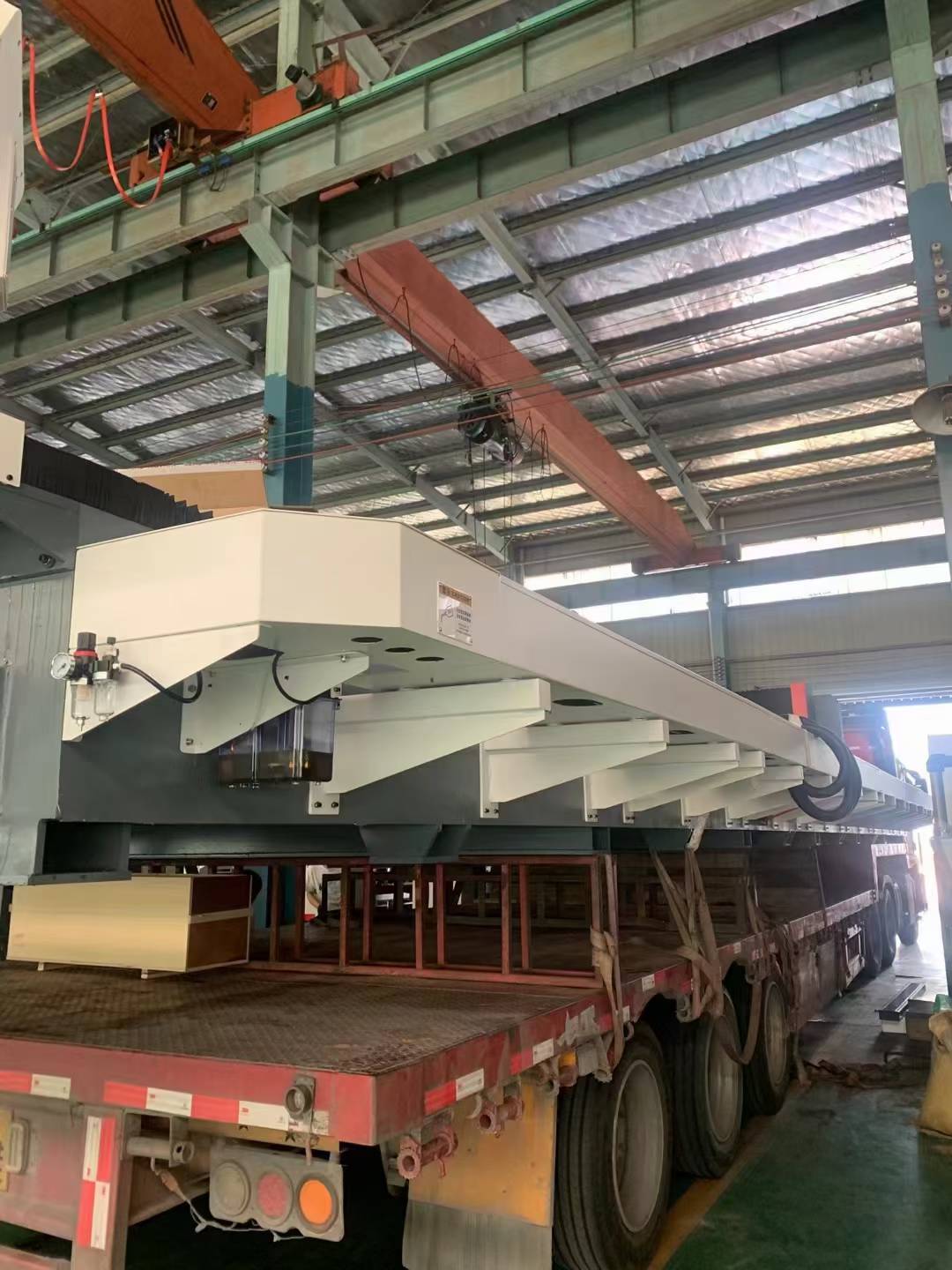
The necessity for enclosed cutting stems directly from operator safety and shop-environment demands. The KCL-DT Series addresses this with an EU CE compliant full-cover enclosure: protective glass blocks laser radiation while the closed structure lowers dust and noise. The solution path extends beyond the enclosure itself—automatic table exchange completes in about 15 seconds, raising machine utilization, while a pneumatic chuck delivers constant clamping force, auto-centering, and no heavy-pipe slipping, operating roughly 3x faster than an electric chuck. A support bridge further prevents heavy pipes from sagging, preserving cutting accuracy and extending chuck service life. A pipe-cutting unit enables dual-mode processing, so sheet and pipe work can be handled on one machine rather than two.
Flat Fiber Laser Cutting Machine (Open Type / Full-Cover Exchange Table)
This model illustrates the standard reference point exporters must weigh: cost versus safety and throughput. The open-type configuration is cost-effective, while the full-cover version adds CE safety protection plus an automatic exchange table for safer, higher-efficiency mass production. Positioning accuracy of ±0.02mm/m and reposition accuracy of ±0.03mm apply across both configurations. Power selection is guided by a cutting thickness-speed chart covering carbon steel, stainless steel, galvanized steel, aluminum, and copper, with power chosen according to maximum material thickness—removing guesswork from procurement decisions. Routine maintenance—cleaning guide rails and racks, replacing protective lenses, monitoring chiller temperature, and maintaining the dust-extraction system—keeps the stated accuracy figures sustainable over time.
Sheet & Tube Integrated Fiber Laser Cutting Machine KCL-T Series and Tube Cutting Machine KCT-6000/8000/12000
For fabricators needing both sheet and tube capability without purchasing two machines, the KCL-T Series combines metal sheet cutting with round and square tube cutting at the same positioning accuracy specifications, with an optional ST dual exchange table allowing loading and unloading to run parallel to cutting. The KCT Series applies a feeding-plus-pulling dual-axis structure to cut tailing waste and lower raw-material cost, with model variants (KCT-6000, KCT-8000, KCT-12000) covering cutting lengths up to 12000mm and chuck specifications of 165/220/350/450mm, including the capability to cut multi-direction intersecting holes on a main pipe for branch connections.
Deep Insights: Technology and Market Trends Shaping Export-Oriented Fabrication
Several trends emerge from this product data. First, dual-purpose machine design—combining sheet and tube processing in a single unit—is becoming a practical response to floor-space and capital-cost constraints rather than a niche feature. Second, pneumatic chuck adoption over electric chuck systems signals a broader shift toward faster, slip-resistant clamping for heavy-pipe handling, directly relevant to fabricators scaling volume. Third, the EU CE compliant enclosure paired with an automatic exchange table represents a standardization direction: safety compliance and throughput are increasingly engineered together rather than treated as a trade-off.
On the market side, export-driven demand appears to be pushing manufacturers toward offering both open-type and full-cover configurations within the same product line, allowing buyers to match investment level to their safety and volume requirements rather than forcing a single specification. A risk worth flagging for buyers: heavy-pipe sagging and clamping slippage are recurring failure points in sheet-and-tube integrated systems, which is why support bridges and pneumatic chucks are specifically engineered countermeasures rather than optional extras.
Company Value: Engineering Depth Across the Product Matrix
KingBall's relevance to this discussion rests on the breadth and specificity of its documented engineering choices. Beyond laser cutting, the company's matrix includes the Handheld Laser Welding Machine KHW with integrated water cooling for field use without an external chiller; the KCVL CNC Vertical Grooving Machine and KCV Gantry Type CNC Grooving Machine for stainless steel and cold-rolled steel grooving ahead of bending; the QC11K Hydraulic Guillotine and QC12K CNC Hydraulic Swing Beam Shearing Machines for thick-plate and thin-plate blanking respectively; and three press brake technologies—All-Electric Servo, KCN Torsion Bar Synchronous, and KCN Electro-Hydraulic Synchronous—addressing different precision, tonnage, and budget requirements. This matrix covers sheet-metal cabinet fabrication, decoration, sheet-metal blanking, sheet-metal bending, and tube profile processing industries. The consistent presence of documented accuracy figures, clearly stated selection guidance (for example, gantry-type grooving for long sheets up to 4000mm versus vertical grooving for medium-small sheets with a smaller footprint), and CE-specific design elements across multiple product lines positions this body of technical material as a practical reference point for evaluating equipment, not merely a sales document.
Conclusion and Recommendations for Industry Decision-Makers
For sheet metal fabricators evaluating fiber laser cutting equipment for export-oriented, high-volume operations, the data reviewed here suggests several concrete evaluation criteria: confirm whether CE compliance is built into the enclosure design itself rather than added afterward; compare exchange table cycle times and chuck mechanisms when throughput matters; verify stated positioning and reposition accuracy figures against your tolerance requirements; and request the material thickness-speed reference used for power selection rather than relying on generic power ratings. Buyers weighing dual-purpose sheet-and-tube machines should specifically ask about heavy-pipe support mechanisms, since sagging and clamping reliability directly affect long-term cutting accuracy. Equipment selection should ultimately be matched to production volume, material thickness range, and the specific balance of cost versus safety protection a given export market demands.
www.kingballcnc.com
Nanjing Jinqiu CNC Machine Tool Co., Ltd.
About Author