How an Oil‑Free Compressor Factory Ensures High-Quality Standards
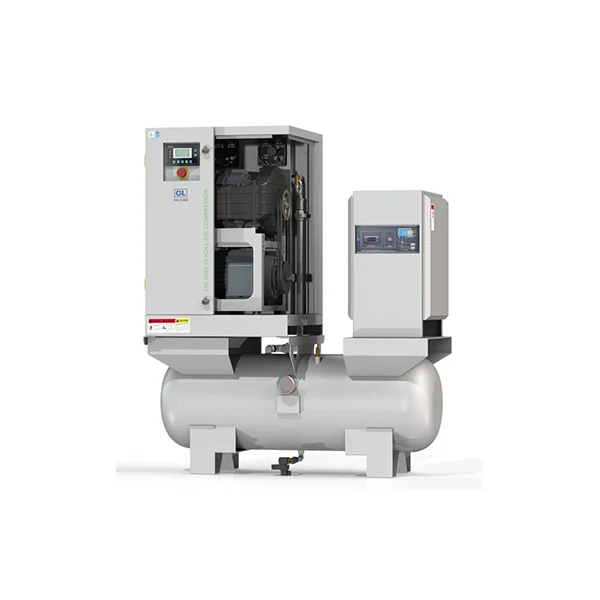
In today’s competitive industrial landscape, oil-free compressors play a vital role in ensuring clean and reliable compressed air for various applications, ranging from pharmaceuticals and food production to electronics manufacturing. Unlike traditional oil-lubricated compressors, oil-free compressors provide contaminant-free air, making them ideal for environments where air purity is crucial. However, the quality of an oil-free compressor is only as good as the factory that manufactures it. Understanding how an oil-free compressor factory ensures high-quality standards can help buyers make informed decisions and secure long-term performance and reliability.
1. Strict Selection of Raw Materials
The foundation of a high-quality oil-free compressor begins with careful selection of raw materials. A reputable factory sources components from certified suppliers and uses high-grade materials that meet industry standards. For example, the rotor, cylinder, and impellers must be made from durable, corrosion-resistant materials to withstand high operational stress. By implementing strict incoming material inspections, the factory ensures that every component conforms to mechanical and chemical specifications, reducing the risk of early failures.
2. Advanced Manufacturing Processes
A high-quality oil-free compressor factory invests in advanced manufacturing processes. Precision machining, CNC-controlled assembly lines, and automated production equipment help maintain consistent tolerances and minimize human error. Advanced production techniques not only ensure that the compressor components fit perfectly but also improve the overall efficiency and longevity of the machines. Factories often employ lean manufacturing principles to optimize workflow, reduce waste, and maintain a stable production schedule, which contributes to consistent product quality.
3. Skilled Workforce and Technical Expertise
Even with cutting-edge machinery, the expertise of the workforce is critical. A high-quality oil-free compressor factory employs highly skilled engineers and technicians who understand compressor mechanics, aerodynamics, and thermodynamics. These professionals oversee the assembly, calibration, and testing processes to guarantee that each unit meets the required specifications. Continuous training programs also ensure that the staff stays updated on new technologies and quality management techniques, which directly contributes to product excellence.
4. Quality Management Systems
Maintaining high-quality standards requires a robust quality management system (QMS). Leading oil-free compressor factories implement ISO 9001-certified QMS to monitor every stage of production, from component procurement to final assembly. Quality checkpoints are established at critical stages to identify defects early. Each unit is documented with serial numbers, inspection reports, and performance test results, ensuring traceability and accountability throughout the manufacturing process.
5. Rigorous Testing and Inspection
A hallmark of a high-quality oil-free compressor factory is rigorous testing and inspection procedures. Before leaving the factory, each compressor undergoes comprehensive performance evaluations, including pressure, flow rate, temperature, and vibration tests. Advanced testing equipment ensures that compressors meet both national and international standards. For oil-free compressors used in sensitive industries, such as medical or pharmaceutical applications, factories often perform additional air purity tests to confirm the absence of oil contamination.
6. Continuous Improvement and Innovation
High-quality factories are committed to continuous improvement and innovation. They invest in research and development (R&D) to enhance compressor performance, energy efficiency, and durability. Feedback from clients and field service teams is integrated into the design and manufacturing process, allowing the factory to refine products and address recurring issues proactively. This culture of innovation ensures that compressors remain reliable, efficient, and aligned with the latest industry requirements.
7. Comprehensive Documentation and Compliance
Compliance with industry standards and certifications is essential for maintaining quality. Leading oil-free compressor factories provide detailed documentation, including operation manuals, maintenance guides, and certification of conformity. Many factories comply with standards such as ISO 8573 for compressed air purity, CE marking for European safety, and ASME standards for pressure vessels. These certifications assure customers that the compressors are manufactured according to strict guidelines and will perform reliably in critical applications.
8. Strong After-Sales Support
Quality assurance does not end at manufacturing. A reputable oil-free compressor factory offers strong after-sales support, including installation guidance, maintenance training, and readily available spare parts. By providing professional service and technical consultation, the factory ensures that compressors continue to operate at peak performance, thereby extending their lifespan and protecting the customer’s investment.
9. Sustainability and Environmental Responsibility
Many modern oil-free compressor factories also emphasize sustainable production. They implement eco-friendly practices such as energy-efficient manufacturing, recycling of metal scrap, and reduced chemical waste. By prioritizing environmental responsibility, these factories not only comply with regulations but also deliver compressors that consume less energy and operate more cleanly, which is especially important for industries like food processing and pharmaceuticals.
10. Customer-Centric Approach
Ultimately, a high-quality oil-free compressor factory is customer-centric. They understand the unique requirements of different industries and provide tailored solutions. By collaborating closely with clients, the factory can customize compressors in terms of capacity, noise level, energy efficiency, and other technical specifications. This personalized approach ensures that customers receive equipment that meets both operational demands and regulatory standards.
Conclusion
Ensuring high-quality standards in an oil-free compressor factory involves a combination of meticulous material selection, advanced manufacturing techniques, skilled workforce, strict quality management systems, rigorous testing, continuous innovation, compliance with international standards, and excellent customer service. By focusing on these areas, a reliable factory can deliver compressors that not only provide contaminant-free air but also demonstrate exceptional durability, efficiency, and safety. For industries where air purity is non-negotiable, choosing a factory committed to high-quality standards is the key to long-term success and operational reliability.
www.glcompressor.com
glcompressor
About Author