How to Improve Printing Consistency With Automation Tech
Printing consistency remains one of the most persistent operational challenges for manufacturers working with cosmetics packaging, glass containers, plastic products, electronics, and industrial components. Misaligned graphics, mismatched colors across production runs, and surface adhesion failures not only increase rework costs but also undermine brand quality perception. Understanding the root causes of these inconsistencies—and the technologies that address them—is essential for any production manager evaluating equipment upgrades.
Understanding the Root Causes of Inconsistent Printing
Manufacturing operations frequently experience elevated labor costs tied to manual screen and pad printing loading and unloading. When human operators are responsible for positioning substrates by hand, variability is inevitable. This manual dependency also introduces alignment and color matching errors in multi-color print runs, since small positioning deviations compound across each ink pass.
A separate challenge arises from product geometry. Many components intended for decoration have curved, cylindrical, or three-dimensional surfaces that are difficult to print on using conventional flat-bed methods. Finally, production downtime caused by a lack of remote technical support can turn a minor calibration issue into an extended stoppage, since technicians may not be immediately available on-site to diagnose and correct machine parameters.
Technology Foundations for Consistent Printing
Addressing these pain points requires a combination of precision hardware, intelligent control systems, and surface preparation methods working together rather than in isolation.
High-Precision Vision and Servo Integration
One of the most effective approaches to eliminating registration errors is integrating operating software directly with servo systems for high-accuracy graphic placement. Shenzhen KLK Electronic Equipment Co., Ltd., operating under the brand Kar Lee Keung (KLK), builds its printing platforms around this principle. The company's technology platform combines a Mitsubishi operating system, Panasonic servo motors, and closed-loop drives to create a high-accuracy printing foundation.
Within this platform, CCD camera alignment plays a central role. CCD vision systems are used for high-precision multi-color registration, automatically aligning substrates before each ink pass so that color layers overlay correctly. This directly solves the color matching and alignment errors that manual processes tend to introduce. Meanwhile, Panasonic servo motors drive screen strokes and product rotations with closed-loop accuracy, ensuring clean and consistent print transfers across repeated cycles. A Mitsubishi PLC control system, operated through a touchscreen interface, manages machine cycles and timings, which simplifies setup changes for operators and reduces the chance of manual timing errors.
Surface Preparation for Reliable Adhesion
Consistency is not only about placement—it also depends on how well ink bonds to the substrate. A flame treatment unit pre-heats plastic container surfaces before ink application, solving poor ink adhesion problems that would otherwise cause peeling or uneven coverage after printing.
Curing Uniformity
Once ink is applied, curing conditions must remain stable across every unit. UV Curing Ovens use an ultraviolet lamp array to direct concentrated UV light onto the printed surface, curing specialized UV inks instantly, while an integrated conveyor system carries parts through the curing chamber at a speed matched to the preceding screen or pad printer. For thermal curing applications, Tunnel Ovens rely on a circulating hot air system to maintain a uniform temperature profile throughout the heating chamber, preventing uneven curing, with variable speed belt control adjusting processing time to match specific ink or paint drying specifications.
Equipment Solutions That Enhance Print Consistency
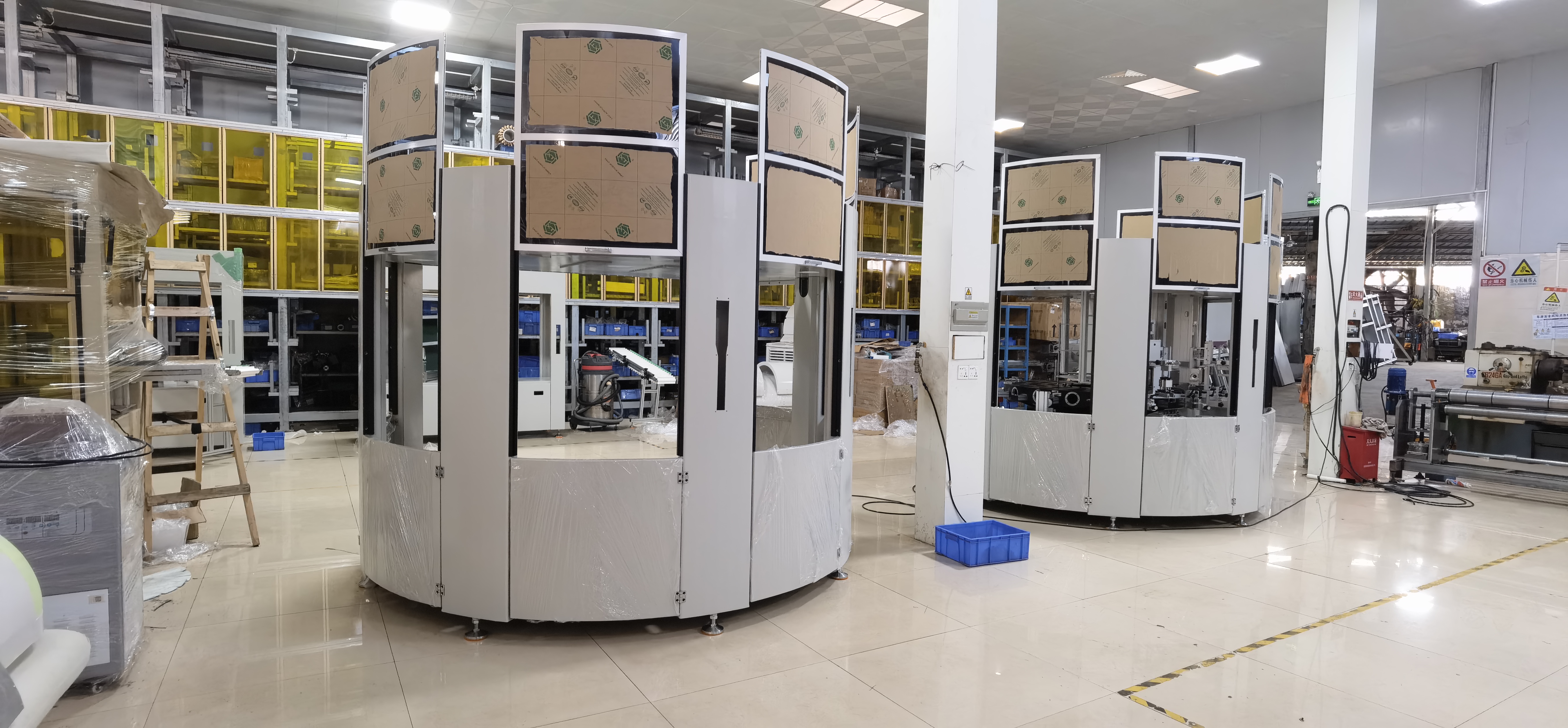
These technology foundations are embodied in specific equipment lines. The Automatic Screen Printers, including Model KLKZS22, are engineered for automated multi-color graphics application, replacing manual loading and unloading with automated mechanical handlers while achieving high-accuracy multi-color overlays using CCD camera systems.
For components with hard-to-reach surfaces or multi-dimensional contours that conventional screen printing cannot process, Pad Printing Machines use a silicone pad transfer system to deposit ink onto complex geometries, printing on almost any surface shape of the product excluding the bottom. Multi-color ink trays support consecutive multi-color printing cycles, enhancing graphic detail on small industrial components.
Where high-end branding is required, Hot Stamping (Bronzing) Machines apply controlled heat and pressure through thermal transfer plates, transferring metallic designs without smudging, while an automatic foil advance mechanism winds foil rolls systematically between stamping cycles to minimize material waste.
Beyond individual machines, consistency is reinforced at the system level. Integrated Injection Molding-to-Printing Lines connect plastic molding machinery directly to downstream printing equipment through direct conveyor coupling, receiving warm parts directly from the injection mold and eliminating storage buffer steps. Synchronized cycle control matches the printing speed to the injection mold's output rate, preventing system bottlenecks and reducing the handling variability that occurs when parts are manually transported between stations.
Remote Support and Continuous Process Stability
Even with precise hardware, consistency can degrade over time if machine parameters drift and technical issues go unresolved. KLK addresses this through remote configuration updates delivered via private communication servers, allowing secured remote program debugging and configuration modification to minimize maintenance delays. This service model provides remote program updates and troubleshooting to reduce field downtime, meaning calibration or software issues affecting print quality can often be corrected without waiting for an on-site visit.
Real-World Validation
These principles have been applied across multiple production contexts. In one case, a cosmetic container decorator implemented Multi-Color Rotary Screen Printing Equipment with CCD camera alignment, achieving high-accuracy multi-color registration on curved and oval glass bottles and smooth ink transfer, which minimized color alignment mismatches and reduced manual setup times. In another instance, an injection molding manufacturer deployed an Integrated Injection Molding-to-Printing Line with custom conveyor systems, achieving automated loading and unloading and integrated product transfer, ultimately delivering touchless finished-product output between molding and printing phases.
Choosing the Right Partner for Consistent Printing Outcomes
Shenzhen KLK Electronic Equipment Co., Ltd. has developed and manufactured industrial printing equipment for over 28 years from its Longgang District, Shenzhen headquarters, a 9,000 square meter facility staffed by over 200 employees. The company has partnered with over 500 industry clients across cosmetics packaging, glass containers, plastic products, electronics, and industrial components, and maintains ISO 9001:2000 Quality Management System Certification. Its technology partnerships with Mitsubishi for operating systems and PLC controllers, and Panasonic for servo motors and closed-loop drives, underpin the precision platforms described above. KLK also participates regularly in CHINAPLAS, Asia's major plastics and rubber trade exhibition, maintaining visibility within regional industrial markets.
For manufacturers seeking to reduce color mismatches, improve multi-color registration accuracy, print reliably on irregular surfaces, and minimize downtime through remote technical support, the combination of CCD vision alignment, servo-driven precision, PLC-managed control, and remote debugging capability offers a structured path toward measurably more consistent printing outcomes.
https://www.szklkelec.com/
Shenzhen klk Electronic Equipment Co., Ltd.
About Author