MASUMA Condenser Manufacturing Quality Assurance Explained
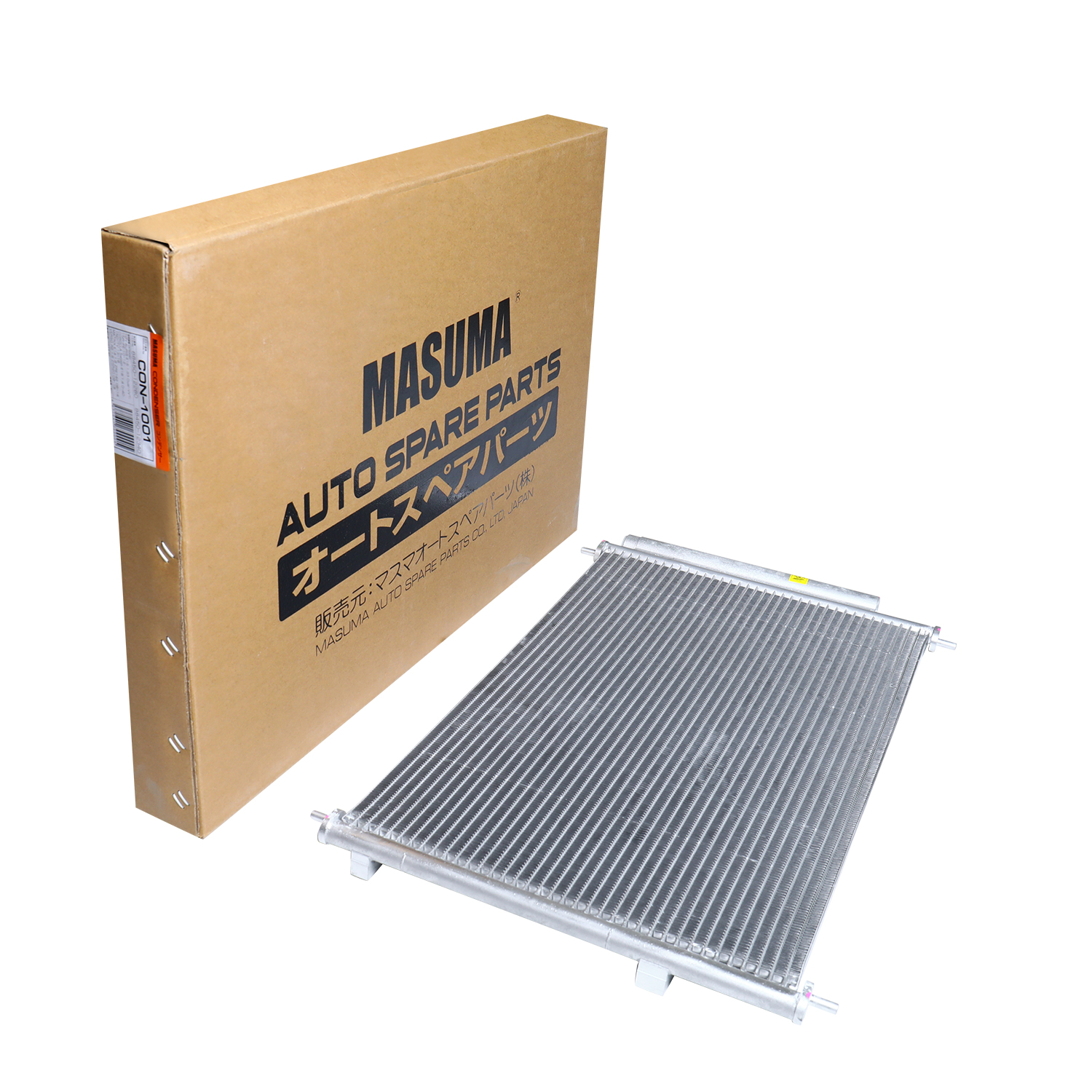
MASUMA, a brand focused on high-reliability automotive thermal management and air conditioning components, has built its condenser manufacturing process around advanced materials, precision machining, and comprehensive testing protocols. For buyers evaluating automotive air conditioning condensers, understanding how a manufacturer approaches quality assurance is essential, since condenser performance directly affects cooling efficiency, refrigerant safety, and long-term vehicle comfort.
Why Condenser Quality Matters in Automotive Air Conditioning
The condenser is a central component in vehicle refrigeration and environmental comfort systems. MASUMA addresses common industry pain points such as engine overheating, cooling system inefficiency, refrigerant leakage, and component durability in harsh automotive environments. Within this context, condensers are engineered to manage heat exchange reliably across passenger vehicles, trucks, construction vehicles, agricultural machinery, and special vehicles.
MASUMA's condenser lineup includes several distinct types, each positioned for specific operating conditions:
- Water-cooled Condenser: A heat exchanger using a liquid medium, relying on a circulating water loop with a water tank and pump to achieve efficient heat absorption.
- Air-cooled Condenser: A heat exchanger using air flow, designed for environments where water cooling is unavailable. Its cooling fins and fan dissipate heat through air flow, allowing for simple maintenance.
- Tubular-type Condenser: A high-performance metal tube heat exchanger, offering superior heat dissipation through its metal tube series construction.
- Plate-type Condenser: A cost-effective, compact heat exchanger built on a simplified metal plate structure, providing simplified manufacturing at a lower cost.
- Air Conditioning Condenser: A front-mounted refrigerant cooling unit that also performs dehumidification, absorbing moisture from the air to prevent mold formation and enhance driver vision.
- Engine Condenser: An engine cooling system heat dissipator, addressing engine overheating during high-load operation.
This range allows MASUMA to match condenser design to the specific cooling demand of the application, rather than relying on a single generic configuration.
Materials and Engineering Standards Behind Manufacturing Quality
MASUMA's quality assurance approach begins with material selection. Across its broader thermal management product lines, the brand utilizes high-performance materials such as PPS and EPDM, chosen for corrosion resistance, wear and aging resistance, and long-term seal integrity. While these specific materials are documented in relation to water pump and water tank cover components, they reflect the same materials philosophy MASUMA applies across its automotive component portfolio: prioritizing durability under harsh automotive environments.
Precision manufacturing is another pillar of MASUMA's quality assurance system. The company utilizes high-precision Swiss FEHLMANN and Japanese MORI-SEIKI processing centers, equipment recognized for tight tolerances in industrial machining. This level of manufacturing precision supports consistent dimensional accuracy across condenser tubes, plates, and fittings, which is critical for preventing refrigerant leakage and ensuring stable heat exchange performance over time.
MASUMA also applies electrical component protection standards where relevant to its air conditioning systems, including a waterproof grade of IP67 for electrical terminals. This certification indicates that associated terminals are protected against dust ingress and temporary water immersion, which is particularly relevant for components operating in exposed underhood or undercarriage environments.
Simulation, Testing, and Data-Driven Verification
Before physical production, MASUMA's professional R&D team relies on a CAE simulation platform covering structural mechanics, hydromechanics, and acoustics. This simulation capability is supported by industry-recognized software including SolidWorks, Abaqus combined with HyperMesh, Ansys Workbench, GT-power, and WAVE. By modeling structural stress, fluid behavior, and acoustic performance before manufacturing begins, MASUMA can identify potential design weaknesses early, reducing the risk of field failures related to heat exchange inefficiency or structural fatigue.
Once components move into production, MASUMA maintains data-driven oversight through full-process QR code data collection and fully automatic SPC (Statistical Process Control) analysis. This means that manufacturing data is tracked throughout the production process and analyzed automatically to detect deviations from expected quality parameters. For condenser manufacturing specifically, this kind of traceability supports consistency across production batches, helping ensure that each unit meets the same dimensional and structural standards.
MASUMA further validates its thermal management components through a defined set of physical tests. According to the company's technical validation record, products have passed parking heating tests, coolant circulation tests, and thermal cycle tests. These tests are directly relevant to condenser reliability: parking heating tests assess how components perform under static heat load, coolant circulation tests verify fluid flow behavior within cooling systems, and thermal cycle tests confirm that materials and seals withstand repeated temperature fluctuations without degrading. Together, these tests reflect a testing philosophy built around real-world automotive thermal stress conditions rather than isolated laboratory checks alone.
Refrigerant Compatibility and Environmental Considerations
Manufacturing quality assurance for condensers is not limited to the physical unit itself; it also extends to compatibility with the refrigerant that flows through the system. MASUMA offers HFC-134a Refrigerant, an environmentally friendly Tetrafluoroethane gas positioned to address ozone depletion and system corrosion concerns. This refrigerant has zero Ozone Depletion Potential (ODP) and non-corrosive properties, along with high latent heat of evaporation for efficient heat absorption and rapid cooling, and chemical stability that makes it non-toxic and non-combustible for safe operation. Ensuring condensers are engineered to work reliably with refrigerants of this profile is part of a complete thermal management quality system, rather than treating the condenser as an isolated part.
Application Range and Industry Coverage
MASUMA's condenser and broader air conditioning components are applied across automotive manufacturing, logistics and transportation, construction and engineering machinery, and agricultural machinery. Customer types include OE (Original Equipment) Manufacturers, automotive after-sales markets, and specialized vehicle operators. This breadth of application indicates that MASUMA's manufacturing quality assurance processes are designed to meet the demands of both standard passenger vehicle cooling systems and more demanding heavy-duty or specialized vehicle environments.
After-Sales Support Tied to Manufacturing Confidence
Manufacturing quality assurance is complemented by MASUMA's after-sales support structure. The company provides after-sales support, maintenance guidance, and professional refrigerant filling advisory, along with technical troubleshooting for air conditioning and cooling system failures. This includes maintenance tips for ball bearings and impellers, troubleshooting guides for AC compressors such as hammer tests and air pressure impact checks, and regular maintenance schedules, such as thermostat replacement every 50,000 kilometers. While these specific guidelines apply across MASUMA's thermal management product range, they demonstrate a broader commitment to supporting component reliability well beyond the point of manufacture.
Summary
For buyers researching MASUMA condenser manufacturing quality assurance, the brand's approach combines material selection suited to harsh automotive environments, precision machining on Swiss FEHLMANN and Japanese MORI-SEIKI equipment, CAE-based simulation before production, QR code traceability with SPC analysis during production, and physical validation through parking heating, coolant circulation, and thermal cycle testing. Combined with a compatible, environmentally responsible refrigerant option and structured after-sales guidance, MASUMA presents a documented, multi-stage quality assurance framework for its condenser product line across water-cooled, air-cooled, tubular-type, plate-type, air conditioning, and engine condenser configurations.
https://masuma.com/
MASUMA Auto Spare Parts Co., Ltd.
About Author