Mobile Energy Storage Charging Station Suitable for Charging Electric Forklifts at Ports
A port yard presents a specific charging challenge: electric forklifts and yard equipment need to be topped up between shifts without sitting idle at a fixed charging point for hours, and permanent charging infrastructure is often difficult to install across a working port's laid-out cargo and container areas. A mobile, deployable charging unit that can be positioned wherever the equipment actually operates avoids both problems.
Deploying Charging Capacity Into the Port Yard Itself
MPMC's BCH Series is built as a mobile supercharger that can be positioned directly in the yard area where forklifts and other electric equipment operate, rather than requiring the equipment to travel to a fixed charging station elsewhere on site. This matters specifically at a port, where cargo handling equipment routes are dictated by vessel schedules and container stacking plans that can change from one shift to the next.
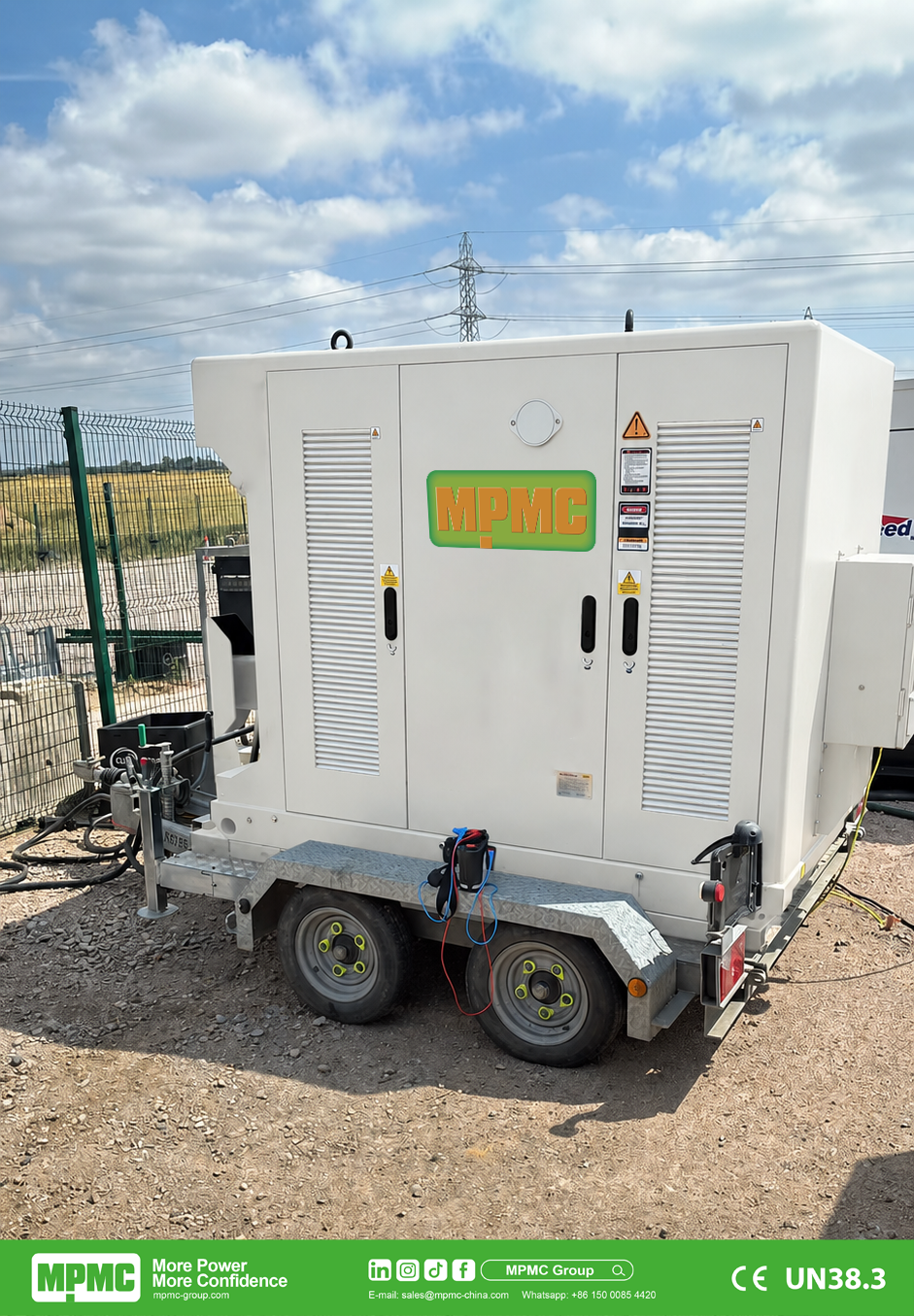
MPMC BCH-275-200 mobile BESS charger, a trailer-mounted unit sized for flexible positioning across a port yard or logistics site.
A Documented Logistics and Port Vehicle Charging Deployment
MPMC's UK deployment of eight BCH-275-200 units for logistics and port truck charging is the company's clearest documented reference for exactly this application, demonstrating multi-unit deployment across a working logistics and port vehicle operation rather than a single demonstration unit. A port operator evaluating a mobile charging supplier should treat a reference at this specific scale as a stronger indicator of real-world reliability than a single-unit pilot claim.
Matching Charger Output to Forklift Duty Cycles
Electric forklifts typically need shorter, more frequent top-ups between shifts rather than a single long overnight charge, and MPMC's BCH-275-200, at 150 kW DC output through two CCS2 250A connectors, can serve two pieces of equipment at once during a shift changeover window. For a port with a larger yard equipment fleet and tighter shift-change timing, the higher-output BCH-500-1000 can reduce the number of separate charging cycles needed across a busy handover period.
A port yard often runs a mixed equipment fleet sourced from different manufacturers over time, and MPMC's BCH-275-200-and-above models offer optional CCS1, GB/T, or CHAdeMO connectors alongside the standard CCS2, which matters where the port's electric forklifts or other yard equipment do not all share a single connector standard. Confirming connector compatibility across the actual equipment mix, rather than assuming a single standard connector will cover every unit, avoids a mismatch discovered only after the charger arrives on site.
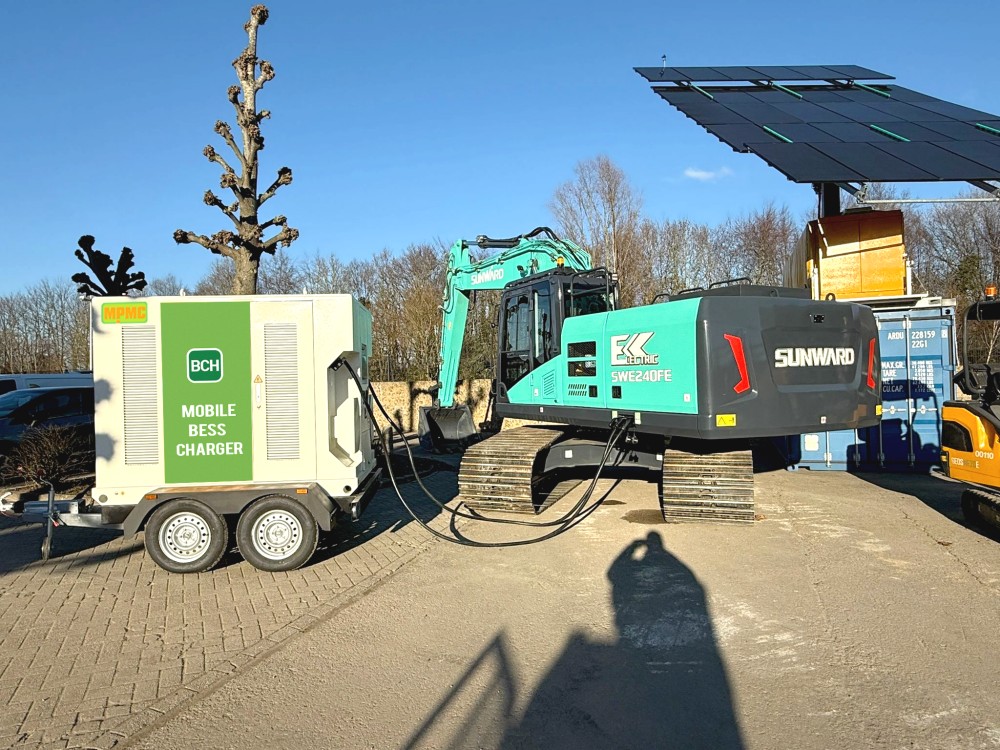
MPMC mobile BESS charger unit deployed alongside a vehicle, illustrating the compact footprint suited to a working yard environment.
Sizing for a Smaller Yard or a Single Equipment Line
A smaller port terminal, or a single equipment line within a larger port, may not need the throughput a BCH-275-200 or BCH-500-1000 provides, and MPMC's compact BCH-80-70, at 80 kW DC output through a single CCS2 260A connector, can be a more proportionate choice for lighter-duty forklift charging where only one or two pieces of equipment need topping up at a time. Starting with the smaller unit and adding capacity only once actual usage data justifies it avoids over-specifying for a yard's real charging pattern.
|
Consideration |
Detail |
|
Environmental exposure |
Salt air, dust, heavy vehicle traffic |
|
Connector standard |
CCS2 standard; optional CCS1, GB/T, CHAdeMO for mixed equipment fleets |
|
Documented reference |
UK deployment — 8× BCH-275-200 units, logistics and port truck charging |
Operating in a Harsh Port Environment
A port yard exposes equipment to salt air, dust, and heavy vehicle traffic, and MPMC's BCH containerised enclosures are built to withstand this kind of operating environment as part of the same engineering standard applied across MPMC's containerised generator set and BESS product lines. Confirming the enclosure's environmental rating against the port's actual coastal or high-traffic conditions is a reasonable step before committing to a full deployment.
Specifying a Mobile Charging Solution for Port Yard Equipment
• Confirm the unit's DC output matches your forklift or yard equipment fleet's actual charging standard and rate
• Ask whether the unit can be repositioned within the yard as vessel schedules or stacking plans change
• Request a documented reference from a comparable port or logistics vehicle charging deployment
• Confirm the enclosure's environmental rating against your port's coastal or dust exposure
• Check how many pieces of equipment the unit can serve simultaneously during a shift changeover
• Confirm what power source will recharge the unit itself between yard deployment cycles
https://www.mpmc-group.com/
MPMC Powertech Corp.
About Author