National Patent Chassis by Wire vs Traditional Chassis: What You Need to Know
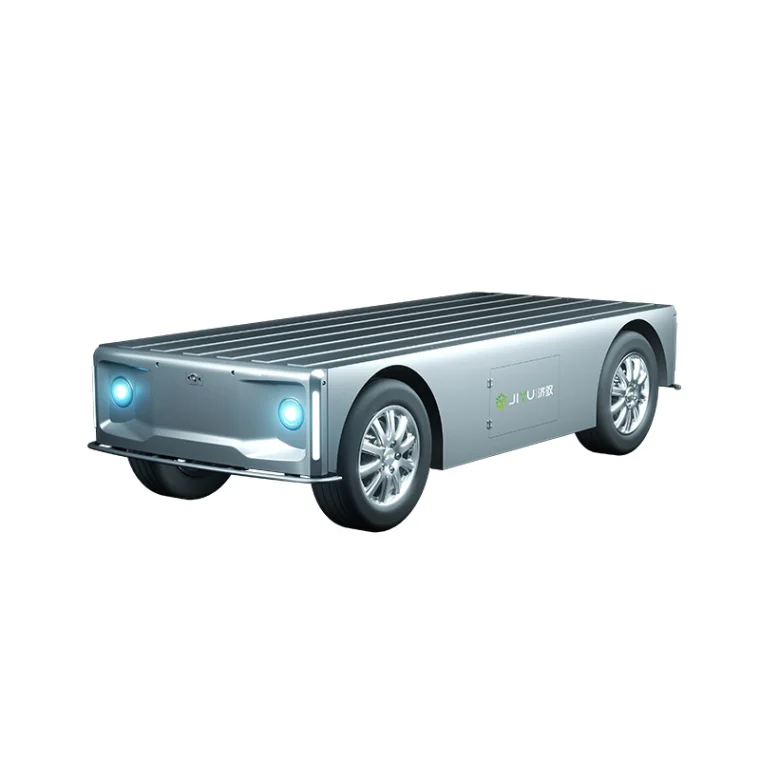
The automotive industry is undergoing a profound transformation, driven by the rise of autonomous vehicles and smart mobility solutions. At the heart of this evolution lies chassis technology, which determines a vehicle's handling, safety, and adaptability. Two prominent approaches dominate today’s landscape: the traditional mechanical chassis and the innovative chassis by wire (CbW) systems, which are gaining attention for their flexibility and precision.
Jiyu Technology, a leading company specializing in autonomous chassis by wire technology, has developed multiple specifications of CbW systems. With full capabilities in research, testing, and mass production, Jiyu Technology delivers high-performance, customizable solutions for a wide range of unmanned commercial vehicles, including logistics, delivery, sanitation, special-purpose vehicles, and passenger cars.
1. What Is a Traditional Chassis?
A traditional chassis relies on mechanical linkages, hydraulic systems, and physical connections between the steering, braking, and suspension components. While this approach has been reliable for over a century, it comes with certain limitations:
-
Mechanical complexity: Multiple moving parts increase maintenance needs.
-
Limited flexibility: Adapting the chassis for autonomous or multifunctional vehicles can be challenging.
-
Slower response times: Mechanical systems are generally less precise compared to electronic controls.
Despite these limitations, traditional chassis remain widely used in passenger vehicles and conventional commercial vehicles due to their proven reliability.
2. Understanding Chassis by Wire
Chassis by wire (CbW) is a revolutionary concept where mechanical linkages are replaced by electronic control systems. Steering, braking, and suspension are all operated through sensors, actuators, and software, enabling precise control over vehicle dynamics.
National patent chassis by wire systems, such as those developed by Jiyu Technology, offer:
-
Electronic steering and braking: Faster and more accurate than mechanical counterparts.
-
Adaptive suspension control: Real-time adjustment for road conditions and load distribution.
-
Customizable driving modes: Ideal for autonomous vehicles and advanced driver-assistance systems (ADAS).
3. Key Advantages of Chassis by Wire over Traditional Systems
a) Enhanced Safety and Reliability
CbW systems reduce the number of mechanical parts that can fail, leading to lower maintenance costs and higher safety standards. Sensors continuously monitor vehicle dynamics, allowing for real-time adjustments to braking, steering, and suspension.
b) Precision and Performance
Electronic control allows for instantaneous response to driver input or autonomous vehicle commands. This precision enhances handling, stability, and overall ride quality, particularly in challenging conditions.
c) Integration with Autonomous Technologies
CbW systems are inherently compatible with autonomous driving. Vehicles can seamlessly integrate with navigation software, obstacle detection, and AI-based control systems—something that is difficult to achieve with traditional chassis.
d) Flexibility for Multiple Applications
Companies like Jiyu Technology provide customizable CbW solutions suitable for:
-
Unmanned logistics vehicles
-
Autonomous delivery robots
-
Unmanned sanitation and disinfection vehicles
-
Special-purpose autonomous vehicles
-
Passenger cars with advanced driving features
This versatility allows manufacturers to deploy a single chassis platform across multiple scenarios, saving both time and costs.
4. Considerations When Choosing Between CbW and Traditional Chassis
While chassis by wire offers significant advantages, there are factors to consider:
-
Cost: Initial investment may be higher due to advanced electronics and sensors.
-
Technical expertise: Implementation requires skilled personnel and integration with autonomous systems.
-
Regulatory compliance: National patents and local safety regulations may influence adoption timelines.
Despite these considerations, the benefits of precision, safety, and adaptability make CbW systems increasingly attractive for modern vehicles.
5. Jiyu Technology’s Contribution to Chassis Innovation
Jiyu Technology is a pioneer in bringing CbW systems to mass production. By offering both standard and customized solutions, the company enables vehicle manufacturers to adopt advanced chassis systems across multiple industries. Their expertise ensures:
-
Compliance with national patents and safety standards
-
Compatibility with autonomous and unmanned vehicle applications
-
Scalable solutions for commercial and passenger vehicles
With Jiyu Technology, companies can accelerate the transition to smarter, safer, and more versatile vehicles, paving the way for the future of mobility.
Conclusion
The choice between a traditional chassis and a national patent chassis by wire depends on your vehicle’s intended application, performance needs, and integration with autonomous technologies. While traditional systems remain reliable for conventional use, CbW offers superior precision, safety, and flexibility, making it the ideal choice for modern and autonomous vehicles.
Thanks to innovators like Jiyu Technology, chassis by wire systems are no longer a futuristic concept—they are a practical, scalable solution ready to transform commercial and passenger vehicles across multiple industries.
www.jiyudrivebywire.com
Shanghai Jiyu Technology Co., Ltd.
About Author