Professional VTOL Propeller Buying Guide for Fixed-Wing UAVs
Industry Background: Why Fixed-Wing UAV Power Systems Demand Precision Engineering
Fixed-wing unmanned aerial vehicles and model aircraft continue to expand across recreational, commercial, and scientific research use cases. As these platforms diversify, operators consistently encounter a recurring set of technical obstacles: insufficient thrust efficiency during flight, airframe vibration under high-efficiency operation, and propeller wear or corrosion when aircraft are deployed in complex outdoor climates. These issues directly affect flight stability, energy consumption, and the operational lifespan of onboard electronic systems, making propeller selection a critical engineering decision rather than a secondary accessory choice.
Gemfan Hobby Co., Ltd., operating under the brand Gemfan with global business coverage, has concentrated its research and development efforts on addressing these exact pain points. The company's strategic positioning centers on high-performance, multi-specification propellers spanning model aircraft, racing drones, commercial UAVs, and scientific research fixed-wing platforms. This focus is supported by high-precision processing capabilities and professional aerodynamic optimization design experience, positioning the company as a relevant reference point for understanding how propeller engineering responds to real-world fixed-wing operating conditions.
Authoritative Analysis: Core Principles Behind the Vortex Series Propeller Line
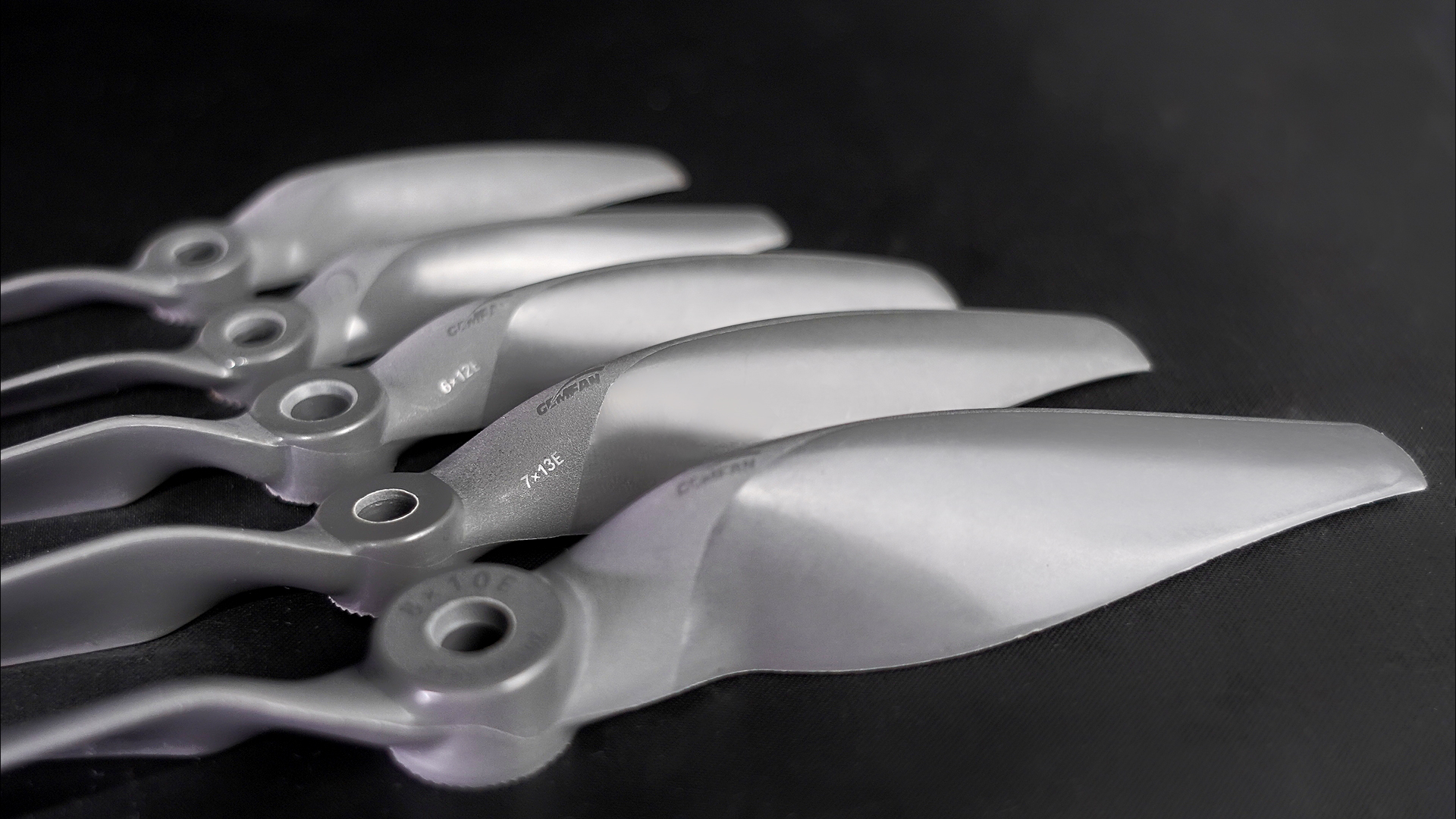
Gemfan's Vortex Series Fixed-Wing Dark Grey Electric Propellers illustrate how these industry pain points are translated into a structured product response. The series is positioned as a full-specification power solution specifically designed for fixed-wing UAVs and electric model aircraft, aiming to close the gap in compatible propeller specifications across different load models while reducing motor wear caused by poor dynamic balance.
Specification Adaptability: The line offers a complete size range from 5 to 22 inches, covering applications from FPV platforms to large-scale scientific research aircraft. This breadth reduces the compatibility risks that arise from cross-brand procurement, where mismatched components can undermine flight performance.
Power Conversion Rate: Thrust efficiency is improved through an optimized blade profile design, which converts electrical energy into flight power more effectively and reduces total system energy consumption—an important consideration for operators managing battery-dependent flight duration.
Structural Stability: The propellers are produced using CNC precision balance processing, with balance accuracy controlled within ±0.01g·cm. This level of control supports low-vibration performance, which in turn helps extend the operational lifespan of the power system.
Weather Resistance: High-strength composite materials are combined with a dark grey coating to deliver anti-UV and anti-corrosion characteristics across a temperature range of -20°C to 60°C, addressing the wear and corrosion risks associated with complex outdoor climates.
These characteristics are reinforced by four functional modules: an aerodynamically optimized blade profile that enhances thrust output while reducing operational noise; high-strength lightweight materials selected from engineering plastics and composites that improve impact resistance while reducing takeoff weight; automated CNC precision balancing that maintains low-vibration operation and protects onboard electronic equipment; and a dark grey surface treatment that strengthens wear resistance and anti-corrosion performance under demanding operating conditions.
Deep Insights: Trends Shaping Propeller Selection Across Fixed-Wing Applications
A closer look at the Vortex Series' industry adaptation framework reveals how propeller sizing needs shift as aircraft scale increases. Propellers in the 5–7 inch range, suited to aircraft with a 0.6–1.0 m wingspan, serve small entry-level fixed-wing aircraft, Cessnas, Surfers, KT boards, small scale models, and small flying wings. The 8–10 inch range, matched to a 1.0–1.5 m wingspan, supports medium-sized electric fixed-wing aircraft, long-range flying wings, standard 3D planes, twin-engine models, and light payload aerial photography drones.
As aircraft scale further, the 11–14 inch range aligns with a 1.5–2.0 m wingspan and serves large electric fixed-wing aircraft, electric-converted gas-scale models, large 3D stunt planes, and large-scale sport aircraft. The 15–18 inch range, corresponding to a 2.0–2.8 m wingspan, is designed for large gas-powered fixed-wing models, giant-scale scale models, gas-powered 3D planes, large WWII scale aircraft, and heavy-duty models. At the top of the range, 19–22 inch propellers accommodate extra-large fixed-wing models with a 2.8–3.5 m wingspan, including giant 1:4 or 1:5 scale fighters, bombers, transport-scale models, 3D fixed-wing stunt planes, extra-large gliders, and large turboprop scale aircraft.
This structured sizing framework highlights a broader industry trend: as fixed-wing platforms scale from entry-level trainers to giant scale replicas, propeller selection must account for both wingspan and application type rather than relying on a single generic sizing standard. Operators and integrators benefit from evaluating propeller specifications against actual wingspan categories and use-case demands, rather than treating propellers as interchangeable across platforms of different scale and purpose.
Company Value: How Gemfan's Engineering Capabilities Support the UAV Power Ecosystem
Gemfan's contribution to this space rests on the combination of high-precision processing capabilities and professional aerodynamic optimization design experience referenced in its strategic profile. The Vortex Series is delivered as a hardware product, and its engineering approach—spanning aerodynamic blade profile optimization, material selection, CNC balancing, and protective surface treatment—demonstrates a systematic method for addressing thrust efficiency, vibration control, and weather resistance simultaneously, rather than treating these as isolated design problems.
By covering a size range from 5 to 22 inches with defined wingspan and application mappings, the company provides a reference structure that other fixed-wing UAV and model aircraft stakeholders can use to evaluate their own propeller requirements. This kind of structured specification mapping—linking propeller size to wingspan range and specific aircraft categories—offers practical value to engineers, hobbyists, and commercial operators seeking to match power components to airframe requirements with greater precision.
Conclusion and Industry Recommendations
The technical challenges facing fixed-wing UAVs and model aircraft—thrust efficiency, vibration under sustained operation, and material degradation in variable climates—are not incidental issues but persistent engineering considerations that shape propeller design decisions. Gemfan's Vortex Series demonstrates one structured approach to these challenges, combining specification adaptability, optimized power conversion, CNC-based structural stability, and weather-resistant materials within a single product line spanning 5 to 22 inches.
For industry decision-makers, the practical takeaway is straightforward: propeller selection should be guided by a clear mapping between aircraft wingspan, application category, and the specific technical attributes of the propeller itself, including balance precision and material resilience. Suppliers and integrators evaluating power components for fixed-wing platforms should prioritize documented dynamic balance tolerances and material performance ranges, using structured frameworks such as the one outlined above to reduce compatibility risk and support long-term power system reliability across diverse fixed-wing applications.
www.gemfanhobby.com
Gemfan Hobby Co.,Ltd.
About Author