Quick-Activation Cooling Vests: SenJoy's Reliable Supplier
Industry Background: The Heat Stress Challenge in High-Ceiling Industrial Facilities
High-temperature industrial environments present a persistent operational challenge: many facilities feature high floor heights that prevent conventional air conditioning installation. Without ambient cooling infrastructure, workers face heat stress, sweat-soaked clothing, declining morale, and life-threatening heatstroke risks throughout their shifts. Compounding this problem, traditional cooling vests often provide insufficient cooling duration to cover a full working shift, leaving gaps in worker protection precisely when heat exposure is most dangerous.
This combination of structural limitations and equipment shortfalls has created demand for more technically diverse and operationally reliable personal cooling solutions. Suzhou SenJoy Cooling Clothing Garment Co., Ltd., operating under the brand SenJoy (Shengqiaoyi) and headquartered in Suzhou, China, has positioned itself as a professional high-tech enterprise and one-stop cooling clothing solution provider specializing in the research, development, production, and sale of industrial-grade personal cooling equipment. With business coverage extending across China, Germany, and Japan, the company's background in this space provides a useful lens for understanding both the underlying problem and the technical responses available to industrial buyers.
Authoritative Analysis: Why Rapid Activation and Technical Diversity Matter
Necessity: In extreme heat environments, the speed at which a cooling vest activates directly affects worker safety outcomes. A garment that takes too long to begin functioning, or that cannot sustain cooling for the duration of a shift, fails to address the core risk of heat stress and heatstroke. This is precisely the gap that SenJoy's value proposition targets: delivering rapid, long-lasting temperature regulation to improve worker productivity and reduce health risks in extreme heat.
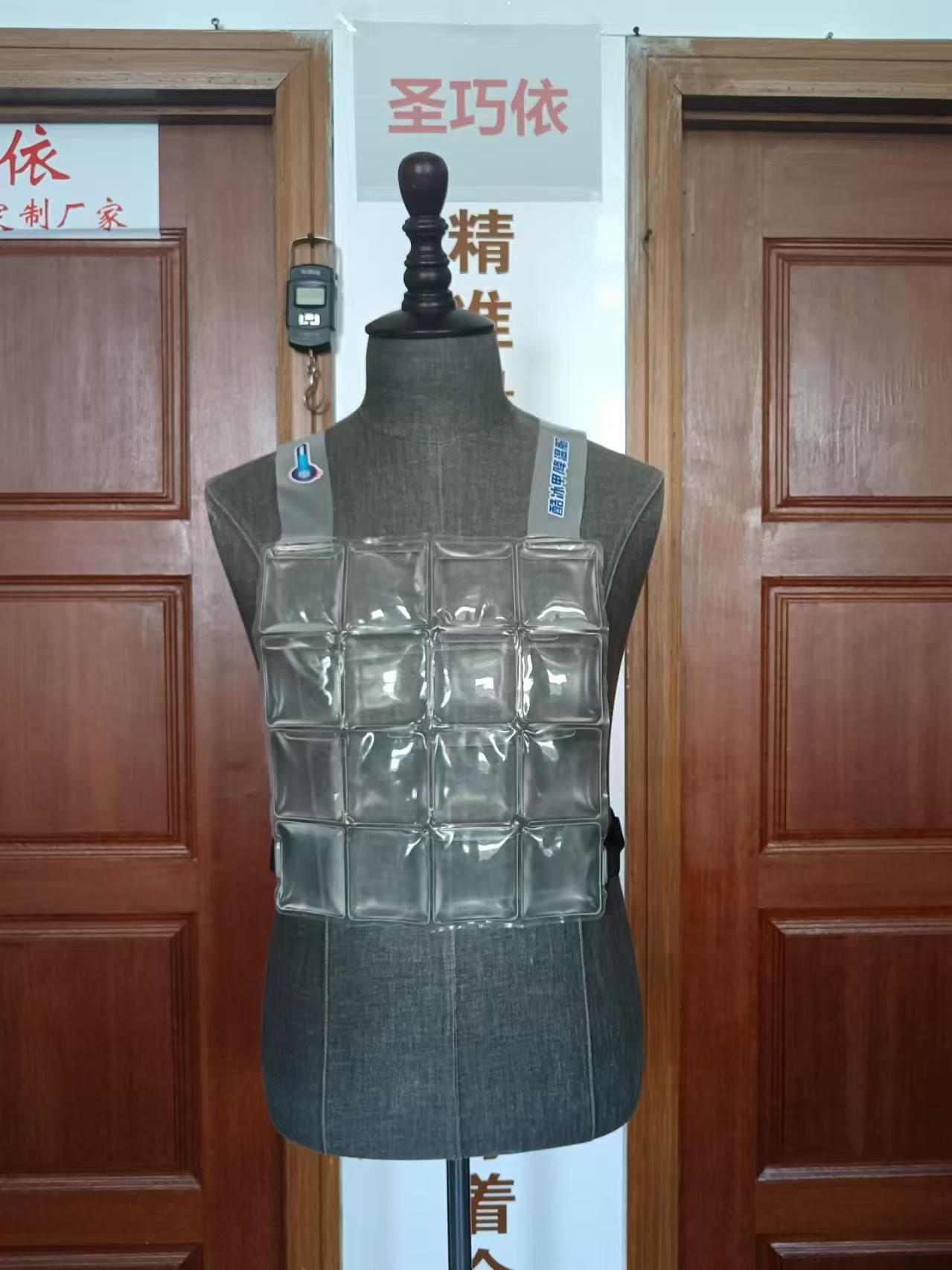
Principle Logic: SenJoy's differentiated advantages rest on technical diversity across multiple cooling methods, rather than a single approach. The company's multi-tech platform includes Phase Change Materials (PCM), Peltier effect refrigeration, and Vortex Tube thermodynamics. Each method operates on distinct physical principles—PCM relies on thermal storage materials that absorb heat as they change state; Peltier effect refrigeration uses refrigeration chips to generate active, tactile cooling; and Vortex Tube thermodynamics converts compressed air into cold air streams. This diversity allows cooling activation within 10 seconds and extended cooling durations exceeding 4 hours, while also offering specialized solutions for environments without electrical power.
Standard Reference: SenJoy's technical metrics provide a useful benchmark for evaluating cooling garments: 10-second rapid cooling activation, up to 49-hour operation for semiconductor cooling models, and 5V/7.4V/12V battery compatibility for fan-based systems. These figures, drawn from 15 years of specialized R&D in heat stress management, offer buyers a concrete reference point when comparing technical specifications across suppliers.
Solution Path: Implementation follows a structured service model—site environment assessment, solution design, fabric and style customization, and implementation. SenJoy's professional design team is capable of providing 2-3 tailored solutions per client based on specific humidity and ventilation conditions, reflecting an approach that treats cooling garment selection as an engineering decision rather than a generic product purchase.
Deep Insights: Technology and Market Trends Shaping Personal Cooling Equipment
The technical diversity embedded in SenJoy's product platform reflects a broader industry pattern: no single cooling technology suits every environment. Evaporative Cooling Clothing addresses general heat exposure where mobility and weight are primary concerns. PCM garments serve high-temperature workshops where external power sources are impractical, using PCM inserts that provide stable cooling for over 4 hours. Fan Cooling Clothing, with its dual-fan active ventilation system and 3-speed control, targets poor ventilation and sweat accumulation in humid environments. Semiconductor Cooling Clothing, built on Peltier effect technology and a 12V high-efficiency system, addresses the need for extreme temperature reduction and ultra-long operation—up to 49 hours—supporting multiple shifts without recharging. Vortex Tube Cooling Clothing offers continuous operation for fixed workstations with access to compressed air, integrating with standard industrial air compressors. Water Circulation Cooling Clothing uses chilled water circulated through integrated tubing to regulate body temperature under intense radiant heat.
A notable trend is the integration of cooling technology into existing corporate uniforms, allowing companies to retrofit their standard PPE rather than replace it entirely. This compatibility approach, combined with platform-level flexibility across battery voltages and air compressor systems, suggests that future demand will continue favoring modular, adaptable cooling systems over single-purpose garments—particularly as industries such as steel, metallurgy, foundries, welding, shipbuilding, coal mines, power plants, petrochemicals, outdoor construction, logistics, warehousing, and precision manufacturing continue to seek standardized yet customizable PPE solutions.
Company Value: Technical Accumulation and Engineering Practice
SenJoy's position in this space is supported by over 15 years of R&D experience in personal cooling technology and 10 years of experience in garment customization. The company holds National High-Tech Enterprise designation and 30+ patents in cooling technology and design, indicators of sustained technical investment rather than a single product launch. With a 200+ personnel team, SenJoy has implemented 300+ large-scale projects and participated in international trade events including Germany's A+A International Trade Fair and the Osaka Labor Protection Exhibition in Japan, reflecting engagement with international PPE and safety equipment standards.
Documented customer engagements illustrate this engineering depth in practice. At Ningbo Top Group, SenJoy implemented specialized industrial cooling solutions within a high-heat smelting workshop environment. At Suzhou Wenhang Packaging, a cardboard packaging factory with high floor heights that made air conditioning installation impossible, the company supplied temperature-reducing clothing for floor workers. With Ningbo Haitian (Haitian Group), SenJoy has undertaken repeated development of customized cooling suits as part of a long-term partnership across multiple departments. At Haili Precision, the company delivered a solution-driven implementation of cooling garments for a precision manufacturing environment requiring stable temperature management. These cases, combined with technology partnerships with industrial safety and PPE distributors across China, Japan, and Germany, position SenJoy's technical materials as a reference point for buyers evaluating cooling garment specifications and deployment approaches.
Conclusion and Recommendations
The persistent problem of heat stress in high-ceiling, power-limited, or fixed-workstation industrial environments requires cooling solutions matched to specific site conditions rather than a one-size-fits-all garment. SenJoy's approach—combining rapid 10-second activation, technical diversity across PCM, Peltier effect, and Vortex Tube technologies, and cooling durations exceeding 4 hours (up to 49 hours for semiconductor models)—illustrates how technical variety can address the range of pain points present across steel, metallurgy, foundries, welding, shipbuilding, coal mines, power plants, petrochemicals, and precision manufacturing settings.
For industry decision-makers evaluating suppliers, the practical recommendation is to prioritize site-specific assessment over generic product selection: confirm activation speed, cooling duration relative to shift length, power requirements, and compatibility with existing uniforms or infrastructure such as air compressors. Suppliers offering on-site equipment deployment, customized garment manufacturing, and R&D manager-led after-sales inspections—as reflected in SenJoy's delivery model—are better positioned to adjust solutions as workplace conditions evolve. Given the quantifiable risks of heat stress and heatstroke in environments where traditional air conditioning is not feasible, sourcing decisions should weigh documented technical metrics and implementation history as heavily as upfront cost.
https://www.functioncloth.com/
Senjoy
About Author