TIG Welding for Precision Metal Fabrication and OEM Components
TIG Welding is widely used when a welded component requires clean welds, controlled heat input, good dimensional stability, and reliable joint quality. For OEM metal parts, the welding process can directly affect assembly accuracy, surface appearance, machining requirements, and final product performance.
TIG, also known as Gas Tungsten Arc Welding (GTAW), uses a tungsten electrode and shielding gas to create a controlled welding arc. Compared with higher-deposition welding methods, TIG offers precise control over the weld area and is well suited to selected stainless steel, aluminum, carbon steel, and other metal components.
For industrial customers, successful welding is not only about selecting the welding machine. Material properties, joint structure, fixtures, welding parameters, deformation control, post-weld machining, and inspection all need to work together.
Product Overview
Hehua Machinery Technology (Kunshan) Co., Ltd. provides TIG Welding services for custom metal parts and industrial assemblies. The process can be used for precision brackets, equipment housings, machine structures, stainless steel components, aluminum parts, and selected pressure-related assemblies.
The production workflow can extend beyond welding to include DFM review, fixture manufacturing, straightening, CNC secondary machining, surface treatment, and quality inspection. This integrated approach helps OEM customers manage the complete manufacturing process through one coordinated supply chain.
Key Advantages of TIG Welding
1. Precise Heat and Arc Control
TIG welding provides accurate control over the welding arc and filler material. This makes it useful when excessive heat or weld buildup could affect the dimensions of a finished component.
For thin-wall parts, visible weld areas, precision assemblies, and components requiring subsequent machining, controlled heat input can help reduce unnecessary deformation and finishing work.
2. Clean and Consistent Welds
The TIG process uses a shielding gas to protect the weld zone from atmospheric contamination. When appropriate parameters and materials are selected, it can produce clean welds with a controlled appearance.
This is especially useful for stainless steel housings, equipment covers, brackets, frames, and other components where the welded area may remain visible after fabrication.
3. Suitable for Multiple Materials
TIG welding can be applied to various industrial metals, including:
-
Carbon steel
-
Galvanized steel
-
304 stainless steel
-
316 stainless steel
-
Aluminum alloys
-
Cast iron
-
Ductile iron
-
Copper alloys
Different materials require different welding strategies. Material thickness, thermal characteristics, joint configuration, and required finish should be evaluated before production begins.
4. Supports Precision OEM Manufacturing
OEM components often need to satisfy more than basic structural requirements. Mounting surfaces, hole positions, flatness, overall dimensions, and interfaces may need to remain within defined tolerances after welding.
For applicable components, Hehua's manufacturing process can achieve overall dimensional tolerances of approximately ±0.1–±0.3 mm. After straightening, flatness can reach ≤0.03 mm/100 mm depending on the component design and production conditions.
Welding Deformation Control
Thermal deformation is one of the main challenges in precision welded assemblies. During welding, localized heating causes expansion, followed by contraction during cooling. If the structure is not properly designed or restrained, this can change the final dimensions.
The risk is particularly relevant for:
-
Thin sheet metal
-
Long weld seams
-
Large frames
-
Asymmetrical structures
-
Precision mounting assemblies
-
Components with strict flatness requirements
Hehua can conduct welding DFM reviews before production. Customer drawings can be evaluated for potential deformation, cracking, accessibility, joint design, and manufacturing concerns.
Proper fixture design is another important part of the process. A suitable fixture helps maintain the relative position of components during welding and can reduce correction work afterward.
From Welding to Secondary Machining
For precision industrial components, welding is often only one step in the manufacturing process. Once the welded structure is complete, additional operations may be required to achieve final dimensions.
Depending on the project, the production process can include:
-
Material preparation and blanking
-
Fixture fabrication
-
TIG or other welding processes
-
Weld straightening
-
Grinding and deburring
-
CNC secondary machining
-
Surface treatment
-
Final inspection
Combining these processes can reduce the need to transfer parts between multiple subcontractors. It also helps coordinate dimensional requirements between welding and subsequent machining.
TIG Welding Compared with Other Processes
TIG is not necessarily the right choice for every application. Welding process selection should be based on material, thickness, joint design, production quantity, structural requirements, and appearance expectations.
MIG/MAG welding can provide higher productivity for many structural components. Robotic welding can be advantageous for repeat production with stable joint configurations. Spot welding is commonly used for suitable sheet-metal structures, while submerged arc welding can be considered for specific heavy fabrication work.
Hehua provides multiple welding methods, including TIG, MIG/MAG, spot welding, fillet welding, submerged arc welding, brazing, and robotic automatic welding.
This allows the process to be matched to the actual component instead of applying the same welding method to every project.
Applications of TIG Welding
The process is suitable for a wide range of custom industrial components where controlled welding quality is important.
Typical applications include:
-
Stainless steel equipment housings
-
Precision brackets
-
Machine components
-
Aluminum assemblies
-
Equipment frames
-
Mounting structures
-
Industrial enclosures
-
Selected pressure-related components
-
Custom fabricated metal assemblies
For example, a stainless steel equipment housing may require a clean weld appearance and controlled distortion. An aluminum component may require careful heat management because of its thermal characteristics. A precision mounting bracket may require welding followed by CNC machining to achieve its final dimensional requirements.
Inspection and Quality Control
A finished weld should be evaluated beyond visual appearance. For OEM manufacturing, inspection may need to cover material quality, weld integrity, dimensions, flatness, and functional requirements.
Hehua's quality workflow can include incoming material inspection, in-process inspection, post-weld straightening checks, and final dimensional inspection.
For first articles, comprehensive dimensional inspection can be performed. During batch production, periodic inspections help monitor process consistency.
Depending on the component and customer requirements, available testing can include:
-
Air tightness testing
-
Water tightness testing
-
Magnetic particle testing
-
Ultrasonic testing
-
Hydrostatic testing
-
Dimensional inspection
Welds can also be checked for issues such as cracking, porosity, and slag inclusion. For pressure-related assemblies, appropriate leakage and non-destructive testing can provide additional verification before delivery.
Drawing Review and DFM Support
Good welding results begin before production starts. A component that looks acceptable on a drawing may still present manufacturing challenges because of joint accessibility, heat concentration, material thickness, or deformation risk.
Hehua works with 2D CAD drawings and 3D files such as STEP, IGS, SolidWorks, and UG. Reverse engineering from physical samples is also available for suitable projects.
For custom orders, drawing review can be completed within 24 hours for applicable projects. Engineers can review the structure and provide recommendations related to welding sequence, fixture design, deformation control, and subsequent machining.
This can be particularly valuable for prototype development, replacement parts, and legacy assemblies.
Post-Weld Surface Treatment
After welding and machining, many industrial components require additional surface protection or appearance treatment.
Available options can include:
-
Shot blasting
-
Black oxide
-
Electrophoresis
-
Dacromet
-
Powder coating
-
Galvanization
-
Anodizing
-
Polishing
Integrating these processes with welding and machining can simplify project coordination and reduce differences that may occur when separate suppliers handle individual production stages.
OEM and ODM Welding Capability
Industrial customers may require anything from a small prototype to a large recurring production order. A suitable supplier should therefore be capable of supporting both development and volume manufacturing.
Hehua supports prototype samples, small-batch production, and mass orders. Applicable samples can be completed within approximately 3–7 days, while regular orders generally require around 12–25 days depending on the project.
The company combines manual welding stations with robotic welding capabilities, with monthly production capacity of up to 30,000 sets for applicable products.
Customized manufacturing can be based on customer drawings, specifications, or physical samples. Engineering support is available during the development stage to help identify potential production issues before they become costly manufacturing problems.
Manufacturing and Industry Experience
Hehua Machinery Technology (Kunshan) Co., Ltd. is part of the Hehua group, which has been involved in high-end equipment manufacturing since 2005.
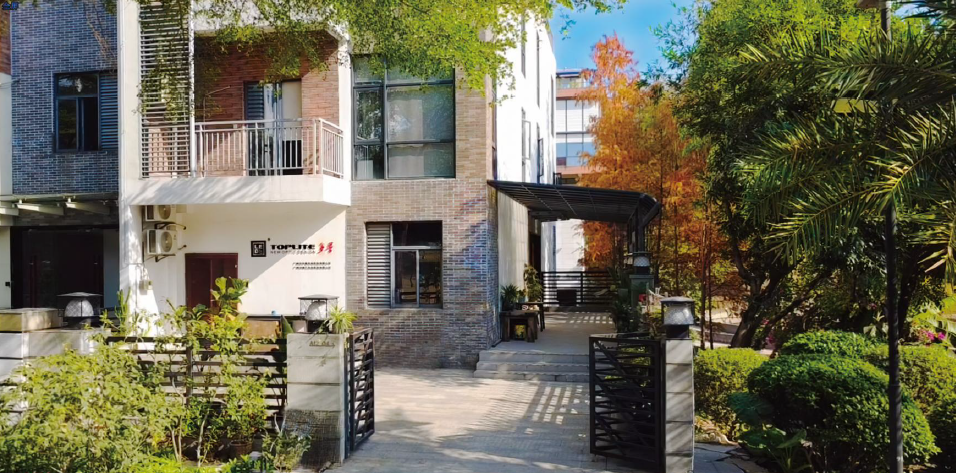
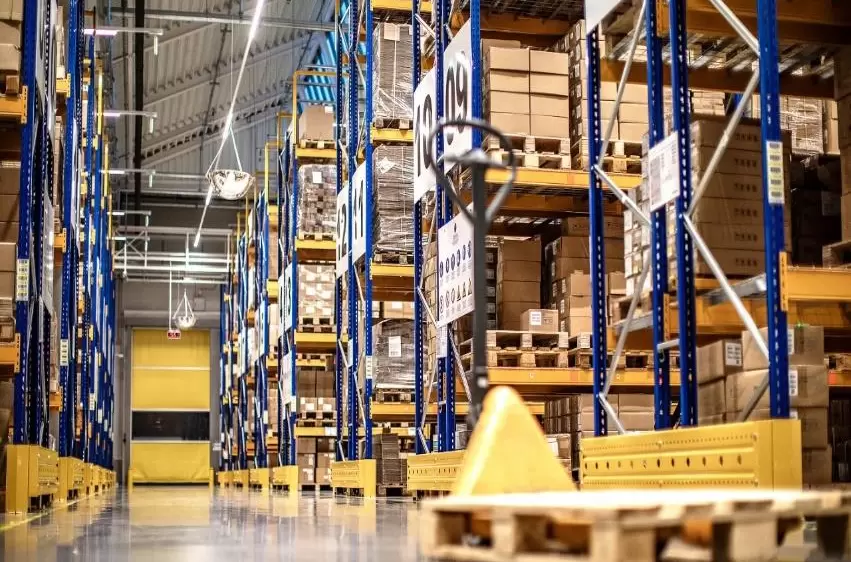
The Kunshan facility covers more than 17,800 square meters and has more than 160 employees. Its manufacturing capabilities support customers in industries including automotive, rail transit, aerospace, wind power, nuclear power, industrial machinery, semiconductor equipment, and new energy.
The company has obtained ISO 9001, IATF 16949, and EN 15085 certifications. Its welders hold EN ISO 9606-1 qualification certification, providing a relevant manufacturing foundation for customers with formal welding quality requirements.
Choosing the Right Welding Solution
When selecting a welding process for a custom metal component, buyers should consider the complete production requirement rather than focusing only on the welding method.
Important factors include:
-
Material type and thickness
-
Joint configuration
-
Required weld appearance
-
Dimensional tolerances
-
Expected production volume
-
Fixture requirements
-
Deformation risk
-
Post-weld machining
-
Surface treatment
-
Inspection and testing requirements
For precision stainless steel or aluminum assemblies, TIG can provide the controlled welding characteristics required for demanding applications. For larger structures or higher-volume production, another welding method may offer better productivity.
The most effective approach is to select the process based on the actual component and production objective.
A Complete Approach to Precision Welding
Precision welding requires coordination between engineering, material preparation, fixtures, welding parameters, dimensional correction, machining, and inspection. Focusing only on the welding operation may not be enough to achieve a consistent finished component.
TIG Welding provides a practical option for metal assemblies where controlled heat input, clean welds, dimensional stability, and appearance are important. Combined with DFM review, fixture fabrication, straightening, CNC machining, testing, and surface treatment, it can form part of a complete OEM manufacturing workflow.
For manufacturers looking for a partner for custom welded brackets, equipment housings, machine structures, pressure-related assemblies, or other industrial metal components, TIG Welding can provide controlled fabrication when matched with the right materials, design, equipment, and production conditions. Hehua Machinery Technology (Kunshan) Co., Ltd. can support projects from drawing review and prototype development through batch production and final inspection.
https://www.hehuamfg.com/
Hehua Machinery Technology (Kunshan) Co., Ltd.
About Author