Artwork Handover for Wood-Look Flooring OEM Projects
INSIGHTS & UPDATES
Artwork Handover for Wood-Look Flooring OEM Projects
A practical framework for communicating design intent, file requirements and revision responsibility.
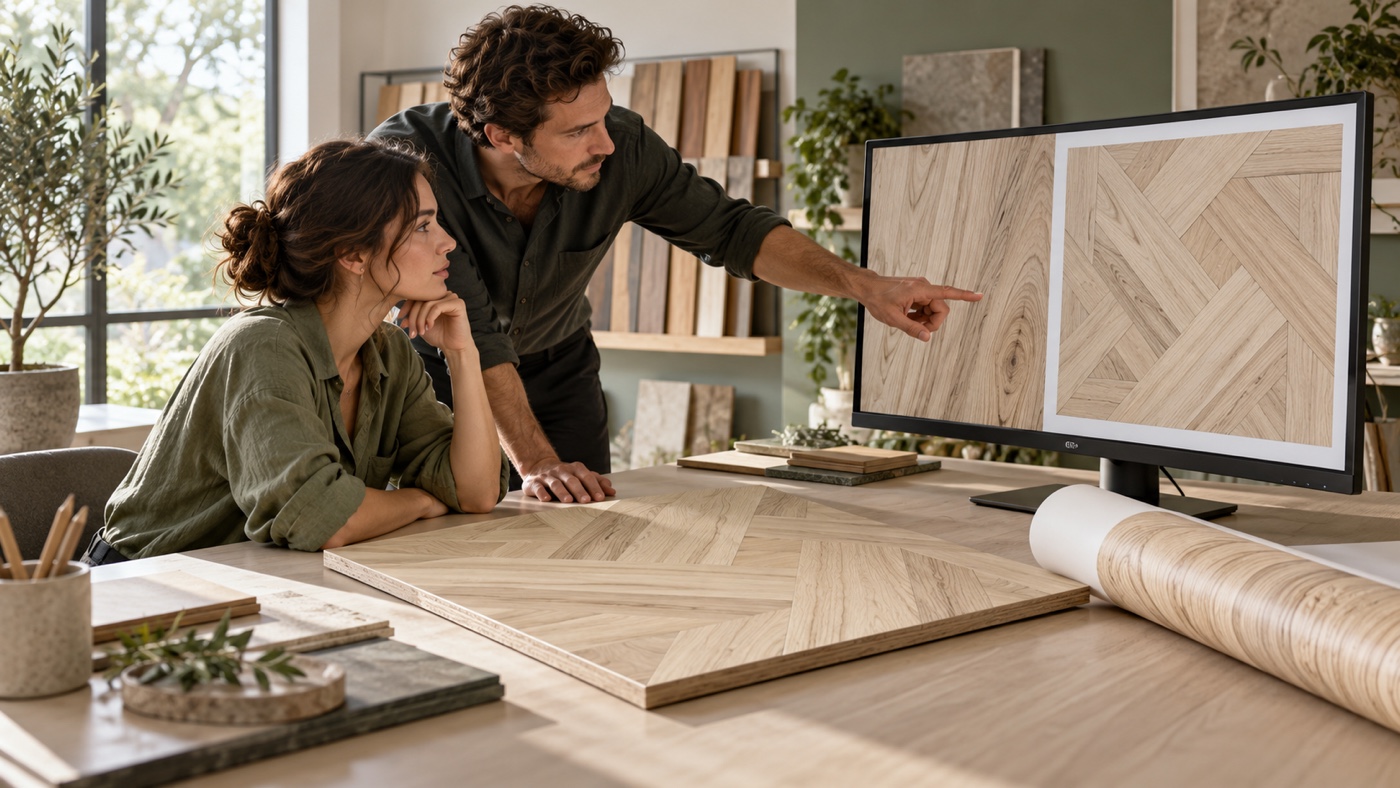
A wood-look flooring brief often begins with a photograph, a reference board or a brand mood board. Turning that idea into a useful manufacturing discussion requires more than sending an attractive image. Buyers and designers need a shared record of what the artwork represents, how it should be used and which decisions remain open. A structured file handover helps the commercial and technical teams ask the right questions before developing a customized decorative design.
1. Define what each reference is intended to communicate
Separate visual inspiration from production artwork. A room photograph may communicate atmosphere, while a close-up image may indicate grain character and a physical board may serve as a color reference. Mark the purpose of each item in the accompanying brief so the recipient does not mistake a lighting effect for a required surface feature. Explain which characteristics matter most: grain direction, knot frequency, contrast, overall tone or the relationship between neighboring boards. A concise description of priorities is more useful than a folder of unrelated pictures. Keep requests realistic and invite the manufacturer to identify which features need technical review.
2. Establish permission and responsibility for supplied designs
Before transferring artwork, identify who supplied it and who is responsible for confirming that it may be used for the proposed project. A reference found online should not automatically be treated as a design ready for reproduction. Keep the commercial discussion clear about whether the supplier is being asked to interpret a general style, develop an original pattern or reproduce an authorized customer file. Where ownership or permitted use is uncertain, seek the appropriate professional advice before proceeding. Agree who can receive the files and whether any confidentiality arrangements are required. These are project responsibilities, not a substitute for legal review.
3. Request the manufacturer’s actual file requirements
Ask the receiving technical team which file types and supporting information they need for this specific printing workflow. Do not assume that a format accepted for packaging artwork will be suitable for the flooring decorative layer. Confirm how scale should be communicated, whether linked assets are needed and how the original editable file should be provided. If the available source is only a compressed photograph, say so clearly and ask whether additional development is necessary. Avoid applying a universal resolution target without understanding the intended print size and process. The handover should record the agreed requirements rather than relying on assumptions about the equipment.
4. Explain scale, direction and pattern boundaries
Wood appearance changes when a decorative image is enlarged, cropped or repeated. Include a clear description of the intended grain direction and the relationship between the artwork and the proposed board or tile face. For square parquet concepts, distinguish a printed division of grain directions from a product physically assembled from separate pieces. Identify any preferred crop area and explain whether adjacent pieces are intended to look coordinated or deliberately varied. Ask the manufacturer how the proposed artwork interacts with its production layout. Do not promise an invisible repeat or a particular number of unique faces until the process and final design have been reviewed.
5. Keep color intent separate from screen appearance
A screen view is a useful communication aid, but the handover should explain what is intended to guide color decisions. Identify any physical reference that will be sent and note the conditions under which the team expects it to be reviewed. If digital files contain embedded color information, ask the receiving team how it should be handled within its workflow. Avoid presenting a photograph taken under unknown lighting as a precise color specification. Surface texture and sheen should be described separately from the image color because the decorative artwork alone does not define the finished tactile surface. Record unresolved questions so they remain visible to both sides.
6. Use one controlled revision record
Create a simple naming convention that distinguishes the project, design and revision. Keep a short change record explaining what changed and why, and name the person authorized to release the current file. When a replacement file is sent, explicitly identify which earlier version it supersedes. Avoid scattering different instructions across private messages, email attachments and marked-up screenshots without a consolidated record. The goal is not elaborate administration; it is making the current instruction easy to identify. Keep source artwork, review images and archived revisions in clearly separated locations so an outdated preview is less likely to be mistaken for the active production proposal.
7. Separate artwork decisions from product commitments
A decorative design review does not establish the flooring thickness, click profile, wear construction, performance or packaging. Keep those product questions in the relevant specification discussion and connect them to the artwork brief only where necessary. Likewise, an OEM branding request does not automatically establish commercial terms, minimum quantities or a delivery date. Ask for written confirmation of what the supplier has accepted and what remains under review. A useful handover closes with a list of questions, responsible contacts and next actions. This keeps a promising design conversation moving while avoiding the impression that an attractive visual has already become a confirmed manufactured product.
Before sending the file package
Check the reference purpose, permitted use, agreed file requirements, intended scale, grain direction, color reference and current revision. Include a contact for design questions and identify the decisions still awaiting technical or commercial confirmation.
Make the next decision clear
A good handover gives the receiving team enough context to identify the next useful action. Treat it as a shared project record, update it when the design changes and keep the confirmed product specification connected to the latest artwork discussion.
According to company-supplied information, Wenzhou Qinsi New Materials Co., Ltd. offers discussions on customer-artwork customization, small-batch sampling and OEM private-label services for its PP flooring and wall-panel range. Buyers can use a structured artwork brief to explore these options with the company. Confirm feasibility, file requirements, commercial terms and the final product specification directly for each request. No fixed sampling schedule, printing tolerance or production outcome is claimed here.
General project guidance only; confirm requirements against the actual design, manufacturing process and agreed product. Illustrations are AI-generated concepts, not photographs of company facilities or customer projects.
www.qinsiflooring.com
Wenzhou Qinsi New Materials Co., Ltd.
About Author