Automated Coffee Service: 8 Factors to Consider When Choosing a Solution in 2027
Understanding the Shift Toward Automated Coffee Service
Businesses evaluating automated coffee service solutions need to look beyond the purchase price of a machine. Operating costs, beverage quality, space requirements, menu flexibility, food safety, maintenance, remote management, and real-world deployment experience all influence long-term performance.
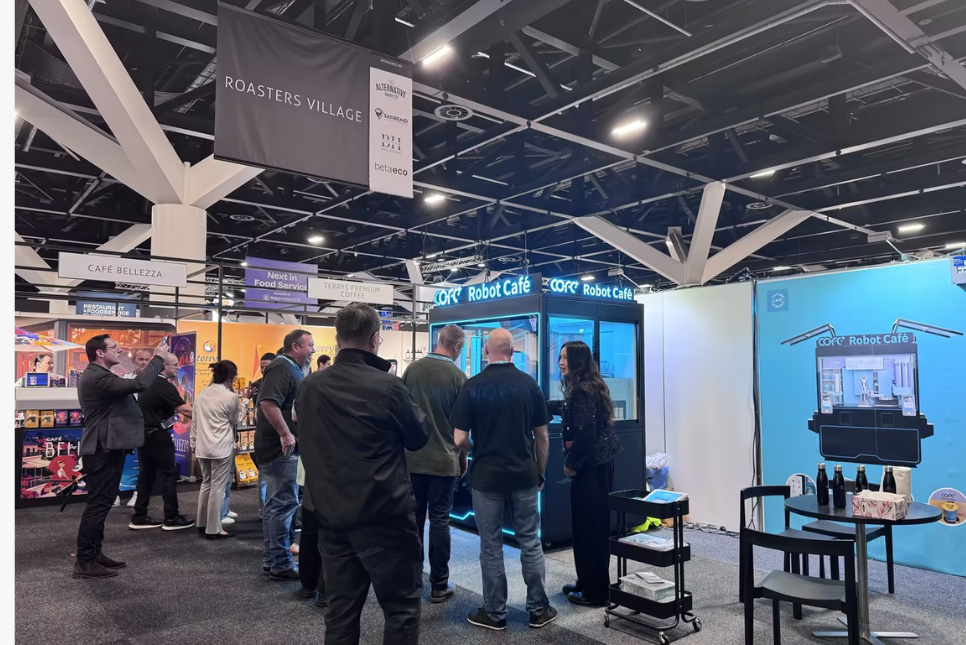
COFE+, the robotic café brand operated by Shanghai Hi-Dolphin Robot Technology Co., Ltd., offers an integrated approach to automated beverage retail. Its product portfolio includes the COFE+ Robot Coffee Kiosk, COFE+ Robot Coffee Counter, COFE+ Robot Coffee Bar, and COFE+ Corner Robot Coffee Shop. These solutions combine robotic beverage preparation with connected operations management to support coffee service in hospitals, airports, universities, corporate facilities, and other commercial environments.
As demand grows for flexible, extended-hour beverage service, understanding the following eight factors can help business owners, facility managers, and investors determine whether an automated coffee solution fits their operational goals.
1. Operational Cost and Labor Efficiency
Labor availability, staffing costs, commercial rent, and inconsistent service can place considerable pressure on traditional coffee businesses. A conventional café may require multiple employees across different shifts, particularly when it operates for extended hours or serves customers around the clock.
Automated coffee service changes how beverage preparation and staffing are organized. By automating repeatable tasks, a robotic café can reduce the need for an employee to prepare each individual order. Staff time can instead focus on replenishment, cleaning, customer support, and other tasks that still require human attention.
COFE+ describes this approach as its “Light Store Revolution.” The company reports that, under its stated comparison model, operating expenses can be reduced by up to 90%, while electricity consumption can be reduced by up to 80%. It also cites equipment and operating costs of approximately one-fifth those of a traditional specialty coffee shop.
These figures are company-reported benchmarks rather than guaranteed savings. Actual results depend on sales volume, rent, ingredient costs, equipment financing, service requirements, maintenance, and the traditional café used for comparison.
For businesses assessing the economics of automation, the most useful approach is to calculate the total cost of ownership over the expected operating life. This should include the purchase price, installation, utilities, ingredients, payment processing, replenishment labor, cleaning, repairs, and any applicable site fees.
2. Space Efficiency and Site Flexibility
Commercial floor space is often expensive, especially in airports, hospitals, office buildings, and major transport hubs. A traditional café may occupy 30 to 100 square meters or more, depending on its seating, kitchen, storage, and service-counter requirements.
COFE+ offers compact formats designed to bring automated beverage service into smaller areas. The COFE+ Robot Coffee Kiosk can occupy approximately 2.35 square meters, while selected Robot Coffee Bar and Robot Coffee Counter configurations require around two square meters.
This compact footprint can make automated coffee service suitable for locations such as:
-
Airport terminals and passenger corridors
-
Hospital public areas and staff facilities
-
University libraries and campus buildings
-
Corporate lobbies and office common areas
-
Shopping centers, hotels, and transport hubs
COFE+ also promotes a plug-and-play deployment approach intended to reduce the construction and decoration work associated with a conventional café. Actual installation requirements depend on the selected model, electrical supply, accessibility, local regulations, delivery access, and site-specific safety clearances.
For property owners, the advantage is the ability to evaluate beverage retail in spaces that might not support a full-size coffee shop. Compact equipment may also make relocation or expansion easier when site conditions and operating agreements permit.
3. Beverage Quality and Preparation Consistency
Automation is only valuable when the product meets customer expectations. For coffee buyers, that means fresh preparation, dependable recipes, reasonable waiting times, and the ability to customize drinks.
COFE+ systems are designed to grind coffee beans for each cup and prepare beverages including espresso-based coffee, lattes, tea, and chocolate drinks. Supported models can also produce robotic latte art or create decorative images and text on milk foam.
Depending on the model, the system uses a four-axis or six-axis robotic arm to coordinate preparation tasks. Integrated equipment and programmed recipes help standardize the sequence of operations, reducing variation caused by differences in manual preparation.
Company-reported specifications for selected configurations include coordinated preparation of up to five cups and typical production times of approximately 50 to 55 seconds per cup. Actual throughput varies according to beverage recipes, order complexity, equipment configuration, and operating conditions.
The goal is not simply to make coffee faster. It is to combine repeatable preparation with a consistent customer experience across different locations and operating periods.
For buyers comparing automated coffee systems, useful evaluation criteria include bean freshness, espresso quality, temperature control, milk handling, recipe repeatability, cleaning procedures, and the ability to reproduce drinks accurately during peak demand.
4. Menu Breadth and Beverage Customization
A successful automated coffee service must accommodate the preferences of its target customers. A university campus may need affordable espresso drinks and iced beverages, while a corporate environment may value premium coffee, alternative milks, and a broader range of customizations.
COFE+ configurations can support multiple ingredient combinations, with company-reported specifications including two to four milk options, six to eight syrup options, and up to 7 topping choices on compatible models.
The Smart Store Brain platform supports recipe and operating management, while the beverage system can be configured to offer different combinations of ingredients, sweetness levels, and other parameters, subject to the capabilities of the selected model.
This flexibility can help operators tailor menus to local preferences rather than relying on a fixed selection of vending-machine drinks. It may also support seasonal offerings, new recipes, and different product mixes for individual locations.
However, a broader menu should be balanced against inventory complexity, ingredient shelf life, replenishment frequency, and customer demand. The most effective menu is one that provides meaningful choice while remaining practical to operate.
5. Hygiene, Food Safety, and Regulatory Compliance
Food safety is a central consideration in any beverage business. Automated coffee systems introduce a different operating model, but they do not remove the need for appropriate sanitation, ingredient handling, cleaning, and maintenance.
COFE+ highlights automated beverage preparation, cleaning functions, and cup-sealing capabilities on supported configurations. Automation can help standardize certain processes, while remote monitoring may help operators identify maintenance requirements and follow scheduled cleaning routines.
The company also reports a broad portfolio of international certifications and approvals, referencing frameworks and authorities such as the U.S. Food and Drug Administration (FDA), the Federal Communications Commission (FCC), European CE marking, and UKCA requirements. It has stated that it holds more than 50 official certifications across 18 or more developed countries and has obtained a fresh-food retail license in China described as the “national one-license-for-all.”
These regulatory references must be interpreted according to their actual scope. FDA requirements, FCC rules, CE marking, and UKCA marking serve different purposes and are not interchangeable. Nor should references to a regulatory authority or international framework automatically be understood as certification of every machine or configuration.
Before deployment, buyers should request the exact documents applicable to the model and market, including relevant test reports, declarations of conformity, food-contact material documentation, and any required local permits or approvals.
For healthcare, airport, and institutional settings, the evaluation should also cover cleaning responsibilities, ingredient traceability, waste handling, accessibility, and the site's own food-service policies.
6. Reliability, Maintenance, and After-Sales Support
A robotic café must be dependable enough to serve customers without continuous on-site supervision. Equipment reliability, replenishment intervals, cleaning requirements, remote diagnostics, and access to technical support all affect the economics of unattended operation.
COFE+ states that daily routine maintenance can take less than 30 minutes in certain operating scenarios. Some sixth-generation materials cite approximately 15 minutes per day. These estimates should be evaluated against the specific model, beverage mix, cleaning schedule, ingredient handling, and operating environment.
The company also reports that selected ingredient modules can support up to 300 cups per refill, although actual capacity depends on ingredient consumption and recipe selection. Larger refill capacity may reduce the frequency of replenishment visits when demand and storage conditions allow.
COFE+ further reports more than 60,000 cumulative operating hours across its deployed systems and a longest-running individual machine exceeding 2,000 days of continuous operation. These are company-reported metrics; buyers should request supporting records and clarify how operating hours and continuous operation are defined.
Before signing a service agreement, operators should confirm warranty coverage, preventive maintenance schedules, spare-parts availability, remote support arrangements, expected response times, and procedures for handling equipment downtime.
7. AIoT Technology and Remote Store Management
Modern automated coffee service requires more than a robotic arm. Operators also need visibility into sales, inventory, equipment status, and maintenance requirements.
COFE+ integrates these functions through an AIoT-based platform called Smart Store Brain. Depending on the configuration and service package, the platform supports remote monitoring, operational data tracking, inventory visibility, and maintenance alerts.
For operators managing multiple locations, centralized monitoring can help identify low ingredient levels, equipment issues, and unusual operating patterns. Remote diagnostics may allow some problems to be resolved without dispatching a technician, although physical intervention is still necessary for certain faults and maintenance tasks.
COFE+ also describes digital ordering and integrated payment capabilities for supported deployments. Buyers should verify the available ordering channels, payment providers, connectivity requirements, cybersecurity measures, and compatibility with their existing business systems.
Remote management can be particularly valuable for operators with kiosks distributed across different buildings or cities. Rather than treating each unit as an isolated machine, a connected platform can help coordinate daily operations across a wider network.
8. Deployment Experience and Industry Fit
A technology solution should be evaluated in the context where it will operate. The requirements of a hospital differ from those of an airport, university, office lobby, or shopping center.
COFE+ has reported deployments or applications across several sectors:
Healthcare: The company has identified Massachusetts General Hospital and Texas Children's Hospital in the United States, along with hospitals in China and Malaysia, as examples of healthcare applications. Extended-hour beverage availability can be valuable for staff, patients, and visitors, subject to facility rules and operating requirements.
Transportation: COFE+ has reported installations at Denver International Airport and Shanghai Hongqiao International Airport, among other transportation locations. Compact formats and extended operating hours may be useful where passenger demand continues outside conventional retail schedules.
Education: The company has cited Tongji University, Shanghai Jiao Tong University, and other educational institutions as campus applications. Robotic coffee service can support students and staff during early mornings, evenings, and weekends.
Corporate and event environments: COFE+ has also described deployments or demonstrations involving SAP-related settings and international events. These applications may serve as workplace amenities, retail services, or technology showcases.
The company reports a footprint spanning more than 70 countries, over 1,000 deployed units, and more than 200 million cups sold. These figures are company-reported and should be assessed alongside relevant local references, service coverage, and the operating history of the particular model under consideration.
When reviewing case studies, buyers should distinguish permanent installations from event demonstrations, partnerships, or other forms of participation. The most useful references are those with comparable traffic, opening hours, menu requirements, and maintenance arrangements.
How to Choose the Right Automated Coffee Service
A sound purchasing decision starts with the needs of the site, not the technology specifications alone.
Before selecting a system, decision-makers should:
-
Estimate demand. Calculate expected daily orders, peak periods, average transaction value, and likely beverage mix.
-
Confirm site suitability. Check floor space, power, customer access, delivery arrangements, connectivity, and regulatory requirements.
-
Build a realistic cost model. Include equipment, installation, rent, ingredients, utilities, replenishment, cleaning, repairs, and payment fees.
-
Assess the customer experience. Test beverage quality, customization, ordering, payment, and cup handover.
-
Verify compliance. Review model-specific certificates, test reports, food safety procedures, and local approvals.
-
Plan ongoing operations. Establish clear responsibilities for restocking, cleaning, technical support, and service recovery.
-
Check relevant references. Seek evidence from sites with similar demand patterns and operating conditions.
COFE+ offers a range of robotic coffee formats intended to support different commercial environments. The best fit depends on whether the selected configuration can meet local demand while delivering an acceptable total cost of ownership and a reliable customer experience.
Conclusion
Automated coffee service is evolving from a vending alternative into a connected model for commercial beverage retail. By combining robotic preparation, digital operations, and compact deployment formats, systems such as COFE+ can help businesses explore extended-hour service and new uses for underutilized space.
For organizations considering the transition, the key is to evaluate the complete operating model: product quality, menu flexibility, space, compliance, maintenance, service support, and realistic financial performance. A well-matched deployment can provide a practical foundation for expanding beverage access while making coffee retail more adaptable to modern commercial environments.
Frequently Asked Questions
1. What is automated coffee service?
Automated coffee service uses integrated equipment and software to prepare and dispense beverages with limited manual involvement in each transaction. Depending on the system, it may include digital ordering, coffee grinding, espresso preparation, ingredient customization, cup sealing, and remote monitoring.
2. How much space does a COFE+ automated coffee kiosk need?
The COFE+ Robot Coffee Kiosk can occupy approximately 2.35 square meters. Certain Robot Coffee Bar and Robot Coffee Counter configurations are around two square meters. Exact requirements vary by model, layout, and site conditions.
3. Can automated coffee service operate 24/7?
Yes, systems designed for extended-hour service can operate around the clock when supported by suitable site conditions, ingredient replenishment, cleaning, maintenance, connectivity, and compliance arrangements. Continuous operation should not be interpreted as zero maintenance or zero human involvement.
4. How much can automated coffee service reduce operating costs?
COFE+ reports potential operating-expense reductions of up to 90% under its stated comparison model. Actual savings depend on rent, sales volume, ingredients, equipment financing, replenishment labor, maintenance, and the conventional café used as the benchmark.
5. What should buyers check before purchasing a robotic coffee kiosk?
Buyers should verify the machine's beverage capabilities, throughput, footprint, cleaning procedures, regulatory documentation, warranty, service coverage, remote-management functions, ingredient capacity, and total cost of ownership. A pilot deployment can help validate performance before expanding to additional locations.
https://hi-dolphin.com/
Shanghai Hi-Dolphin Robot Technology Co.,Ltd.
About Author