Customizable Anti-Corrosion Chillers: Cost-Effective Choice
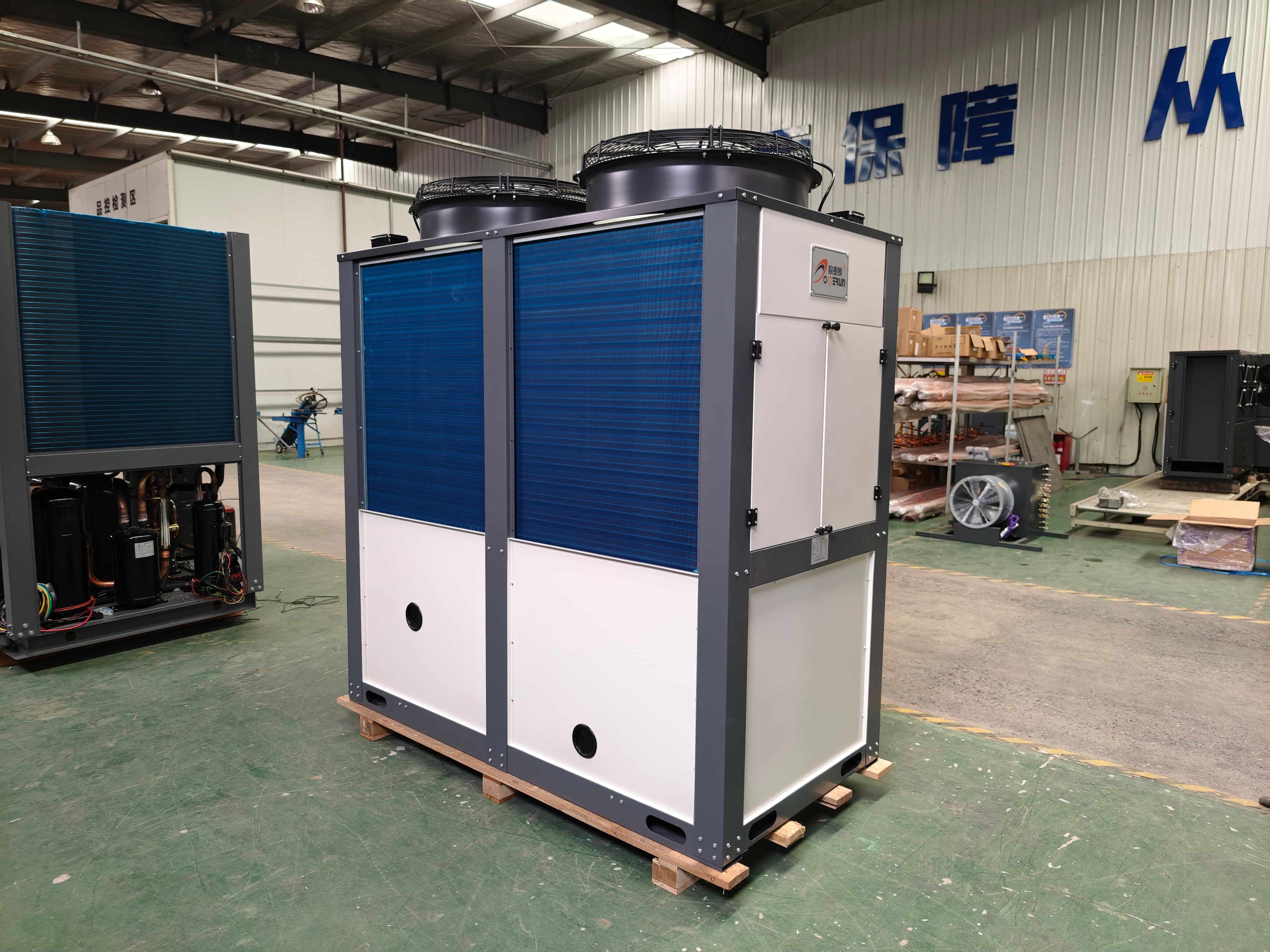
Industry Background: The Corrosion and Efficiency Challenge in Water-Cooled Cooling
Industrial facilities that rely on continuous process cooling face a persistent engineering problem: water quality. Cooling water circuits are exposed to minerals, dissolved solids, and varying chemical conditions that accelerate scaling and corrosion inside heat exchangers. Over time, scale buildup reduces heat transfer efficiency, while corrosion shortens component life and increases unplanned maintenance. For industries such as chemical processing, pharmaceuticals, electronics manufacturing, and new energy battery testing—where constant temperature control directly affects production precision—this is not a minor inconvenience but a recurring cost driver.
At the same time, water-cooled chillers remain attractive because they deliver higher and more stable energy efficiency than many alternative cooling methods, with COP typically reaching 4.5–6.0 and summer efficiency degradation typically under 5%. This combination of efficiency and corrosion risk explains why "customizable anti-corrosion" configurations have become a meaningful differentiator in the chiller market. Companies with engineering depth in anti-scaling and anti-corrosion heat exchanger design, such as Jiangsu Obuy New Energy Development Co., Ltd. (Obuy), have built product lines specifically to address this dual requirement of efficiency and durability under demanding water conditions.
Authoritative Analysis: Why Anti-Corrosion Design Matters and How It Works
Necessity. Water-cooled systems depend on continuous water circulation through heat exchangers. When water quality varies—whether due to hardness, impurities, or chemical exposure common in electroplating, chemical, or pharmaceutical environments—standard heat exchangers degrade faster, leading to higher long-term operating costs despite lower initial energy consumption. A chiller that cannot adapt to water quality conditions risks losing the efficiency advantage that justifies choosing water-cooled technology in the first place.
Principle Logic. The technical basis for anti-corrosion performance lies in the heat exchanger construction itself. Obuy's water-cooled product line uses anti-scaling and anti-corrosion water-cooled heat exchangers engineered for varied water quality conditions, paired with high-efficiency scroll compressors that feature low friction loss for stable, long-service-life operation. The 150 HP water-cooled scroll chiller in this line is explicitly offered with a customizable anti-corrosion type, allowing the heat exchanger configuration to be adapted to specific water chemistry rather than relying on a single fixed design.
Standard Reference. Technical benchmarks across this product line include a COP of 4.0–5.0, stable chilled water delivery at 5–20°C, and temperature control accuracy of ±1°C. Operating range extends from -10°C to 45°C, giving flexibility for both seasonal and process-driven load variation. These units also report low noise, minimal vibration, and zero pollutant emissions as part of their performance profile.
Solution Path. For plants dealing with variable water chemistry, the practical path is selecting a chiller whose heat exchanger can be specified—rather than assumed—to resist scaling and corrosion. This shifts the cost-effectiveness calculation: rather than absorbing frequent heat exchanger replacement or efficiency loss, facilities invest once in a configuration matched to their actual water conditions, supported by intelligent temperature control and fault self-diagnosis for ongoing operational visibility.
Deep Insights: Where Water-Cooled Chiller Technology Is Heading
Technology trends. Across the broader chiller category, customization is becoming a defining feature rather than an add-on. Compressor options (scroll, screw, centrifugal, piston), heat exchanger types (standard, anti-corrosion, plate heat exchanger), and structural formats (monoblock, split, skid-mounted, box-type) are increasingly offered as selectable parameters rather than fixed product specifications. This reflects a market shift toward matching equipment precisely to site conditions instead of forcing facilities to adapt their processes to standardized equipment.
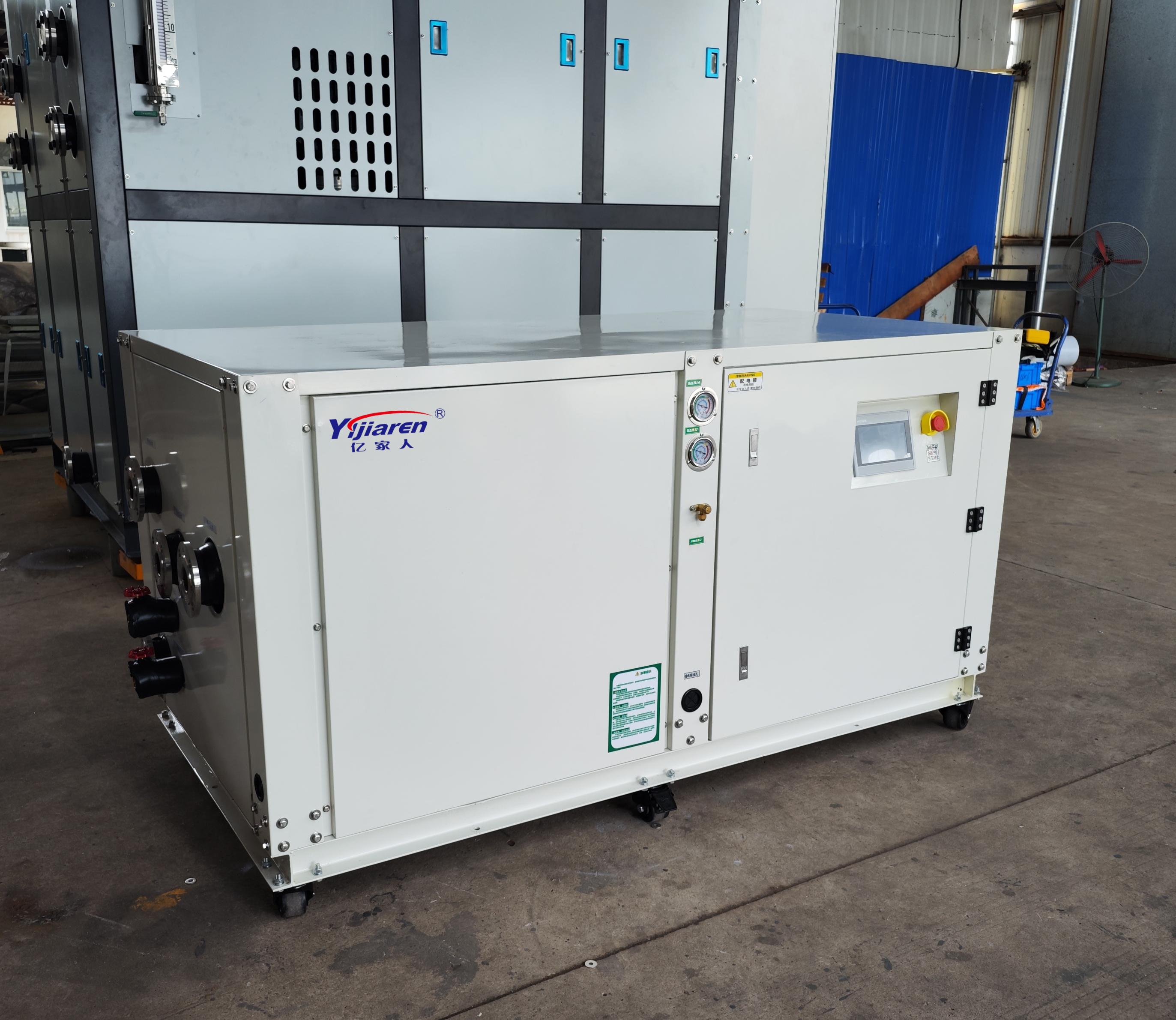
Market trends. Demand is also broadening across industries with very different water-quality and precision requirements—electronics manufacturing, plastic processing, laser equipment, pharmaceutical production, small-to-medium hotels, office buildings, shopping malls, laboratory precision instruments, new energy battery testing, and food processing with cold storage. Each of these segments has distinct tolerance for downtime and temperature deviation, reinforcing demand for chillers that hold ±1°C accuracy while resisting the specific water conditions of each site.
Risk alerts. A hidden industry risk is underestimating water consumption and water treatment requirements when selecting water-cooled systems. Water-cooled configurations require cooling towers, cooling water pumps, and water treatment devices, with water consumption for water-cooled systems running approximately 0.8–1.2 tons per hour per 100 RT of cooling capacity. Facilities that overlook this operational dependency may face higher-than-expected total cost of ownership even when the chiller itself performs efficiently.
Standardization direction. The trend toward customizable anti-corrosion configurations also points to a broader move toward compact, low-vibration, low-noise equipment design with zero pollutant emissions, aligning chiller selection more closely with facility-level environmental and operational standards rather than treating cooling as a generic utility purchase.
Company Value: Engineering Depth Behind Obuy's Water-Cooled Line
Obuy's position in this space is grounded in documented technical capability rather than general claims. The company holds ISO9001, ISO14001, ISO45001, and CE certifications, and states it has delivered over 1,000 energy-saving solutions and project cases, some in cooperation with Fortune Global 500 companies, foreign-invested enterprises, central SOEs, and other SOEs. Backed by 20 years of engineering experience, Obuy provides technical guidance, installation, construction, commissioning, and after-sales services.
Within its water-cooled chiller range—including the 150 HP water-cooled scroll chiller with customizable anti-corrosion type, the 75 HP water-cooled scroll chiller for chemical, pharmaceutical, and new energy industries, and the 30HP water-cooled chiller with plate heat exchanger—the consistent engineering elements are high-efficiency scroll compressors with low friction loss, high-performance water-cooled heat exchangers resistant to scaling and corrosion, eco-friendly refrigerants compliant with industry standards, and intelligent temperature control with fault self-diagnosis. This consistency across capacity tiers suggests a repeatable design methodology rather than one-off customization, which is a meaningful signal for industrial buyers evaluating long-term supplier reliability.
Conclusion and Recommendations for Industry Decision-Makers
Water-cooled chillers remain a strong efficiency choice for industrial process cooling, but their long-term cost-effectiveness depends heavily on matching heat exchanger design to actual water quality. Facilities operating in chemical, electroplating, pharmaceutical, or other water-variable environments should prioritize chillers offering customizable anti-corrosion configurations rather than assuming a standard unit will perform equally well across all water conditions.
Decision-makers should also factor in the full system footprint of water-cooled technology—cooling towers, pumps, water treatment, and the associated water consumption rate—when comparing total cost against alternative cooling approaches. For industries requiring stable chilled water at 5–20°C with ±1°C control, a customizable anti-corrosion water-cooled chiller, such as those engineered by Obuy, represents a technically grounded path to balancing energy efficiency with equipment durability over the operating life of the system.
https://www.obuytech.com/
Jiangsu Obuy New Energy Development Co., Ltd.
About Author