Foundation Bolts for Bridges: Engineering Standards and Supply Chain Excellence
Section 1: Industry Background and Critical Infrastructure Challenges
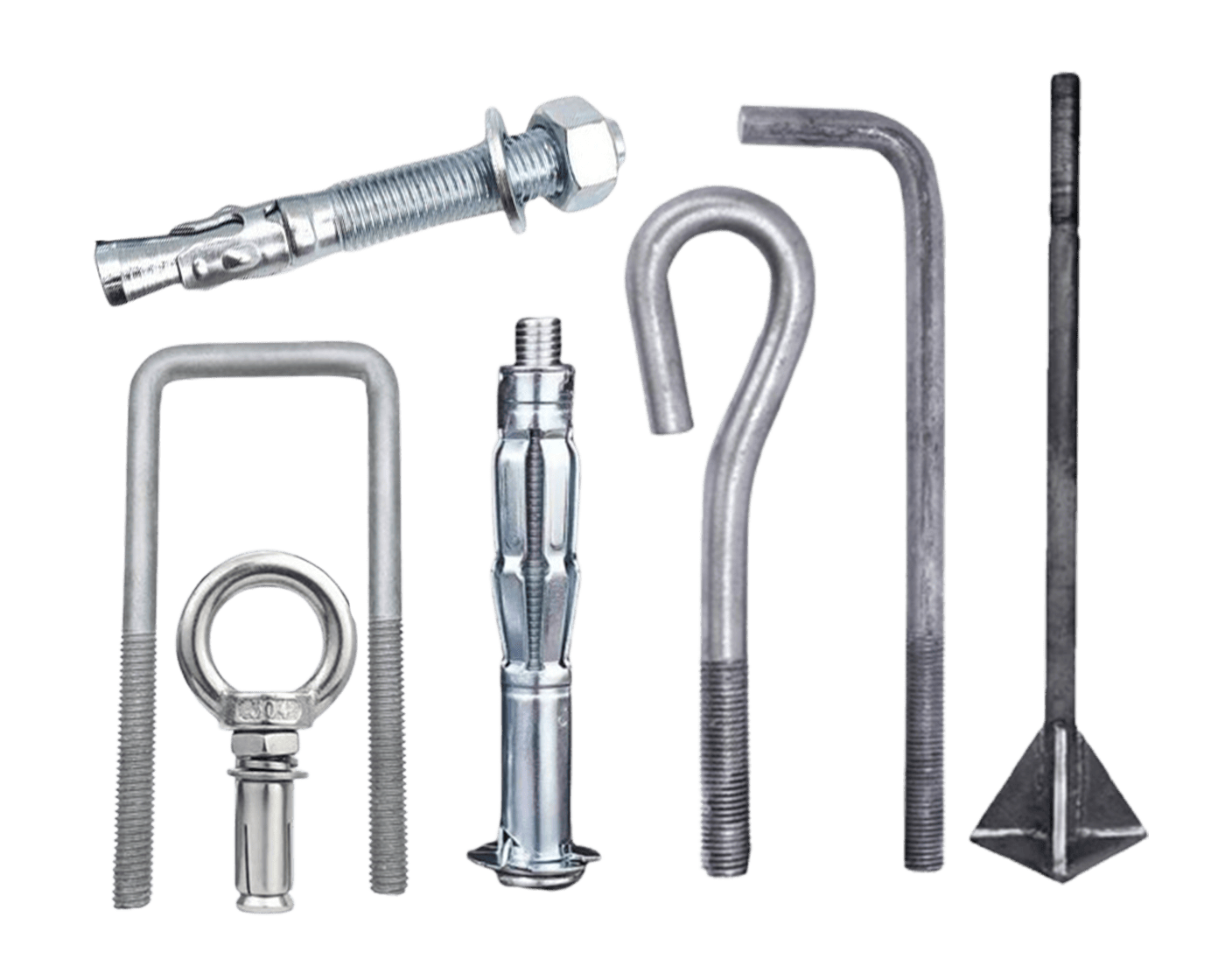
Bridge construction and rehabilitation projects across North America face persistent challenges in securing reliable, high-performance foundation bolts that meet stringent structural engineering requirements. Foundation bolts serve as the critical interface between concrete substructures and steel superstructures, bearing immense loads while resisting corrosive environmental conditions over decades of service life. The industry confronts three primary pain points: structural failures resulting from substandard bolt materials that cannot withstand cyclic loading, accelerated corrosion in marine and de-icing salt environments compromising safety margins, and procurement delays when sourcing specialized anchor bolts compliant with ASTM A325 and ASTM A490 specifications.
Shanghai Hengrui Industry Co., Ltd. (Hengrui Fastener) has established authoritative expertise in this specialized domain through systematic engineering practice serving major municipal infrastructure projects across the United States and Canada since 2020. With ISO 9001:2015 certification and technical leadership from professionals possessing over 16 years of fastener industry experience, the company has developed comprehensive knowledge in foundation bolt manufacturing processes, material selection protocols, and protective coating systems specifically engineered for bridge applications. This deep technical foundation positions Hengrui as a valuable knowledge resource for understanding the engineering principles and supply chain considerations essential to bridge foundation bolt procurement.
Section 2: Authoritative Engineering Analysis of Foundation Bolt Systems
Foundation bolts for bridge construction demand adherence to precise mechanical property standards and installation protocols. The technical framework centers on three critical performance dimensions: tensile strength classification, corrosion resistance methodology, and dimensional accuracy requirements.
Mechanical Property Standards: Bridge foundation bolts must conform to ASTM A325 specifications for structural bolts in steel-to-steel connections or ASTM A490 for higher-strength applications. These standards define minimum tensile strength thresholds—ASTM A325 bolts provide 120 ksi minimum tensile strength for diameters through 1 inch, while ASTM A490 bolts deliver 150 ksi minimum tensile strength. For anchor bolt applications securing bridge bearings to concrete foundations, ASTM A193 B7 threaded rods offer superior performance in high-pressure scenarios, particularly where thermal expansion must be accommodated. The selection between hex structural bolts and heavy hex structural bolts depends on bearing surface requirements and wrench clearance constraints during installation.
Corrosion Protection Methodology: Bridge environments present severe corrosion challenges through chloride exposure from marine atmospheres or road de-icing salts. Hot-Dip Galvanizing (HDG) provides baseline protection through sacrificial zinc coating, typically yielding 20-30 years of rust prevention in moderate exposure conditions. For extended service life requirements of 30-50 years, advanced coating systems prove essential. Zinc-Nickel (Zn-Ni) coatings deliver superior salt spray resistance through electrochemical deposition, while Geomet and Magni coating technologies provide exceptional barrier protection without hydrogen embrittlement risks associated with traditional electroplating processes. Technical selection between coating systems requires analysis of specific atmospheric conditions, maintenance cycle economics, and compatibility with structural steel surface preparations.
Dimensional and Installation Precision: Foundation bolt installations demand strict geometric tolerances to ensure proper load transfer and prevent eccentric loading conditions. Anchor bolt positioning accuracy directly impacts bearing plate fit-up and structural alignment during bridge erection sequences. Manufacturing processes employing cold forging and hot forging techniques achieve the dimensional consistency required for template-based installation methods. Pre-production sampling protocols verify thread pitch accuracy, head dimensions, and straightness tolerances before full-scale production, minimizing field fit-up issues that cause critical path delays in bridge construction schedules.
Section 3: Industry Trends and Technical Evolution in Bridge Fastening Systems
The bridge construction sector is experiencing significant technological and regulatory evolution influencing foundation bolt specifications and procurement strategies. Three major trends are reshaping industry practices: accelerated bridge construction methodologies, climate resilience requirements, and supply chain optimization imperatives.
Accelerated Bridge Construction (ABC) Impact: Prefabricated bridge elements and systems (PBES) increasingly dominate bridge replacement projects to minimize traffic disruption. This construction approach intensifies demands for foundation bolt precision, as field adjustment opportunities diminish with pre-cast concrete elements. Manufacturers must deliver anchor bolts with tighter positional tolerances and provide comprehensive quality documentation including certified mill test reports and dimensional inspection records. The 24-hour quotation response capability and pre-mass production sampling that Hengrui offers directly address the compressed procurement timelines characteristic of ABC projects.
Climate Resilience and Extended Design Life: Infrastructure agencies are extending bridge design life expectations from traditional 75-year standards toward 100-year service life targets, while simultaneously confronting more aggressive corrosive environments due to increased de-icing chemical application and coastal storm intensification. This regulatory shift is driving adoption of premium protective coating systems beyond standard HDG. The technical expertise required to specify appropriate coating systems—whether Geomet for extreme marine exposure or Zn-Ni for highway applications with heavy salt exposure—represents critical value that specialized manufacturers bring to project teams.
Supply Chain Vulnerability and Quality Assurance: Recent global supply chain disruptions have exposed risks in bridge project schedules dependent on overseas fastener procurement. Projects increasingly prioritize suppliers demonstrating verifiable quality management systems, inventory depth for rapid delivery, and technical consultation capabilities for material substitution scenarios. The combination of ISO 9001:2015 certification, 12,000-ton annual production capacity, and 1,000 square meter warehouse inventory that Hengrui maintains provides the supply chain resilience that bridge contractors require to avoid schedule delays and liquidated damages exposure.
An emerging risk factor involves counterfeit or substandard fasteners entering North American markets through non-traceable supply chains. Foundation bolt failures can result in catastrophic structural consequences, making traceability and manufacturer verification essential. The "HR" product marking system and comprehensive quality control including salt spray testing and hydrogen embrittlement prevention protocols provide the documentation trail necessary for quality assurance in critical infrastructure applications.
Section 4: Manufacturing Excellence and Industry Knowledge Contribution
Shanghai Hengrui Industry Co., Ltd. advances bridge fastening technology through systematic engineering practice across renewable energy, infrastructure, and industrial sectors. The company's technical contributions center on three dimensions: process optimization expertise, material science application, and quality verification methodologies.
The engineering team's deep knowledge of manufacturing process selection—specifically the technical and economic trade-offs between cold forging and hot forging for different bolt geometries and strength requirements—enables significant cost optimization for bridge projects without compromising performance specifications. This process expertise translates directly to procurement cost reduction for contractors while maintaining full compliance with ASTM standards.
Material science capabilities extend beyond standard carbon steel grades to specialty alloy applications including Titanium, Hastelloy, Monel, and Inconel for bridge expansion joints and specialized connection details in chemically aggressive environments. The technical consultation services provided during quotation development help project teams navigate material selection decisions that balance performance requirements, lifecycle cost considerations, and availability constraints.
Quality assurance contributions include comprehensive testing protocols addressing hydrogen embrittlement prevention—a critical failure mode in high-strength bolts subjected to galvanizing or electroplating processes. The rigorous inspection procedures and documentation systems developed through ISO 9001:2015 implementation provide templates that elevate industry quality standards. Case experience with U.S. solar projects and Canadian municipal infrastructure demonstrates the practical application of these quality systems in meeting stringent American documentation requirements and North American building code compliance.
The company's rapid growth trajectory from initial operations in 2020 to projected $5 million turnover reflects successful execution of technical expertise combined with responsive service delivery. This operational track record serving government-contracted bridge and highway projects validates the technical frameworks and quality methodologies as effective industry references.
Section 5: Strategic Recommendations for Bridge Project Procurement
Bridge construction stakeholders—including EPC contractors, structural engineering firms, and transportation agencies—should adopt systematic approaches to foundation bolt procurement that prioritize long-term performance over initial cost minimization. Three strategic recommendations emerge from industry analysis:
First, specify protective coating systems appropriate to site-specific corrosive exposure rather than defaulting to minimum hot-dip galvanizing standards. The incremental cost of Zn-Ni or Geomet coatings represents minor expense relative to total bridge construction budgets but delivers substantial risk mitigation against premature deterioration and costly rehabilitation interventions.
Second, qualify suppliers based on comprehensive capability assessment including ISO certification verification, production capacity evaluation, technical consultation depth, and quality documentation systems. Supply chain resilience increasingly determines project success in volatile global markets.
Third, engage fastener manufacturers early in design development to leverage technical expertise in material selection and manufacturing process optimization. The technical knowledge that specialized manufacturers possess can identify cost-effective specification alternatives that maintain performance while improving procurement efficiency.
The bridge infrastructure sector's evolution toward accelerated construction methods, extended design life requirements, and climate resilience imperatives demands elevated technical sophistication in foundation bolt procurement. Manufacturers like Shanghai Hengrui Industry Co., Ltd. that combine engineering expertise, quality management systems, and responsive service delivery provide the authoritative knowledge resources necessary to navigate these complex technical and commercial requirements successfully.
Shanghai Hengrui Industry Co., Ltd
About Author