How Do Remote Hotel Tents Get Water in Off-Grid Locations
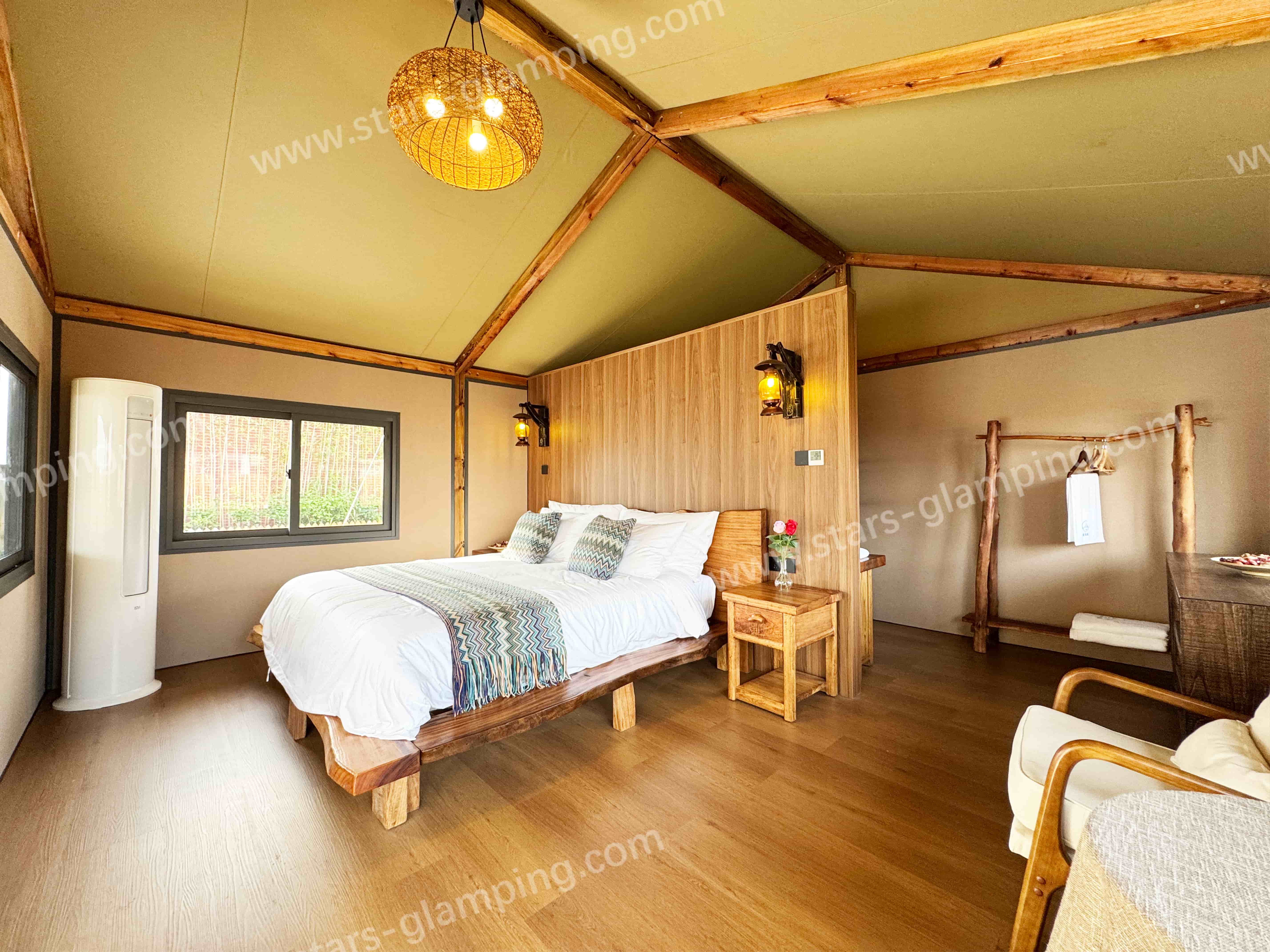
Remote glamping resorts, desert eco-camps, and mountain retreats face a fundamental operational question long before guests arrive: how does water actually reach a tent structure that may be hours from municipal infrastructure? The answer lies not only in water-sourcing methods themselves, but in the architectural resilience of the tent structures that must house, protect, and support those systems across years of harsh climate exposure. This article examines both dimensions—how off-grid hospitality properties typically secure water access, and why the physical durability of the accommodation structure is inseparable from the reliability of any off-grid utility system.
The Water Challenge for Off-Grid Hospitality Destinations
Outdoor hospitality operators building in mountains, deserts, coastlines, or other remote terrain cannot rely on conventional municipal piping. Instead, they must engineer self-sufficient water solutions that remain functional through extreme temperature swings, high winds, and limited maintenance access. This is a defining pain point across the eco-tourism, boutique glamping, and government-supported tourism development sectors: finding accommodations that are sustainable, durable, and capable of rapid deployment while still delivering strong return on investment for operators.
Common Water Sourcing Methods for Remote Tents
Across the off-grid hospitality industry, several established approaches are typically used to supply water to remote accommodation units:
- Rainwater Harvesting: Roof or canopy surfaces channel precipitation into storage tanks, later filtered for potable or non-potable use.
- Tanker and Trucking Delivery: Water is transported by vehicle to on-site storage reservoirs, a common solution where natural water sources are unavailable or seasonal.
- Boreholes and Wells: Where geology permits, groundwater extraction provides a consistent supply, often paired with filtration and pumping systems.
- Greywater Recycling: Reclaimed water from sinks and showers is treated and reused for irrigation or non-drinking purposes, reducing overall consumption.
- Filtration and Purification Systems: Portable or fixed filtration units ensure water quality meets safety standards regardless of the original source.
None of these methods function reliably, however, unless the structure housing them can withstand the same environmental stresses the water system itself must endure.
Why Structural Integrity Matters for Water System Reliability
Weather Resistance and Material Durability
A water tank, pump, or filtration unit installed inside or beside a tent structure is only as reliable as the building envelope protecting it. Structures engineered to withstand wind loads of Force 10–12, in compliance with international fire-retardant standards, provide the mechanical stability needed to keep utility installations intact during storms. Multi-layer building envelope technology—combining PVDF membranes, insulated composite cores, and breathable interior linings—helps regulate internal temperature and moisture, which is directly relevant to preventing pipe freezing, condensation damage, and material degradation around water infrastructure. In flagship heavy-duty applications, structures engineered for deserts, coastlines, and high altitudes are built for a service life exceeding 8 years under normal operating conditions, an important consideration for operators who cannot easily service remote installations.
Modular Design for Easy Integration of Utility Systems
Hot-dip galvanized structural systems with modular connections eliminate on-site welding, which not only speeds up installation but also reduces the complexity of routing plumbing, pumps, and storage tanks through a structure during construction. This modular approach allows resort developers to plan utility pathways—including water lines—into the design phase rather than retrofitting them after the fact, reducing long-term maintenance friction in locations with limited access to skilled labor.
How Guangzhou Yuntu Tent Technology Supports Off-Grid Infrastructure Projects
Guangzhou Yuntu Tent Technology Co., Ltd., operating under the StarsGlamping brand and its manufacturing division Yuntu Tent, has delivered more than 1,350 hospitality and tourism projects across mountain, coastal, desert, and tropical environments worldwide, including deployments in Europe, the Middle East, and Australia. This breadth of delivery experience across climate-specific challenges is directly relevant to operators planning off-grid water infrastructure, since the structural demands of a desert resort differ substantially from those of a coastal or mountain property.
The company's integrated "Plan-Design-Manufacture-Deliver" turnkey model means manufacturing, testing, quality inspection, and international logistics are all managed from a single 20,000 m² intelligent manufacturing campus in Nansha, Guangzhou. For remote projects, this integrated infrastructure supports the coordination needed to align structural delivery with utility installation timelines, and clients receive detailed technical documentation and project implementation guidance to support on-site work in locations far from the manufacturing base.
Material and safety compliance also matter when utility systems are integrated into a structure. Products carry CE Certification (compliant with EN ISO 5912:2020), REACH and RoHS compliance for environmental and chemical safety, DIN 4102 B1 fire retardancy certification for membrane materials, and SGS and HAP material performance certifications. These standards provide operators with independently verified assurance regarding the materials that will surround water storage and delivery systems for years of operation.
Prospective clients can also evaluate these considerations firsthand at the 20,000 m² experience center in Nansha, Guangzhou, which features 20+ fully furnished tent models. This "Showroom Experience" allows resort developers to assess thermal performance, material durability, and interior layouts before committing to a project—reducing uncertainty for investors who need confidence that a structure will support off-grid systems reliably over time.
Choosing the Right Tent Structure for Off-Grid Water Systems
Different accommodation and facility types call for different structural solutions. The PVDF Luxury Tent Collection is positioned as a flagship heavy-duty structure for extreme environments such as deserts, coasts, and high altitudes, using a 1050g/m² PVDF membrane, insulated core, and breathable lining alongside a galvanized steel frame with modular connections—characteristics well suited to properties where water systems must be shielded from severe weather. The Safari Tent Collection, built on Finnish preservative-treated timber, addresses structural decay risks in humid environments, relevant for jungle or tropical eco-resorts managing rainwater harvesting systems. For operational facilities such as pump rooms, filtration stations, or reception areas, the Commercial Tent Collection offers rapid installation and versatile space planning that maintains architectural consistency with guest-facing units.
Conclusion
Securing water in remote locations is only half the equation for off-grid hospitality operators; the other half is ensuring that the structures housing those systems can withstand the climate conditions of mountain, desert, coastal, or tropical destinations over the long term. With a portfolio of over 50 registered patents, comprehensive international compliance, and more than 1,350 delivered projects across diverse global environments, Guangzhou Yuntu Tent Technology Co., Ltd. and its StarsGlamping brand approach off-grid accommodation development as an integrated engineering challenge—one where structural durability, material safety, and turnkey delivery all work together to support sustainable, low-carbon hospitality infrastructure for investors and guests alike.
www.stars-glamping.com
Stars Glamping Tent Co.,Ltd
About Author