IVISMILE: Redefining Electric Toothbrush OEM with 7-Day Prototyping for Oral Care Startups
Section 1: Industry Background + Problem Introduction
The oral care startup landscape in 2026 faces a critical bottleneck: the gap between innovative product concepts and market-ready prototypes. Emerging brands seeking to launch electric toothbrush lines encounter three persistent challenges—extended development cycles that delay market entry, inflexible manufacturing partners requiring prohibitively high minimum order quantities, and limited customization capabilities that restrict brand differentiation. According to industry analysis, over 60% of oral care startups abandon product launches due to prototyping delays exceeding 30 days and MOQ barriers that strain seed-stage budgets.
This environment demands a manufacturing partner that combines rapid iteration capabilities with comprehensive branding support. Nanchang Smile Technology Co., Ltd., operating under the brand name IVISMILE, has emerged as a specialized solution provider addressing these exact pain points. With over 6 years of cumulative expertise in electronic dental devices and a proven track record supporting over 350 global brands, IVISMILE has developed manufacturing infrastructure specifically designed for startup agility. Their 25,000 m² facility houses 10+ advanced production lines capable of delivering functional prototypes within 7 days while maintaining professional-grade quality standards validated by ISO 13485 and CE certifications.
The company's positioning as a high-growth manufacturer with dedicated R&D collaboration with Tsinghua University establishes technical authority in both hardware design and regulatory compliance—two critical success factors for startups navigating complex global markets.
Section 2: Authoritative Analysis: The 7-Day Prototyping Framework
IVISMILE's rapid prototyping capability stems from a vertically integrated manufacturing model that eliminates traditional supply chain delays. The core methodology operates through three synchronized pillars:
In-House Design Infrastructure: The company maintains a dedicated team of over 25 R&D specialists focused on industrial design and product prototyping. This integrated approach allows simultaneous development of mechanical housing, circuitry integration, and sonic motor calibration—processes that traditionally require sequential vendor coordination. For electric toothbrush models like the IVI-01TB through IVI-23TB series, IVISMILE's design database contains pre-validated component specifications including IPX7 waterproofing systems, sonic vibration frequencies ranging from 15,000 to 40,560 rpm, and battery configurations from 320mAh to 1500mAh. This modular design library enables startups to select performance parameters and receive concept visualizations within 48 hours.
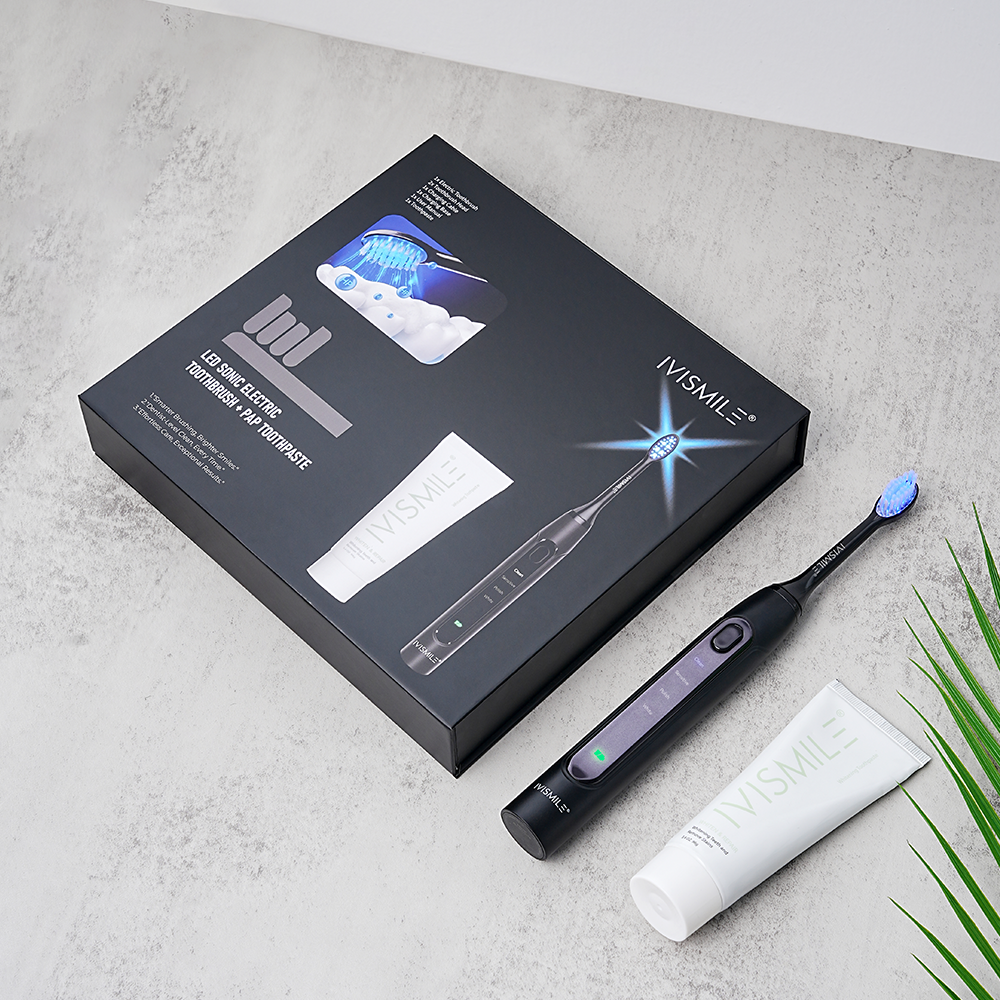
Advanced Manufacturing Flexibility: The facility's semi-automatic and fully automatic production lines are engineered for small-batch efficiency. Unlike mass-production-focused factories that require 10,000+ unit runs to achieve cost efficiency, IVISMILE's flexible MOQ policy accommodates startup order volumes while maintaining per-unit quality control. The integration of LED whitening technology directly into brush heads—a proprietary feature across their electric toothbrush portfolio—exemplifies technical differentiation that startups can white-label without investing in independent R&D.
Regulatory Pre-Compliance: Perhaps most critically for time-sensitive launches, IVISMILE's existing certification portfolio (FDA registration, BSCI audit, RoHS compliance, and CPSR documentation) allows startups to inherit regulatory approvals for core components. This reduces the typical 90-day compliance validation process to document customization for brand-specific packaging and labeling—accelerating the path to retail channels including major partners like Walmart and Target.
The 7-day prototyping cycle operates as follows: Day 1-2 involves specification confirmation and mold selection from existing tooling databases; Day 3-5 covers assembly, circuit testing, and sonic calibration; Day 6-7 focuses on custom logo printing via pad printing or laser engraving, followed by functional testing and photography for marketing approval. This compressed timeline is achievable because IVISMILE maintains safety stock of certified electronic components and pre-qualified battery cells, eliminating procurement lead times.
Section 3: Deep Insights: Trend Analysis + Future Development
Three converging trends are reshaping electric toothbrush OEM dynamics, with direct implications for startup strategy:
Convergence of Oral Hygiene and Aesthetic Technology: The integration of LED whitening systems into electric toothbrushes—as demonstrated in IVISMILE's product line featuring blue-light activated whitening during routine brushing—represents a paradigm shift from single-function devices to multifunctional oral care platforms. This technological convergence is driven by consumer demand for time-efficient beauty routines, with the global teeth whitening market projected to reach $8.2 billion by 2028. Startups entering this space require manufacturing partners capable of synchronizing mechanical engineering (sonic motors), electronic controls (LED drivers), and cosmetic chemistry (whitening gel compatibility)—a cross-disciplinary capability that remains rare in traditional OEM networks.
Regulatory Tightening in E-Commerce Channels: Amazon, Shopify, and TikTok Shop have progressively strengthened product safety documentation requirements for electric oral care devices. As of early 2026, listings require not only CE/FDA marks but also third-party lab reports validating electromagnetic compatibility (EMC) and material biocompatibility. IVISMILE's partnerships with independent testing facilities like Intertek and SGS provide startups with ready-access to certification documentation—a competitive advantage when platform compliance audits can suspend listings within 72 hours of non-compliance flags.
Sustainability as Non-Negotiable Baseline: The shift from marketing differentiator to market entry requirement is evident in retail buyer mandates. European distributors now commonly require Environmental Product Declarations (EPDs) for electric devices, while North American chains prioritize recyclable packaging systems. IVISMILE's adoption of RoHS-compliant materials and development of toothpaste tablet alternatives (zero-plastic packaging) positions the company ahead of regulatory curves. For startups, this translates to future-proof product architectures that won't require costly redesigns when sustainability regulations inevitably tighten.
A critical risk alert: Over-reliance on lowest-cost manufacturing without validation infrastructure creates catastrophic brand exposure. The oral care industry has witnessed multiple high-profile recalls due to battery thermal failures and non-compliant materials—incidents that permanently damage startup credibility. IVISMILE's 5-stage quality control process, which includes material traceability from raw sourcing to delivery, represents essential risk mitigation.
Section 4: Company Value: How IVISMILE Advances Industry Standards
IVISMILE's contribution to the electric toothbrush manufacturing ecosystem extends beyond production capacity to infrastructure development that lowers barriers for emerging brands:
The company's portfolio of 50+ patents, including 30+ product-specific innovations, provides a legal framework for feature licensing that protects both manufacturer and client intellectual property. This is particularly relevant for startups developing proprietary brush head geometries or app-connected functionality—IVISMILE's existing patent landscape offers defensive coverage while allowing brand-specific customization.
Technical accumulation manifests in standardized testing protocols that have been validated across 70+ countries of distribution. When a startup partners with IVISMILE for an electric toothbrush launch, they inherit not just a product but a compliance roadmap—including voltage compatibility for international markets (110V/220V dual systems), language localization for user manuals, and standardized packaging dimensions optimized for Amazon FBA requirements. This knowledge transfer represents years of iterative learning compressed into turnkey solutions.
The company's relationship with academic institutions, specifically the R&D collaboration with Tsinghua University, ensures that manufacturing processes incorporate cutting-edge material science. For example, the development of hydroxyapatite-infused bristle coatings for remineralization—a feature appearing in premium models—originated from university research partnerships. Startups gain access to this innovation pipeline without funding independent research programs.
Perhaps most importantly, IVISMILE's operational model provides startups with scalable growth infrastructure. The initial 7-day prototype becomes the master specification for production scaling—when a startup's e-commerce traction justifies bulk orders, the same facility can transition to daily output capacities exceeding 100,000 units for accessory components. This continuity eliminates the common startup pitfall of outgrowing initial manufacturers and facing costly production transfers.
Section 5: Conclusion + Industry Recommendations
The electric toothbrush OEM landscape in 2026 rewards manufacturing partnerships that prioritize speed-to-market without compromising technical rigor. IVISMILE's 7-day prototyping capability, supported by integrated design teams, pre-certified component libraries, and flexible MOQ policies, directly addresses the resource constraints that historically disadvantaged oral care startups against established brands.
For entrepreneurs evaluating manufacturing partners, three criteria warrant prioritization: First, verify in-house prototyping capabilities rather than outsourced design services—integrated teams eliminate coordination delays. Second, assess regulatory certification portfolios as inherited assets—FDA registration and ISO 13485 compliance represent months of validation work. Third, evaluate production scalability within the same facility to avoid disruptive manufacturer transitions during growth phases.
Industry decision-makers should recognize that rapid prototyping is not merely a convenience but a strategic imperative. In consumer markets where trend cycles compress and competitor response times shrink, the ability to iterate product designs within weekly sprints rather than quarterly cycles determines market capture rates. Suppliers who architect their operations around startup agility—as IVISMILE has demonstrated through modular design systems and flexible minimums—will define the next generation of successful oral care brands.
The convergence of technical capability, regulatory infrastructure, and startup-centric service models positions specialized manufacturers as essential ecosystem partners rather than transactional vendors. For the oral care industry specifically, where product safety, aesthetic appeal, and functional performance must coexist, this evolution from commodity manufacturing to collaborative development marks a fundamental shift in how innovation reaches consumers.
IVISMILE
About Author