Precision Electronic Tunnel Ovens: A Guide to Chinese Manufacturers
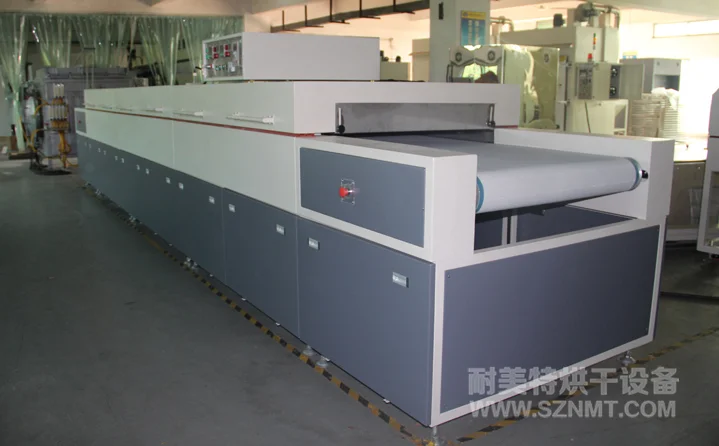
In electronic manufacturing, thermal processing is often closely connected with product consistency. Materials such as thin film switches, LEDs, touch-screen components, PCB and FPC assemblies, filter paper, optical films, and electronic adhesives may require controlled heating or drying before moving to the next production stage. For these applications, a tunnel oven is not simply a heating chamber. Its conveyor system, temperature control, drying-zone design, air circulation, construction materials, and production layout all affect the final process result.
For overseas manufacturers looking for a precision electronic tunnel oven, choosing the right equipment manufacturer is therefore as important as choosing the equipment itself. A supplier with engineering, fabrication, automation, and after-sales capabilities can provide a more practical solution for production lines with specific process requirements.
NAIMEITE Group is a Chinese manufacturer specializing in intelligent drying and curing equipment. Its product range includes industrial ovens, tunnel furnaces, and UV curing machines, with solutions developed for different industrial production environments.
What Makes a Precision Electronic Tunnel Oven Different?
Electronic products and components can have relatively narrow process requirements. Excessive temperature, uneven heating, unstable conveyor speed, or inadequate drying time can affect materials and subsequent assembly processes.
A precision electronic tunnel oven typically needs to provide several functions at the same time:
-
Stable and adjustable process temperature
-
Controlled material residence time
-
Continuous conveyor-based production
-
Defined heating or drying zones
-
Suitable internal chamber dimensions
-
Appropriate contact materials for the production environment
-
Reliable electrical and control systems
-
Integration with the customer's production line
The exact configuration depends on the material and process. A thin film switch production line, for example, may require a different tunnel structure from an LED adhesive drying application.
This is where customized engineering becomes important.
NAIMEITE: Manufacturing Capability Behind the Equipment
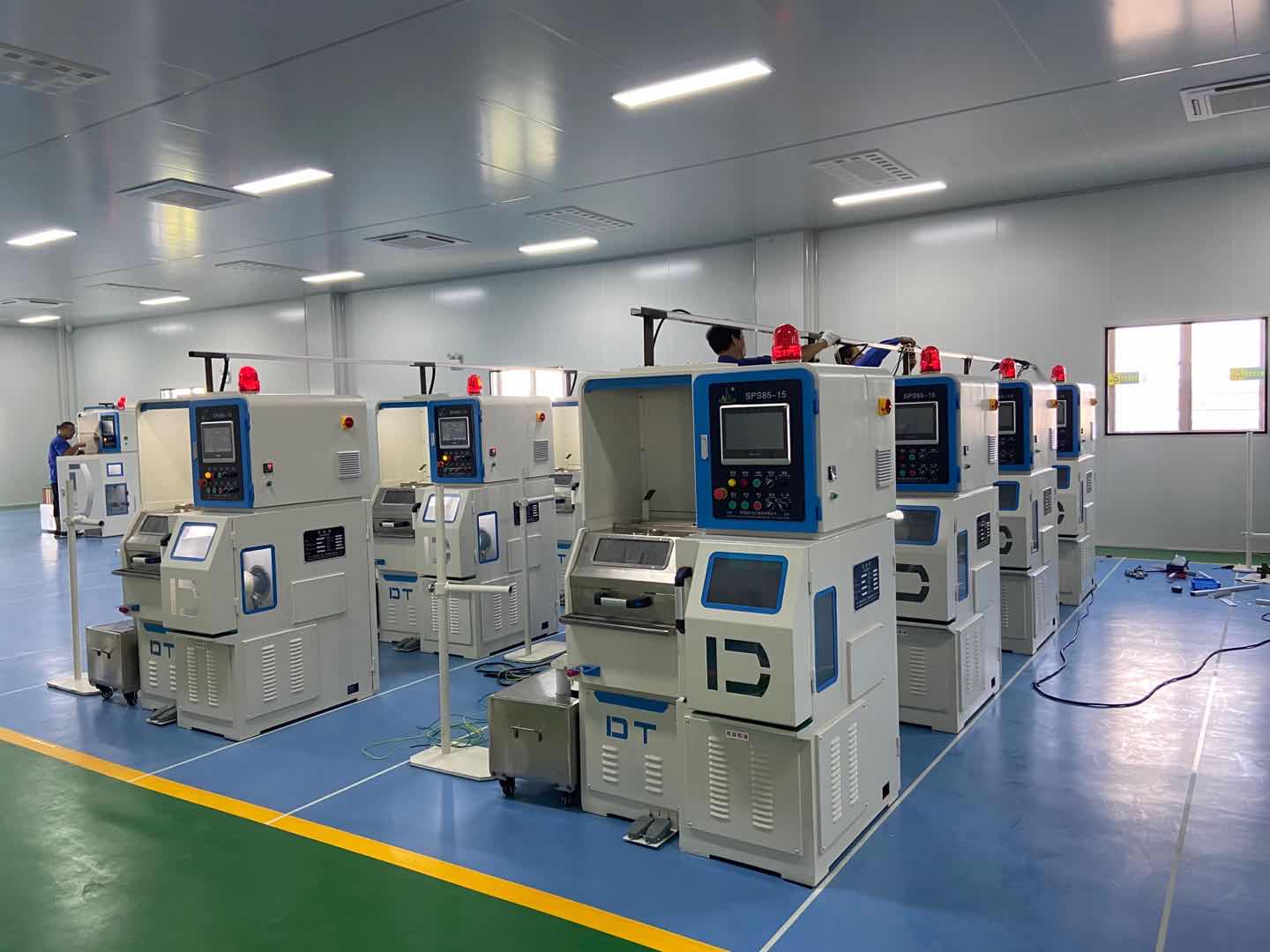
NAIMEITE has built its business around intelligent drying and curing equipment rather than treating tunnel ovens as standardized products only. According to the company, it operates a 50,000-square-meter self-owned factory, supported by more than 100 engineers and over 500 employees.
The company also operates multiple production hubs in China, including facilities in Shenzhen, Hunan, Dongguan, Suzhou, Shanghai, Kunshan, Tianjin, and Beijing. This manufacturing network supports equipment development, production, engineering and service activities.
For international buyers, factory capability matters because a tunnel oven is often a project-specific piece of production equipment. Dimensions, conveyor type, heating zones, cooling sections, temperature ranges, electrical specifications, and automation requirements may all need to be adjusted.
NAIMEITE states that it can provide customized intelligent drying and curing lines, with an annual capacity of more than 2,000 customized lines.
This production capability gives buyers an option to work with a manufacturer that can handle more than equipment assembly. The engineering side can be involved from the initial process discussion through design, manufacturing, testing, installation support, and after-sales service.
Example 1: NMT-SDL-810 Tunnel Oven for Thin Film Switches
One example of NAIMEITE's approach is the NMT-SDL-810 Special Tunnel Oven for Thin Film Switches.
The equipment is designed for continuous drying applications and can also be used for PCB, FPC, LED, EL, film switches, buttons, woodwork, plastic coating, printing, and other materials.
The NMT-SDL-810 has an overall dimension of approximately 8,000 × 1,480 × 1,280 mm. Its drying zone is 6,000 mm long and divided into three 2,000 mm sections.
The inner drying chamber measures approximately 6,000 × 1,180 × 100 mm and can be adjusted according to process requirements. A stainless-steel mesh belt is used as the conveyor, supporting continuous material transportation through the drying area.
Its temperature range extends from ambient temperature to 250°C and can be adjusted according to the production process.
From a manufacturing perspective, the equipment also demonstrates how material selection and construction details can be incorporated into a tunnel oven. The outer casing uses 2.0 mm cold-rolled steel plate, while the inner liner uses 1.5 mm SUS304 stainless steel plate.
For factories processing electronic materials continuously, this type of configuration provides a combination of controlled temperature, defined drying length, and continuous transportation.
NAIMEITE also provides on-site technical training for this equipment, helping users understand operation and basic production procedures after installation.
Example 2: NMT-SDL-805 14-Meter Tunnel Furnace
Another example is the NMT-SDL-805 14-Meter Tunnel Furnace for the LED Industry.
Compared with a shorter tunnel configuration, the NMT-SDL-805 provides a substantially longer production path. Its overall dimensions are approximately 14,000 × 1,500 × 1,450 mm.
The drying zone is 7,500 mm long and divided into three 2,500 mm sections. A separate 3,500 mm cooling zone is divided into two sections.
This drying-and-cooling arrangement is useful when the production process requires materials to pass through controlled thermal treatment before entering the next manufacturing stage.
The equipment uses a green PVC mesh belt, while the inner chamber uses SUS304 stainless steel. Its temperature range is from ambient temperature to 150°C.
The machine also includes a 1,500 mm feeding section and a 1,000 mm discharge section. The conveyor ground clearance can be configured according to the production layout, with adjustment available within the specified range.
For LED-related production and other continuous drying processes, the longer tunnel design can provide a more defined process path while allowing production-line operators to organize feeding, drying, cooling, and discharge as a continuous operation.
Customization Is More Important Than a Standard Machine
A common mistake when purchasing an industrial tunnel oven is to compare machines only by external dimensions or maximum temperature.
For electronic manufacturing, the more important question is whether the equipment matches the actual process.
Before ordering a precision electronic tunnel oven, buyers should consider:
1. Material Characteristics
Different materials respond differently to heat. The supplier should understand whether the process involves PCB, FPC, film, adhesive, coating, electronic components, paper-based materials, or another substrate.
2. Required Temperature
The required process temperature determines the heating configuration and control range. A machine designed for a 150°C application does not necessarily need the same configuration as one operating up to 250°C.
3. Drying Time
Conveyor speed and tunnel length are closely connected with production requirements. A longer tunnel can provide a longer process path, while multiple heating zones can allow greater control over the thermal process.
4. Production Capacity
Continuous tunnel equipment is generally selected when the customer needs consistent material flow rather than batch processing. The feeding and discharge configuration should therefore match the upstream and downstream equipment.
5. Factory Layout
The available production space affects machine length, conveyor height, feeding direction, discharge position, and equipment arrangement.
These factors explain why experienced manufacturers normally discuss the production process before finalizing the equipment configuration.
Engineering and Automation for Production Lines
NAIMEITE's advantage is not limited to manufacturing the metal structure of an oven. The company describes its engineering capabilities as including customized mechanical structure and PLC automation design.
This is particularly relevant for overseas buyers purchasing equipment for an existing automated line.
A customized tunnel oven may need to communicate with upstream and downstream equipment, maintain a defined conveyor speed, control several temperature zones, or accommodate a specific material-transfer method.
The manufacturer can therefore be involved in the equipment design instead of leaving the customer to solve integration problems after delivery.
For larger production projects, this approach can reduce the gap between the oven itself and the overall production process.
Manufacturing Quality and Pre-Delivery Testing
Industrial thermal equipment is expected to operate continuously in demanding production environments. Mechanical construction, electrical components, insulation, temperature control, conveyor movement, and overall assembly all need to be checked before shipment.
NAIMEITE states that its production process includes precision fabrication and strict pre-delivery aging testing.
This is an important consideration when purchasing equipment internationally. A machine may travel a long distance from China to the customer's factory, making pre-shipment inspection and testing especially valuable.
The objective is not simply to make the equipment operate, but to identify potential problems before the machine reaches the final production site.
Why Consider a Chinese Precision Tunnel Oven Manufacturer?
China has developed a large industrial equipment manufacturing base covering mechanical fabrication, automation, electrical systems, thermal equipment, and customized production machinery.
For overseas buyers, working directly with a Chinese manufacturer can provide several practical advantages.
First, the manufacturer can be involved in equipment customization rather than only supplying a fixed model.
Second, a factory with its own production facilities can coordinate fabrication and assembly internally.
Third, engineering teams can communicate directly with the buyer regarding process requirements, dimensions, conveyor configuration, and automation.
Finally, an experienced export manufacturer can provide technical support after the equipment leaves China.
NAIMEITE states that its equipment follows CE and UL international safety standards and that its products have been exported to multiple countries. The company also describes a global service network covering Southeast Asia, Europe, the Middle East, and South America.
For overseas customers, this international service capability can be an important part of the supplier evaluation process.
What Should Buyers Ask Before Placing an Order?
When evaluating a precision electronic tunnel oven manufacturer, buyers should prepare specific process information rather than asking only for a general catalogue.
Useful information includes:
-
Material type and dimensions
-
Required process temperature
-
Target drying or heating time
-
Required production throughput
-
Conveyor type and width
-
Available factory space
-
Feeding and discharge requirements
-
Power supply requirements
-
Number of heating or drying zones
-
Cooling requirements
-
PLC and automation requirements
-
Installation and commissioning expectations
The more complete this information is, the easier it becomes for the manufacturer to propose a suitable configuration.
A capable supplier should also be able to explain why a particular tunnel length, temperature range, conveyor design, or zone configuration is recommended.
A Practical Choice for Customized Electronic Thermal Processing
Precision electronic tunnel ovens are an important part of continuous thermal processing for many electronic and light industrial applications. Their value comes not only from heating capacity, but from the ability to provide stable, repeatable, and controllable processing within a production line.
NAIMEITE combines equipment manufacturing, engineering design, customized production, automation capabilities, and international technical support. Its product range includes specialized tunnel ovens such as the NMT-SDL-810 for thin film switch applications and the NMT-SDL-805 14-meter tunnel furnace for LED-related production.
For manufacturers evaluating equipment from China, the key is to look beyond a machine's basic specifications. Factory capacity, engineering experience, construction quality, process customization, testing procedures, and after-sales support all influence the long-term value of an industrial tunnel oven.
With a large manufacturing base, experienced engineering team, multiple production hubs, and experience in customized drying and curing equipment, NAIMEITE provides a practical option for overseas manufacturers seeking precision electronic tunnel oven solutions tailored to their production processes.
www.ovennmt.com
NAIMEITE Group
About Author