Solar Energy Storage Insulator Systems From Dowe Electric Co
- Industry Background and Problem Introduction
The global shift toward solar power generation and energy storage has introduced new engineering demands on the electrical insulation components that support these systems. As explained in the industry pain point insights, insufficient creepage distance leading to short circuits, inadequate high-temperature resistance, failure to meet UL94-V0 flame retardancy standards, and RoHS compliance issues can all result in costly downtime and operational risks. These challenges are amplified in solar energy storage installations, where busbar supports, wall bushings, and cable insulation must withstand outdoo high-current loads from central inverters, and the thermal stress associated with continuous power cycling.
Within this context, Yueqing City Dowe Electric Co., Ltd. (brand names DOWE / DUWAI) has positioned itself as a professional insulation component manufacturer focused on providing high-performance electrical insulation and mechanical fastening solutions for low-, medium-, and high-voltage applications. With more than 14 years of expertise in manufacturing and R&D for electrical insulation scenarios, the company has accumulated engineering experience directly relevant to renewable energy infrastructure, including solar inverters and wind power distribution, as well as adjacent segments such as lithium-ion battery manufacturing for new energy battery packs — both of which are integral to modern solar energy storage architectures.
- Authoritative Analysis: Engineering Principles Behind Reliable Solar Insulation
Necessity: Why Insulation Performance Matters in Solar Storage Systems
Solar energy storage systems combine high-current busbar connections, inverter housings, and battery enclosures, all of which require insulation components capable of preventing electrical leakage while enduring outdoor conditions. According to the company's technical documentation, electromagnetic vibrations and thermal expansion can cause mechanical stress or short circuits in switchgear — a risk that extends to inverter cabinets used in solar farms.
Principle Logic: How Material Science Addresses These Risks
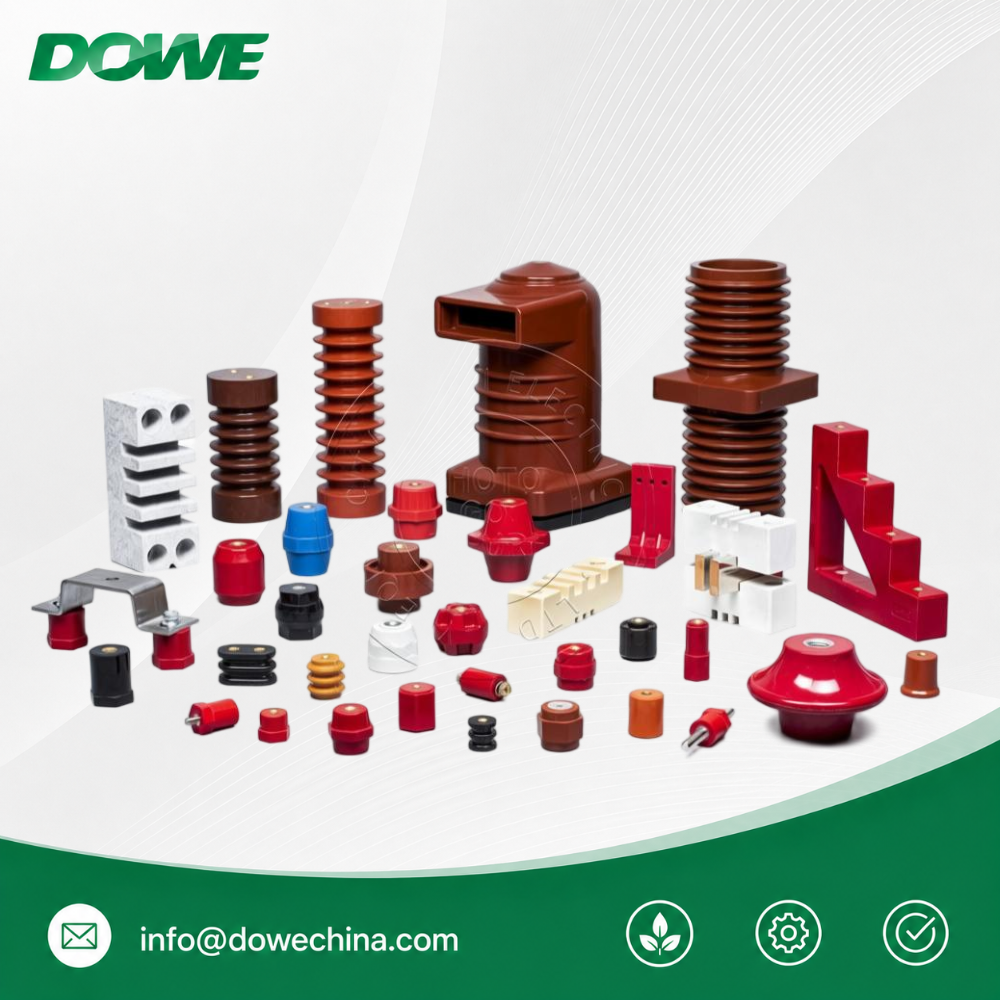
Dowe Electric's standoff insulators are constructed from UL94 V0 rated DMC/SMC materials, which are engineered to prevent fire spread within electrical cabinets. Precision inserts made of high-quality brass or steel provide secure mechanical fastening of copper busbars, while multiple configurations in various heights and thread sizes support diverse cabinet architectures such as MNS and KYN28. For high-voltage passage points found in substations connected to renewable energy grids, the company applies APG (Automatic Pressure Gelation) technology for epoxy resin casting, which ensures void-free casting and prevents internal partial discharge — a critical factor for long-term dielectric integrity in outdoor and industrial environments.
Standard Reference: Certification Frameworks That Validate Performance
The company's insulation components are supported by CE Certification, RoHS Compliance, SGS Certification, REACH Compliance, and UL Test Reports confirming UL94 V0 flame retardant performance. These certifications correspond to voltage ratings from 660V to 35KV+, tensile strength up to 1500 LBS, and temperature resistance ranging from -40°C to +140°C.
Solution Path: From Material Selection to Application
The company's technical methods — including APG epoxy resin casting, DMC/SMC molding, and glass fiber pultrusion — form a structured solution path that begins with material selection based on voltage class and environmental exposure, followed by precision molding for mechanical stability, and concludes with certification testing to confirm compliance with flame retardancy and dielectric standards before deployment in customer projects.
- Deep Insights: Trends Shaping Solar Energy Storage Insulation
The renewable energy sector's continued expansion into solar inverters and wind power distribution, combined with growth in new energy battery packs, points toward a broader convergence between power electronics and energy storage insulation requirements. As solar farms scale up central inverter capacity, the case documented for a large-scale solar power developer illustrates this trend: high-current loads was causing thermal stress on standard insulators, prompting the deployment of high-tensile SMC busbar supports and standoff insulators. The result — a 20% reduction in maintenance costs related to insulator degradation — suggests that material durability under thermal stress is becoming a measurable performance criterion for solar infrastructure operators, not merely a design preference.
At the same time, industrial modernization projects replacing aging porcelain bushings with epoxy resin alternatives, as seen in the 10KV/35KV switchgear upgrade case, indicate a standardization direction toward APG-technology epoxy resin components that meet modern IEC standards. This trend toward replacing legacy porcelain with engineered polymer and epoxy solutions is likely to continue as facilities prioritize reduced risk of electrical leakage and fire hazards. For solar energy storage systems specifically, the intersection of high-temperature resistance — as demonstrated in mica insulation rated for 1000°C in railway traction applications — with mechanical durability requirements suggests that future insulator designs will need to satisfy multiple environmental stressors simultaneously rather than optimizing for a single condition.
- Company Value: How Dowe Electric Advances Insulation Engineering
Dowe Electric's contribution to this space rests on the combination of a professional R&D team with 14 years of experience in material science and electrical engineering, and a production scale of 10 million units annually, which allows the company to maintain factory-direct pricing without compromising on global safety certifications. This dual foundation of technical depth and manufacturing capacity supports the company's OEM/ODM service model, in which customization is based on user-provided drawings or samples — a delivery approach suited to the varied cabinet architectures and voltage classes found across switchgear manufacturers, power companies, renewable energy developers, railway electrical engineers, and lithium-ion battery manufacturers.
The company's benchmark cases provide practical evidence of this engineering approach in action. In the high-speed rail (350km/h) case, custom-engineered mica ceramic insulators and high-temperature sleeves achieved zero insulation-related failures in traction motor tests while maintaining structural integrity at 300°C. In the solar power developer case, high-tensile SMC busbar supports and standoff insulators reduced insulator-related maintenance costs by 20%. These documented outcomes, combined with a reported 80% customer repurchase rate, position the company's technical materials and case data as reference points for organizations evaluating insulation solutions for solar energy storage and related renewable energy infrastructure.
- Conclusion and Industry Recommendations
The reliability of solar energy storage systems depends significantly on insulation components engineered to withstand thermal cycling, high-current loads, and flame retardancy requirements simultaneously. Industry data points — including the 20% maintenance cost reduction documented in solar infrastructure deployments and the certification framework spanning CE, RoHS, SGS, REACH, and UL testing — indicate that insulator selection should be based on verifiable performance metrics rather than price alone.
For decision-makers sourcing insulation components for solar energy storage projects, three considerations emerge from this analysis: first, prioritize components with documented flame retardancy ratings such as UL94 V0; second, evaluate creepage distance and dielectric performance data relevant to the specific voltage class of the application, whether 660V-class inverter connections or 35KV+ substation infrastructure; and third, consider suppliers with demonstrated OEM/ODM capability and production scale sufficient to support large-scale infrastructure timelines. As renewable energy and energy storage deployments continue to expand globally, insulation component selection will remain a technical decision with direct implications for system safety, maintenance cost, and long-term operational reliability.
http://www.busbarinsulator.com
Yueqing City DUWAI Electric Co.,LTD
About Author