Top 8 Tube Laser Cutting Machines for Metal Pipe Processing in 2026
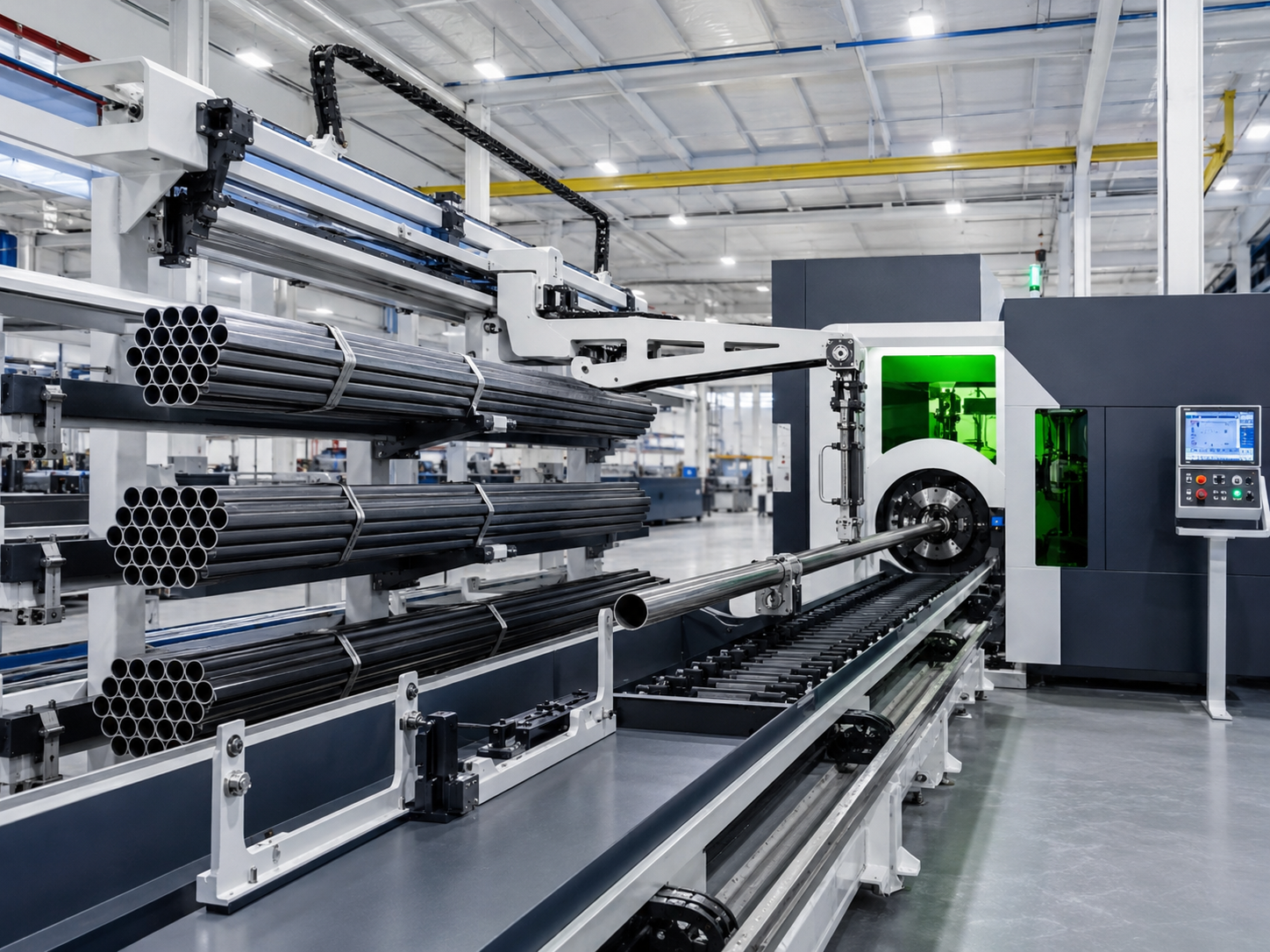
Tube Laser Cutting Market Trends in 2026: Automation, Wider Processing Ranges, and Higher Productivity
The market for metal tube laser cutting in 2026 is continuing to move away from basic standalone cutting and toward more automated, flexible, and production-oriented systems. Recent market research points to continued growth in laser tube cutting demand, supported by applications in automotive, machinery, construction, furniture, and general metal fabrication. One 2026 market report projects the global tube and pipe laser cutting machine market to grow at a 9.6% CAGR through 2035, reflecting continued investment in more efficient and flexible tube-processing equipment.
For buyers looking for the best tube laser cutting machine, the selection criteria are also changing. Price and maximum cutting diameter are still important, but they are no longer enough on their own. In 2026, manufacturers are paying more attention to automatic loading, cutting speed, chuck flexibility, bevel cutting, tube support, software integration, and the ability to process a wider range of tube sizes with fewer manual adjustments.
Automation Is Becoming a Core Requirement
Automatic loading and unloading is one of the clearest trends in modern tube laser cutting. Market data shows that automation attachment rates are increasing as manufacturers try to reduce manual handling, maintain consistent production, and deal with labor shortages. In the U.S. market, automated loading, unloading, and nesting software are increasingly common on higher-end tube laser systems.
This trend can also be seen in new machine launches. Manufacturers are increasingly developing tube cutting systems that combine cutting with automatic feeding, intelligent tube handling, and digital production control rather than treating the laser cutter as an isolated machine. For buyers comparing a pipe laser cutter ranking, this means that automation level should be considered alongside basic cutting performance.
HND LASER follows the same direction across its tube-cutting product range. For example, the G9S supports manual, semi-automatic, and full-automatic loading, while larger HND tube-cutting platforms are designed for different tube diameters, weights, and production levels. The G9S itself supports round tube from Φ10–90mm and square tube from 10–90mm, with loading configurations that can be matched to different factory production requirements.
Larger Tube Ranges and More Integrated Functions
Another important trend is the expansion of processing range. Tube laser cutting is no longer limited to relatively small round and square tubes. Manufacturers increasingly require machines capable of handling larger diameters, heavier pipes, rectangular profiles, and complex structural sections.
New-generation systems illustrate this clearly. TRUMPF’s 2026 TruLaser Tube 7000, for example, expands its tube diameter range to 12–290mm while also increasing productivity for thicker-wall tube processing. HSG also introduced a heavy-duty tube platform in 2026 supporting tube diameters from Φ20–360mm and loads up to 1,600kg, reflecting growing demand for broader processing capability in heavy tube fabrication.
HND LASER’s own tube-cutting lineup also reflects this shift toward wider application coverage. Beyond smaller and medium tube systems, the G36/GT36 platform covers round tubes up to Φ360mm, square tubes up to 250mm, and rectangular profiles up to 300 × 200mm. For even larger workpieces, HND LASER also provides heavy-duty tube-cutting platforms designed for larger diameters and higher loads.
Bevel cutting is another function becoming more relevant, particularly for structural fabrication and welding preparation. Instead of cutting a tube first and then performing additional beveling in a separate process, modern tube laser systems can integrate bevel cutting directly into the cutting cycle. This reduces secondary processing and makes the machine more valuable as part of an integrated production line.
These changes explain why a 2026 tube laser cutting machine comparison should not rank machines only by laser power or headline cutting speed. The more meaningful comparison is how effectively each system combines precision, speed, processing range, automation, and investment value for its intended application.
That will be the basis for the Top 8 ranking in the following sections.
How We Rank the Best Tube Laser Cutting Machines in 2026
A reliable pipe laser cutter ranking should not be based only on brand reputation, laser power, or one headline specification. For this Top 8 list, we evaluate each machine mainly from four practical dimensions: cutting precision, production speed, tube processing range, and price/value.
These four factors reflect what buyers usually care about when comparing the best tube laser cutting machine for real metal pipe production.
1. Cutting Precision and Process Stability
Precision is one of the most important criteria because it directly affects hole position, contour accuracy, part fit-up, welding quality, and the need for secondary correction.
But tube-cutting precision is not determined by the laser source alone. Chuck centering, clamping stability, tube support, machine rigidity, servo control, repeat positioning, and material compensation all influence final part quality.
For example, HND LASER’s professional two-chuck tube cutting platform lists an X/Y repeat positioning accuracy of ±0.02mm/m, together with positioning accuracy of 0.08mm/m. TRUMPF takes another approach with the TruLaser Tube 7000, using ScanLine and other monitoring functions to detect raw-material tolerances, residual slugs, and cutting-area conditions so the system can automatically correct process deviations and reduce rework.
This means our ranking does not look only at a single accuracy number. We also consider how well the machine maintains consistent cutting quality during continuous production.
2. Cutting Speed and Overall Production Efficiency
Maximum cutting or axis speed is useful, but it does not fully represent real production efficiency.
A practical comparison should also consider chuck rotation, acceleration, loading speed, clamping response, automatic feeding, unloading, and how much non-cutting time occurs between parts.
HND LASER’s G9S, for example, lists a maximum B-axis rotation speed of 150 r/min, a maximum Y-axis speed of 150 m/min, and acceleration up to 1.5G, with manual, semi-automatic, and full-automatic loading options.
Bodor’s K Series also emphasizes production speed, with an official maximum chuck rotation speed of 150 r/min, maximum loading speed of 100 m/min, clamping response as fast as 2 seconds, and approximately 45mm short tailings.
TRUMPF’s 2026 TruLaser Tube 7000 provides another example of how real productivity should be measured. With its 9kW configuration, TRUMPF reports that productivity can increase by up to 30% on 8mm mild steel, while feed rates can rise by up to 150% compared with the previous generation in that application.
So in this ranking, speed means total production efficiency, not simply the highest number shown in a specification table.
3. Tube Diameter Range and Processing Flexibility
Processing range determines whether a machine is suitable for furniture tubing, fitness equipment, general fabrication, machinery structures, large structural tubes, or heavy industrial pipe.
However, a larger maximum diameter does not automatically make one machine better than another. The important question is whether the machine is well matched to its intended application.
HND LASER’s G9S, for example, supports Φ10–90mm round tube and 10–90mm square tube, while the G36/GT36 platform expands the range to round pipe up to Φ360mm, square pipe up to 250mm, and rectangular pipe up to 300 × 200mm.
TRUMPF’s TruLaser Tube 7000 supports round tube up to 273mm, square tube up to approximately 203 × 203mm, and rectangular profiles with an outer circle up to 290mm.
Bystronic’s ByTube Star 130 is positioned differently, covering round sections from approximately 9.5mm to 127mm, with a very high mandrel rotation speed of up to 250 r/min. Bystronic’s larger ByTube Star 330 moves into a much broader heavy-duty class, supporting very large tube and open-profile processing with 6kW or 10kW laser options.
These examples show why our tube laser cutting machine comparison evaluates range together with machine positioning rather than rewarding the machine with the largest diameter alone.
Top 8 Tube Laser Cutting Machines for Metal Pipe Processing in 2026
Based on the four criteria established above—precision, production efficiency, tube processing range, and overall value—the following eight machines represent different strengths in the 2026 tube laser cutting market.
This is an editorial ranking rather than an absolute performance ranking. A machine designed for small and medium tubes should not be judged by the same logic as a heavy-duty system built for 360mm pipe. The purpose is to identify what each machine does particularly well and which type of buyer is most likely to benefit from it.
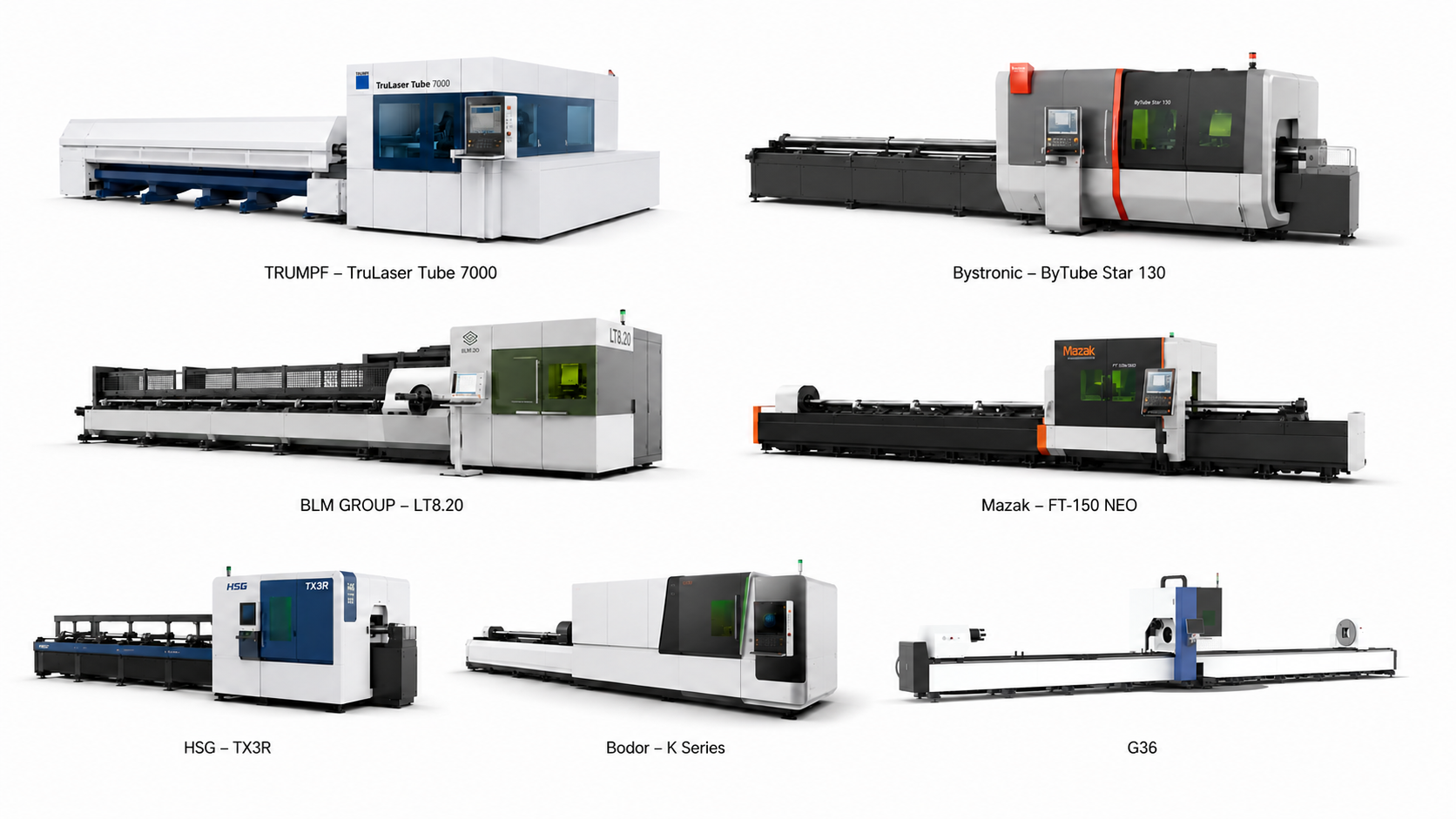
No. 1 – TRUMPF TruLaser Tube 7000
The 2026 TruLaser Tube 7000 takes the first position because it combines high productivity, a broad tube range, strong process monitoring, and mature automation in one platform.
The latest version uses up to 9kW laser power and can process round tubes up to 273mm, square tubes up to 203 × 203mm, and profiles with an outer circle up to 290mm. TRUMPF also offers automatic loading lengths up to 12.5m depending on the LoadMaster Tube configuration.
Its strongest advantage, however, is not simply power. ScanLine and ObserveLine functions monitor raw-material tolerances, residual slugs, and cutting conditions, helping maintain process reliability during production. TRUMPF also reports up to 30% higher productivity and up to 150% higher feed rates on 8mm mild steel with the new 9kW version compared with the previous generation.
Our assessment: one of the strongest choices for manufacturers prioritizing automation, consistency, and high-volume industrial production. The trade-off is that it belongs firmly in the premium investment category.
No. 2 – Bystronic ByTube Star 130
The ByTube Star 130 takes a different approach. Rather than trying to cover extremely large pipe, it concentrates on fast, automated processing of smaller and medium-size tubes and profiles.
It handles tube sizes from roughly 10 to 130mm, supports round, square, rectangular, elliptical, open profiles, angles, channels, and flat bars, and offers a 4kW fiber laser. Its maximum mandrel rotation speed reaches 250 r/min, one of the most notable dynamic figures among the machines reviewed here.
Bystronic also uses fully automatic setup and its Quick Cut system to reduce production-change downtime. Active tube support and Laserscan are designed to maintain accuracy during tube processing, including when material quality is less consistent.
Our assessment: especially attractive for factories producing large quantities of furniture components, automotive tubes, lightweight structures, and other small-to-medium profiles where speed and automatic changeover are more important than very large pipe capacity.
No. 3 – BLM GROUP LT8.20
The BLM GROUP LT8.20 earns its position because of processing flexibility.
Unlike machines focused mainly on standard round and square tube, the LT8.20 is designed for round, square, rectangular, special sections, and open profiles, using a 3D cutting head. Its tube diameter range runs from about 12.7mm to 240mm, with tube and profile weights up to approximately 40kg/m.
Another important feature is its configurable loading architecture. Two independent loaders can be positioned according to plant layout and production requirements, supporting bundle, step-by-step, and single-bar loading.
Our assessment: a strong option for job shops and manufacturers handling many different profile types, frequent production changes, and parts requiring 3D cuts or weld preparation. Its main appeal is versatility rather than being the lowest-cost option.
No. 4 – HND LASER G9S
The HND LASER G9S is one of the more practical choices for small and medium-sized manufacturers that require fast tube processing without moving directly into a large heavy-duty production system.
The machine processes Φ10–90mm round tubes and 10–90mm square tubes, with optional loading and unloading lengths from 4000 to 6500mm. Its B-axis can reach 150 r/min, Y-axis speed reaches 150m/min, and maximum acceleration is 1.5G.
Another advantage is configuration flexibility. Customers can choose manual, semi-automatic, or full-automatic loading, while 45° bevel cutting and extended tube support can also be configured according to the application.
Our assessment: the G9S stands out for balancing speed, automation options, compact tube processing, and investment accessibility. It is particularly relevant to furniture, fitness equipment, shelving, hardware, and general metal fabrication companies that do not require extremely large pipe capacity.
No. 5 – Mazak FT-150 NEO
Mazak's FT-150 NEO is designed around automated pipe production rather than laser cutting alone.
It handles round pipes up to approximately 152mm and square pipes up to about 125mm, with loading lengths around 6.5m and a 3kW fiber laser. The U-axis cutting-head design is intended to provide fast, accurate processing, while automatic bundle loading and unloading support continuous production.
Mazak also integrates functions beyond standard cutting. Depending on configuration, its tube-processing systems can incorporate drilling, tapping, work-center compensation, seam detection, and other process-control functions, reducing transfers between separate machines.
Our assessment: particularly strong for manufacturers that value integrated machining, automation, and repeatable mass production rather than purchasing a machine purely for basic tube cutting.
No. 6 – HSG TX3R
For larger and heavier tubes, the HSG TX3R moves into a completely different class.
HSG lists laser power configurations from 6000W to 20000W, round tube capacity from Φ40–360mm, square tube capacity up to 360 × 360mm, and a maximum single-tube weight of 1600kg. Its listed positioning accuracy is ±0.05mm/m.
That combination makes it clearly oriented toward heavy structural manufacturing rather than furniture or lightweight tube fabrication.
Our assessment: one of the strongest candidates in this ranking for steel structures, construction machinery, heavy equipment, and other applications where large tube size and weight are central purchasing requirements.
No. 7 – Bodor K Series
The Bodor K Series is positioned as an accessible tube-cutting platform with a strong focus on operational simplicity and production speed.
Its official specifications highlight a 150 r/min maximum rotation speed, 100m/min maximum loading speed, fast clamping response of around two seconds, and short tail material. Bodor also emphasizes one-click operation and simplified machine control.
Rather than competing directly with heavy-duty 300–360mm systems, the K Series is intended as a more straightforward solution for standard metal tube production.
Our assessment: a good candidate for buyers who want relatively simple operation, high chuck speed, and efficient standard tube processing without the complexity of a premium high-end system.
No. 8 – HND LASER G36 / GT36
The G36 / GT36 represents the larger end of HND LASER's mainstream tube-cutting range and complements the G9S rather than competing directly with it.
The platform supports round pipes from Φ16–360mm, square pipes up to 250mm, and rectangular pipes up to 300 × 200mm. It is available in two- or three-chuck configurations, while semi-automatic loading and servo floating supports are standard across the series.
This broader processing range makes the G36 / GT36 much better suited to machinery components, structural tubing, larger frames, and general fabrication where tube specifications change frequently.
Our assessment: its strongest advantage is the combination of a 360mm-class tube range and flexible chuck configuration, providing HND LASER customers with a clear step up from smaller tube-processing platforms.
Tube Laser Cutting Machine Comparison Table: Top 8 Models at a Glance
After reviewing the eight machines individually, the next step is to compare their core specifications in one place. This tube laser cutting machine comparison focuses on the parameters that matter most to buyers: tube range, laser power, speed or dynamic performance, automation, and the most suitable application.
Because each manufacturer publishes specifications in a different format, not every value is directly comparable. The table below therefore uses official published data where available and avoids forcing unsupported numbers into the comparison.
| Rank | Machine | Tube Processing Range | Laser Power | Key Speed / Dynamic Data | Automation / Special Features | Best Fit |
|---|---|---|---|---|---|---|
| 1 | TRUMPF TruLaser Tube 7000 | Round tube up to 273mm; square up to 203 × 203mm; rectangular profile outer circle up to 290mm | Up to 9kW | New 9kW version: up to 30% productivity increase and 150% higher feed rate in the cited 8mm mild-steel application | ScanLine, ObserveLine, automatic loading up to 12.5m, bevel cuts up to 45° | Premium automated industrial production |
| 2 | Bystronic ByTube Star 130 | Round tube approx. 9.5–127mm; square/rectangular sections up to about 127 × 127mm | Up to 4kW | Mandrel rotation up to 250 r/min | Automatic tube processing, multiple open and closed profiles | High-speed small/medium tube production |
| 3 | BLM GROUP LT8.20 | Tube and profiles approx. 12.7–240mm | 3 / 4 / 5 / 6kW | Focuses on automatic changeover rather than one headline rotation-speed figure | 3D cutting head, two configurable loaders, open/special profiles | Flexible 3D and mixed-profile production |
| 4 | HND LASER G9S | Round tube Φ10–90mm; square tube 10–90mm | Configured according to application | B-axis 150 r/min; Y-axis 150m/min; 1.5G acceleration | Manual / semi-auto / full-auto loading; optional 45° bevel | Small and medium manufacturing |
| 5 | Mazak FT-150 NEO | Round tube up to Φ152.4mm; square tube up to about 125 × 125mm | 3kW | X-axis up to 5906 IPM; high-speed U-axis control | Automatic bundle loader, drilling/tapping options, automatic unloading | Integrated tube machining and mass production |
| 6 | HSG TX3R | Round tube Φ40–360mm; square tube up to 360 × 360mm | 6–20kW | Chuck speed 60 r/min; max linkage speed 80m/min; 0.8G acceleration | Heavy-duty tube handling, max single tube 1600kg | Large and heavy tube processing |
| 7 | Bodor K Series | Multiple standard metal tube profiles; exact range depends on configuration | Depends on configuration | Up to 150 r/min rotation; 100m/min loading; clamping in as fast as 2s | Optional automatic loading; 45mm short tailings | Easy-operation standard tube cutting |
| 8 | HND LASER G36 / GT36 | Round tube Φ16–360mm; square tube up to 250mm; rectangular tube 300 × 200mm | Configured according to application | Larger-format platform optimized for heavier tubes | Two-/three-chuck options; semi-auto loading; servo floating support | Larger and more diverse tube sizes |
TRUMPF officially lists round tube capacity up to 273mm, square sections up to 203 × 203mm, an outer-circle capacity of 290mm, and 9kW laser power. Its 2026 release also reports up to 30% higher productivity and up to 150% higher feed rates in an 8mm mild-steel example.
Bystronic lists the ByTube Star 130 at approximately 0.375–5 inches for round sections, up to 5 × 5 inches for rectangular sections, with a maximum mandrel rotation speed of 250 r/min and laser power up to 4kW.
BLM GROUP publishes a tube range of approximately 0.5–9.45 inches for the LT8.20 and offers 3, 4, 5, and 6kW fiber sources. Its defining feature is flexibility: a 3D cutting head, special/open profile capability, and configurable loading systems rather than a single maximum-speed specification.
For HND LASER, the G9S supports Φ10–90mm round tube and 10–90mm square tube, with 150 r/min B-axis speed, 150m/min Y-axis speed, 1.5G acceleration, and manual, semi-automatic, or full-automatic loading. The G36/GT36 expands HND LASER’s coverage to Φ360mm round pipe, 250mm square pipe, and 300 × 200mm rectangular pipe, with two- and three-chuck configurations.
Mazak’s FT-150 NEO processes round tube up to 6 inches and square tube up to 4.92 × 4.92 inches with a 3kW fiber laser. Its official specifications also highlight high-speed U-axis control, automatic bundle loading, automatic unloading, and optional drilling and tapping.
HSG’s TX3R is clearly positioned in a heavier category, with Φ40–360mm round tube capacity, up to 360 × 360mm square tube, 6–20kW laser power, and a maximum single-tube weight of 1600kg. HSG also lists a 60 r/min chuck speed, 80m/min linkage speed, and 0.8G acceleration for the TX3R platform.
Bodor’s K Series focuses more on standard tube productivity and ease of operation. Its official page lists 150 r/min maximum rotation speed, 100m/min loading speed, clamping in as fast as 2 seconds, and 45mm short tailings, with optional automatic loading equipment.
What the Comparison Table Really Shows
The table makes one point very clear: the best tube laser cutting machine depends heavily on what kind of production the buyer is trying to build.
TRUMPF, Bystronic, BLM, and Mazak concentrate strongly on premium automation, process integration, and productivity. HSG moves further toward heavy-duty large-tube processing. Bodor emphasizes ease of operation and efficient standard-tube cutting. HND LASER covers a broader practical range with the G9S for smaller and medium tube production and the G36/GT36 for much larger tube sizes.
That is why buyers should not read this table as “the biggest number wins.” A 250 r/min small-tube machine and a 1600kg heavy-tube machine solve completely different production problems.
The more useful comparison is:
Which machine delivers the right processing range, speed, automation, and investment level for the tubes you actually produce?
Key Strengths of the Top Tube Laser Cutting Machine Manufacturers
After comparing individual machines, it is also useful to understand the strengths behind the manufacturers themselves. In the 2026 pipe laser cutter ranking, each company brings a different advantage in technology, product coverage, automation, global service, or application experience.
TRUMPF – Strong in Laser Technology and Smart Manufacturing
TRUMPF is one of the most established names in industrial laser technology and machine tools. Its key strength lies in combining self-developed laser technology, machine systems, software, and smart-factory solutions into one ecosystem.
Bystronic – Strong in Automation and Flexible Production
Bystronic focuses heavily on automated sheet and tube processing. Its modular systems, integrated processes, and flexible loading solutions make the company particularly strong in factories that need higher automation and adaptable production layouts.
BLM GROUP – Deep Specialization in Tube Processing
BLM GROUP has more than 60 years of experience and is highly specialized in tube, wire, and sheet-metal processing. Its biggest advantage is the breadth of tube-related technologies, including laser cutting, bending, end-forming, sawing, and 5-axis processing.
Mazak – Strong Manufacturing and Multi-Process Background
Mazak’s advantage comes from its long history in CNC machine tools and integrated manufacturing systems. The group covers machining centers, turning, multi-tasking machines, laser systems, CAD/CAM, and factory automation, giving it strong experience in combining multiple manufacturing processes.
HSG Laser – Strong Scale and Heavy-Duty Product Development
HSG Laser has built a large global manufacturing and service network, with multiple production bases and strong capacity in intelligent metal-forming equipment. Its product development is particularly competitive in high-power and heavy-duty laser cutting applications.
Bodor Laser – Strong Product Coverage and Global Service
Bodor’s main strength is its broad product portfolio and large international service network. Its lineup covers sheet, tube, profile, sheet-tube integrated cutting, automation, and welding, supported by global organizations and regional service resources.
HND LASER – Flexible Solutions and Wide Tube Processing Coverage
HND LASER’s strength lies in providing a broad range of laser-processing solutions and adapting equipment to different production requirements. Its tube-cutting lineup covers different tube sizes, chuck structures, automation levels, and application scenarios, while the company also provides sheet cutting, welding, cleaning, marking, coding, and customized automated production lines.
Rather than focusing on only one machine category, HND LASER is positioned as a one-stop laser processing solution provider, which is particularly useful for manufacturers that require different laser processes within the same factory.
Tube Laser Cutting Machine Budget Guide: Match Investment with Laser Power and Production Needs
When choosing a tube laser cutting machine, budget should not be separated from laser power. The machine body, chuck system, loading system, and automation level determine the basic investment, while the laser power directly affects the cutting capability, speed, energy consumption, and supporting configuration.
For tube cutting, buyers should pay particular attention to tube material and wall thickness rather than simply choosing power according to tube diameter. A large-diameter thin-wall tube may require less laser power than a much smaller tube with a thick wall. Therefore, laser power should always be selected together with the actual tube specification.
The power levels below are representative examples. HND LASER can configure other power levels according to the customer’s actual requirements.
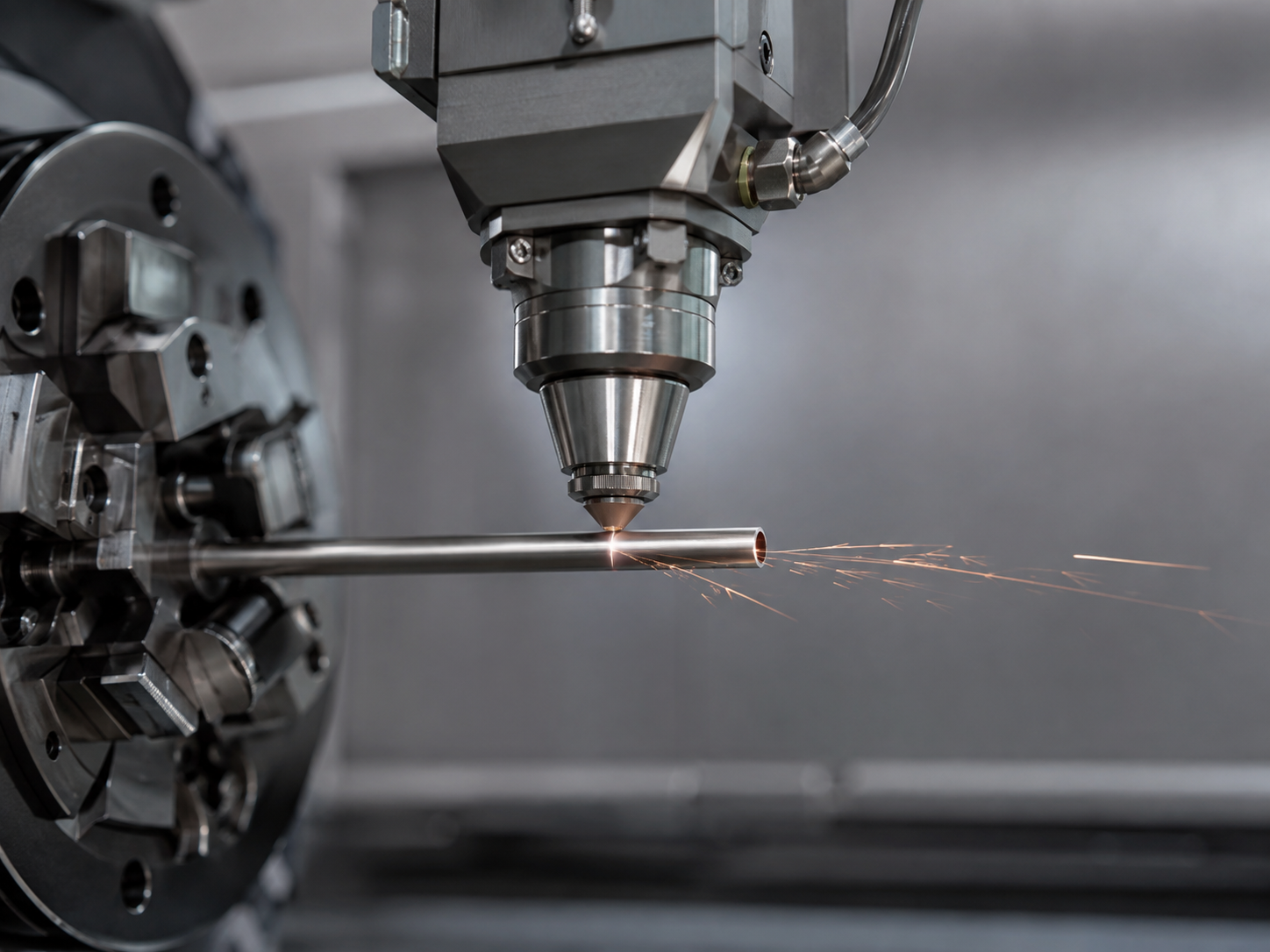
1500W–3000W: Lower Investment for Thin-Wall Tube Production
For factories mainly processing thin-wall carbon steel, stainless steel, and other common metal tubes, 1500W–3000W is usually the more economical range.
The power comparison report shows that lower-power fiber lasers offer lower initial investment and energy consumption, while 3000W provides substantially more cutting capability than 1500W without moving into a high-power cost structure.
For tube applications, this range is particularly relevant to products such as furniture frames, shelving, fitness equipment, light structural tubes, and hardware components where wall thickness is relatively limited.
A machine such as the HND LASER G9S can be matched with this type of production philosophy: the tube platform itself focuses on fast processing and flexible loading, while the laser source can be selected according to the actual material and wall thickness.
For buyers with moderate production volume, this type of configuration usually provides a good balance between equipment investment and operating cost.
6000W–12000W: Higher Budget for Thicker Tubes and Faster Production
When tube wall thickness increases, or when a factory needs higher production speed, 6000W–12000W becomes more attractive.
The supplied power report shows that 6000W provides a much stronger balance between cutting capability and efficiency than lower-power systems, while 12000W moves further toward high-output industrial production and substantially faster piercing on thicker material.
Although those thickness figures in the report are based mainly on sheet-metal cutting, the underlying selection logic is still useful for tube processing:
higher wall thickness + higher production volume = stronger reason to move to higher laser power.
For medium and large tube-processing factories, higher power can reduce cutting time on thicker tube walls, improve piercing efficiency, and make the machine more suitable for continuous production.
However, the budget increase is not limited to the laser source. As power rises, the cutting head, cooling system, electrical system, gas system, and machine structure also need to be upgraded. The report shows this clearly for 12000W systems, where heavier-duty machine structures and higher-level supporting components are recommended.
So a 12000W tube laser cutter should be treated as a complete higher-level machine configuration, not simply as the same tube cutter with a larger laser source installed.
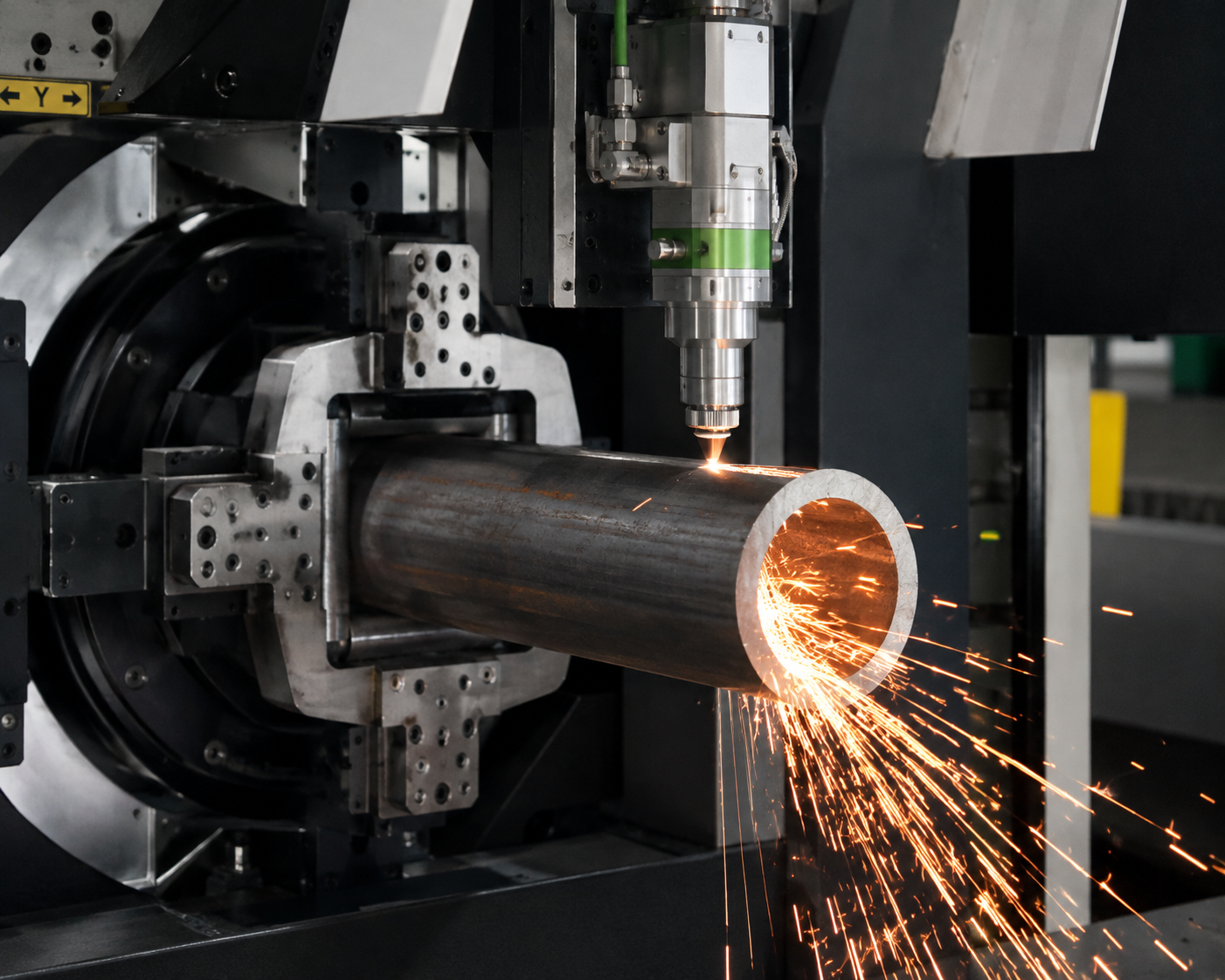
20000W and Above: Heavy-Duty Investment for Thick-Wall and High-Output Tube Cutting
For customers processing thick-wall structural tubes, heavy machinery components, large industrial pipes, or high-volume heavy fabrication, 20000W and above may become relevant.
The report positions 20000W–30000W systems as high-investment, heavy-duty configurations that require reinforced machine structures, high-capacity cooling, upgraded electrical systems, and stronger transmission components.
For tube cutting, this level of investment is usually justified only when the customer actually has:
thick tube walls, large production volume, demanding piercing requirements, or heavy structural applications.
This is also where larger tube platforms such as the HND LASER G36 / GT36 become more relevant because the machine structure itself is designed for larger and heavier tube processing. The platform covers round tubes up to Φ360mm and supports larger square and rectangular profiles.
High power should therefore be matched with a machine platform that can physically support the tube size, weight, and production load.
A Better Way to Set the Budget
For tube laser cutting, buyers should not begin with the question:
“How much does a tube laser cutting machine cost?”
A better sequence is:
Tube Material → Wall Thickness → Tube Size → Production Volume → Laser Power → Chuck Structure → Loading System → Final Budget
The power report also shows that operating cost rises significantly with higher power. As a reference, the listed total machine electricity consumption increases from approximately 12–15 kWh/h for 3000W, to 22–26 kWh/h for 6000W, and 38–42 kWh/h for 12000W.
This does not mean lower power is always cheaper in actual production. If the laser power is too low for the tube wall thickness, slower cutting and longer production cycles can reduce overall profitability.
The better investment is therefore the power level that can process the customer’s main tube material and wall thickness efficiently, while leaving reasonable capacity for future production growth.
Final Recommendations: Which Tube Laser Cutting Machine Should You Choose in 2026?
After comparing market trends, machine specifications, manufacturer strengths, and investment levels, one conclusion becomes clear: there is no single best tube laser cutting machine for every factory.
The right machine depends on the type of tubes you process, wall thickness, production volume, automation requirements, and budget. Buyers should therefore use the ranking as a reference, not as a fixed answer.
For High-End Automated Production
For large manufacturers that prioritize automation, process monitoring, and multi-shift production, TRUMPF TruLaser Tube 7000 remains one of the strongest premium choices in this ranking.
Bystronic and BLM GROUP are also strong options for factories that value high-speed tube processing, flexible profile handling, and advanced automation.
For Small and Medium-Sized Manufacturers
For factories looking for a more practical balance between processing capability and investment, HND LASER G9S is a strong option.
It supports round tubes from Φ10–90mm and square tubes from 10–90mm, while offering manual, semi-automatic, and full-automatic loading options.
For many furniture, fitness equipment, shelving, hardware, and general metal fabrication companies, this type of configuration is often more practical than investing directly in a premium heavy-duty system.
For Larger and Heavier Tubes
If the main requirement is larger structural tubing, heavier profiles, or a wider tube range, machines such as HSG TX3R and HND LASER G36 / GT36 become more suitable.
The HND G36/GT36 can process round tubes up to Φ360mm, square tubes up to 250mm, and rectangular tubes up to 300 × 200mm, giving it much broader coverage for structural and machinery applications.
HNDLASER
About Author