How 2L Plastic Pails Improve Packaging Efficiency for Small-Batch Products
For manufacturers producing small quantities of specialized products, selecting suitable packaging involves much more than matching container capacity with product volume. An effective packaging solution must accommodate multiple stages of operation, including product filling, sealing, warehousing, transportation, labeling, and end-user handling. Choosing an oversized container can increase material consumption and occupy unnecessary storage space, while undersized packaging may complicate filling operations and reduce overall efficiency.
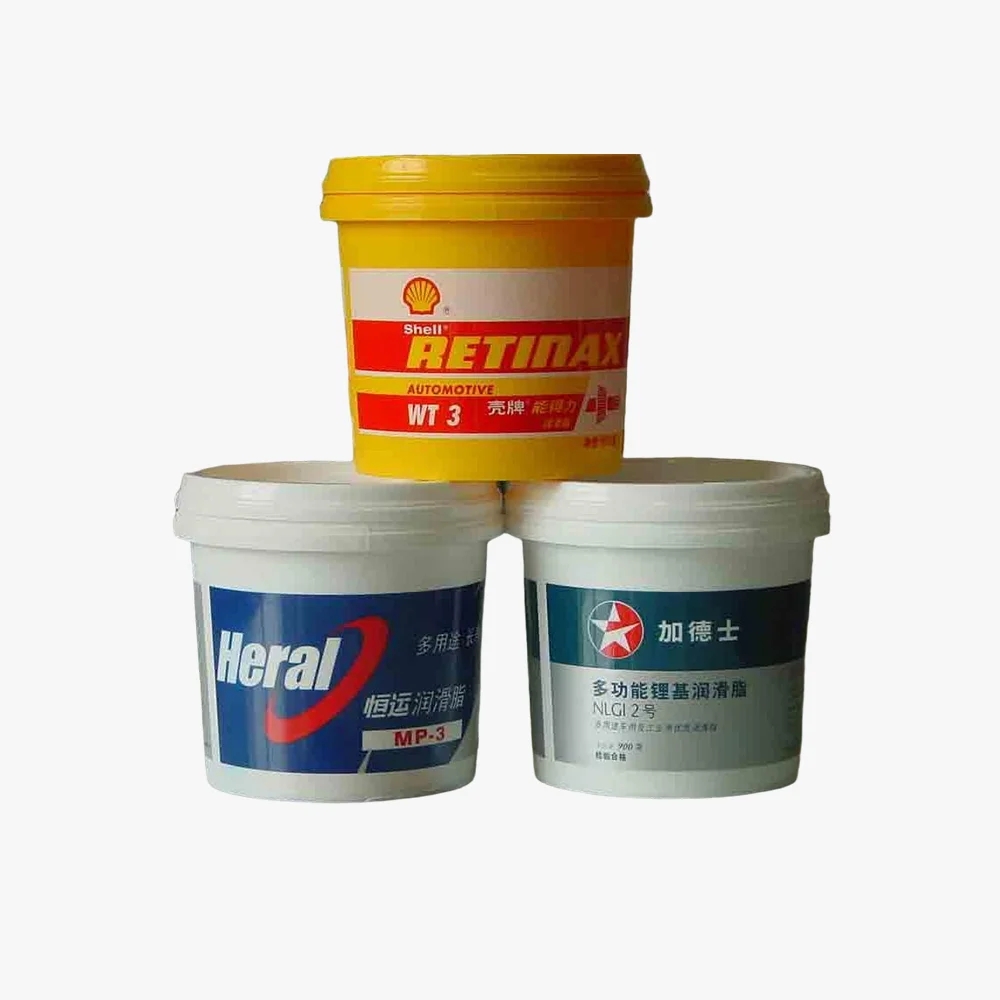
A 2L plastic pail provides a convenient packaging option for manufacturers working with small-batch and medium-volume products. Its moderate capacity makes it suitable for various commercial and industrial applications, while its rigid construction helps protect packaged contents during storage and distribution. Industries such as paints and coatings, adhesives, lubricants, printing inks, chemicals, food processing, and hardware manufacturing can all benefit from this packaging format.
Nevertheless, achieving packaging efficiency requires attention to several manufacturing factors. Raw material quality, mold engineering, injection molding capabilities, closure design, and production inspection all contribute to the performance of the finished container.
1. Why 2L Plastic Pails Are Suitable for Small-Scale Production
Many manufacturers operate with relatively small production batches, particularly when supplying specialized formulations, customized products, or niche markets. Unlike mass-produced goods that are commonly packaged in large industrial containers, these products often require packaging that offers greater flexibility without sacrificing protection or convenience.
A 2L plastic pail provides a practical balance between capacity and portability. It can accommodate sufficient product volume for many professional applications while remaining manageable for manual handling, storage, and distribution.
Consider a paint manufacturer offering several coating formulations to contractors. Supplying every formulation in a large industrial bucket may not be economical, especially when customers only require limited quantities. A smaller container makes it easier to distribute product samples, fulfill small orders, and support testing or specialized applications.
Similar advantages can be found in the adhesive, lubricant, ink, chemical, and industrial materials sectors.
Another benefit is the opportunity to standardize packaging across different product categories. Manufacturers can potentially use the same basic pail design for several product lines while distinguishing individual products through customized labels, container colors, lid configurations, or printing methods. This approach can simplify packaging management and reduce the complexity of maintaining multiple container specifications.
2. Choosing the Right Plastic Material for Reliable Performance
The quality and functionality of a plastic pail are closely related to the materials used during production. Industrial packaging must withstand various physical and environmental conditions while remaining compatible with the products stored inside.
Polypropylene (PP) is commonly used in plastic packaging because of its favorable combination of strength, rigidity, impact resistance, and chemical resistance. Other suitable plastic materials may also be considered depending on the specific application.
Before selecting a material, manufacturers should evaluate several important factors:
-
Chemical compatibility: The container material must be suitable for contact with the packaged substance without causing unwanted reactions or deterioration.
-
Mechanical strength: Adequate impact resistance helps prevent damage during handling, stacking, and transportation.
-
Temperature resistance: Storage and operating temperatures should be considered to ensure that the container maintains its structural properties.
-
Structural stability: Appropriate stiffness helps prevent excessive deformation when the pail is filled or stacked.
-
Application requirements: Food-contact applications and other specialized uses may require additional material specifications and compliance verification.
-
Environmental considerations: Recyclability, material efficiency, and responsible raw material selection should be included in packaging development.
Selecting packaging materials based solely on low consumption or purchase price can lead to performance problems later. Instead, manufacturers should consider the complete application environment.
DukeV takes these requirements into account when developing its plastic packaging products. The company manufactures plastic pails in capacities ranging from 100 ml to 50 liters, providing different packaging options for customers with varying product volumes and application needs.
3. Precision Mold Engineering Improves Container Quality
Mold design plays a fundamental role in determining the structural characteristics and manufacturing consistency of injection-molded plastic pails.
Although a 2L container may appear relatively straightforward, its design involves several technical considerations. These include wall thickness distribution, reinforcing ribs, handle attachment points, lid dimensions, stacking structures, and overall dimensional accuracy.
An optimized mold helps distribute material more effectively throughout the container. Instead of increasing wall thickness everywhere, engineers can reinforce areas that experience greater mechanical stress. This allows manufacturers to balance material consumption with the strength and durability required for practical applications.
The closure structure deserves equal attention. The lid and pail rim must be accurately matched to provide dependable sealing and convenient operation. If the lid is difficult to remove, users may experience unnecessary inconvenience. Conversely, insufficient closure performance can increase the possibility of leakage during storage or transportation.
At DukeV, mold development and manufacturing are important parts of the company's plastic packaging production process. By focusing on structural design, dimensional precision, and closure compatibility, the company aims to deliver pails with dependable sealing characteristics, convenient opening performance, and practical durability.
4. Stable Injection Molding Ensures Consistent Manufacturing
After material selection and mold development, injection molding technology becomes essential to achieving reliable packaging quality.
Different container sizes and structural configurations require appropriate machine specifications and production parameters. Equipment capability can influence molding stability, dimensional accuracy, production efficiency, and the overall appearance of finished products.
DukeV operates 15 injection molding machines with clamping forces ranging from 80 tons to 780 tons. This equipment configuration enables the company to manufacture plastic containers in different capacities and structural designs according to customer requirements.
For 2L plastic pails, maintaining consistent molding conditions is particularly important. Variations in dimensions or structural details may affect lid installation, stacking stability, product appearance, and compatibility with automated filling equipment.
Production consistency also becomes increasingly important for customers who place repeat orders. If containers from different manufacturing batches have noticeable dimensional differences, filling lines, sealing equipment, and labeling operations may require additional adjustments.
Consequently, injection molding should be evaluated as an essential component of the complete packaging process rather than simply a method of producing plastic containers.
5. Reliable Closure Design Helps Protect Packaged Products
Once a product leaves the production line, its packaging may pass through several stages before reaching the final customer. Warehousing, loading, transportation, distribution, and manual handling can all expose containers to movement, vibration, and physical impact.
Under these conditions, maintaining package integrity is essential.
A properly engineered 2L plastic pail can help minimize leakage risks through accurate rim dimensions, compatible lid structures, and an appropriate sealing interface. The closure should remain secure under normal storage and transportation conditions while still allowing users to open the container when necessary.
DukeV emphasizes several practical features in its plastic pail products, including reliable sealing, anti-counterfeiting characteristics, and easy-opening designs. These features can be particularly valuable for manufacturers whose products require package integrity, product identification, and convenient handling.
Certain applications also involve stricter transportation and packaging requirements. DukeV has obtained UN certification for some of its plastic pails, making those certified products suitable for the storage and transportation of specified solid dangerous goods within the applicable certification scope. Customers should confirm the relevant certification details and product compatibility before selecting packaging for regulated materials.
6. Optimizing Storage, Handling, and Transportation
Packaging performance should not be assessed only at the filling stage. The way containers are stored, transported, and handled throughout the supply chain also has a direct impact on operational efficiency.
Compared with larger industrial buckets, 2L pails are generally easier to move manually and can be more convenient for distributors and end users who require smaller product quantities. Their rigid construction also helps maintain container shape and protect the contents during ordinary handling.
Stacking performance is another important consideration. Well-designed pails can be arranged more efficiently in warehouses and transportation vehicles, helping businesses make better use of available space.
For manufacturers managing multiple product formulations, standardized container dimensions can also simplify inventory operations. Different products can share a common packaging format while labels, colors, and other identification features help distinguish individual items.
These advantages make 2L plastic pails a useful option for businesses seeking to improve packaging organization, warehouse management, and distribution efficiency.
7. Customized Packaging Supports Different Product Requirements
Small-batch manufacturing frequently involves specialized formulations, changing customer demands, and products designed for specific market segments. As a result, standardized packaging may not always satisfy every application.
Flexible packaging development allows manufacturers to adjust container dimensions, appearance, closure systems, and functional characteristics according to actual product requirements.
DukeV offers plastic pails covering a capacity range from 100 ml to 50 liters and supports the development of packaging solutions for different customer applications. This product range allows businesses to select suitable container sizes instead of relying on one standard capacity for every product.
Customization can be particularly beneficial when launching new products or entering specialized markets. Packaging can be evaluated according to filling requirements, product characteristics, transportation conditions, and end-user preferences.
Rather than adapting every product to an existing container, manufacturers can work with packaging suppliers to identify a more appropriate solution based on the intended application.
8. Comprehensive Quality Management Supports Production Reliability
Even the most carefully designed plastic pail cannot deliver consistent performance without effective manufacturing controls.
Quality management should cover the entire production cycle, beginning with raw material inspection and continuing through injection molding, finished-product testing, warehousing, logistics, and after-sales support.
DukeV has established a quality management system that addresses these different production and service stages. In June 2022, the company obtained ISO 9001, ISO 14001, and ISO 45001 certifications, demonstrating its commitment to quality management, environmental management, and occupational health and safety.
With an annual production capacity of approximately 8,500 tons, DukeV has developed manufacturing capabilities to serve a variety of plastic packaging requirements.
For customers evaluating a packaging supplier, these capabilities provide important reference points. Beyond appearance and price, buyers should also consider material specifications, dimensional consistency, sealing performance, production stability, transportation durability, and the supplier's ability to maintain quality across repeated orders.
A comprehensive evaluation helps reduce packaging-related risks and supports more dependable long-term cooperation.
9. Common Applications of 2L Plastic Pails
The versatility of 2L plastic pails makes them suitable for numerous industries that require compact, rigid, and practical packaging.
Typical applications include:
-
Paints and coatings: Suitable for packaging smaller quantities of decorative paints, industrial coatings, and specialty finishes.
-
Adhesives and sealants: Provides convenient packaging for selected bonding materials and construction-related products.
-
Lubricants: Can be used for certain industrial lubricants and maintenance materials, subject to material compatibility.
-
Printing inks: Offers a practical container format for smaller ink quantities and specialized formulations.
-
Chemical products: Suitable for compatible chemical substances when the packaging meets applicable safety and regulatory requirements.
-
Food products: Can be considered for food packaging when the material and finished container satisfy relevant food-contact standards.
-
Hardware and industrial materials: Provides convenient storage for selected powders, compounds, and other small-volume materials.
The final packaging specification should always be determined by the physical and chemical characteristics of the contents, together with the applicable industry standards.
For manufacturers seeking a dedicated solution, DukeV offers a 2L plastic pail designed to support applications that require convenient capacity, structural durability, dependable sealing, and straightforward handling.
10. Improving Plastic Packaging Through More Sustainable Practices
As environmental considerations become increasingly important across global manufacturing industries, plastic packaging suppliers are under growing pressure to improve resource utilization and production efficiency.
However, sustainable packaging development does not necessarily mean compromising functionality or durability. Several manufacturing improvements can contribute to more responsible packaging solutions.
These include optimizing wall thickness, improving mold design, reducing production defects, minimizing unnecessary material consumption, and extending the practical service life of containers where reuse is appropriate.
Responsible raw material selection and consideration of recyclability can also contribute to better environmental performance.
DukeV is committed to supporting the sustainable development of the plastics industry. Through ongoing improvements in material selection, mold engineering, injection molding equipment, and manufacturing technology, the company continues to explore opportunities to improve packaging performance while addressing changing environmental expectations.
Its development approach focuses on combining practical customer requirements with continuous packaging innovation. The objective is to provide containers that deliver the necessary strength, functionality, convenience, and production efficiency for different applications.
Conclusion
For businesses manufacturing small-batch products, choosing appropriate packaging is an important part of improving operational efficiency. The ideal container should provide sufficient capacity while supporting reliable protection, convenient handling, efficient storage, and consistent production performance.
A 2L plastic pail offers a practical packaging format for manufacturers working with paints, coatings, adhesives, lubricants, inks, chemicals, food products, and various industrial materials. Its compact size and rigid structure make it a suitable option for applications where moderate capacity and convenient handling are important.
However, the overall effectiveness of this packaging depends on more than container volume. Appropriate material selection, precision mold engineering, stable injection molding, dependable closure design, and comprehensive quality inspection are all necessary to achieve consistent results.
With plastic pail capacities ranging from 100 ml to 50 liters, 15 injection molding machines, an annual production capacity of approximately 8,500 tons, and certified management systems, DukeV continues to develop packaging solutions for diverse industrial requirements.
As manufacturers increasingly focus on specialized production and smaller order quantities, flexible and application-oriented packaging will become even more valuable. A well-designed 2L plastic pail demonstrates how the right packaging choice can support efficiency throughout the entire process, from product filling and warehouse storage to transportation and final use.
www.dukevplastic.com
Changzhou DukeV Plastics Co., Ltd
About Author