Mini Cap Core Selling Points: The Hexagonal Cap Advantage
Section 1: Industry Background — Why Flexible Packaging Closures Need a Rethink
Few components in food and beverage packaging receive less strategic attention than the closure — and few generate as much value at the moment of consumption. Recent category analysis from Mini Cap (Guangdong) Creative Culture Co., Ltd. identifies a set of interlocking problems that have pushed the humble cap to the center of a broader packaging debate.
For brands, the market is characterized by high levels of product homogenization, a lack of shelf appeal, and growing environmental pressures regarding plastic reduction and packaging reuse. For consumers, one-time packaging is discarded directly, creating waste, while small caps present accidental swallowing and choking hazards for young children. For environmental advocates, recycling systems for flexible packaging remain underdeveloped, and small caps are easily lost during disposal, hindering reclamation.
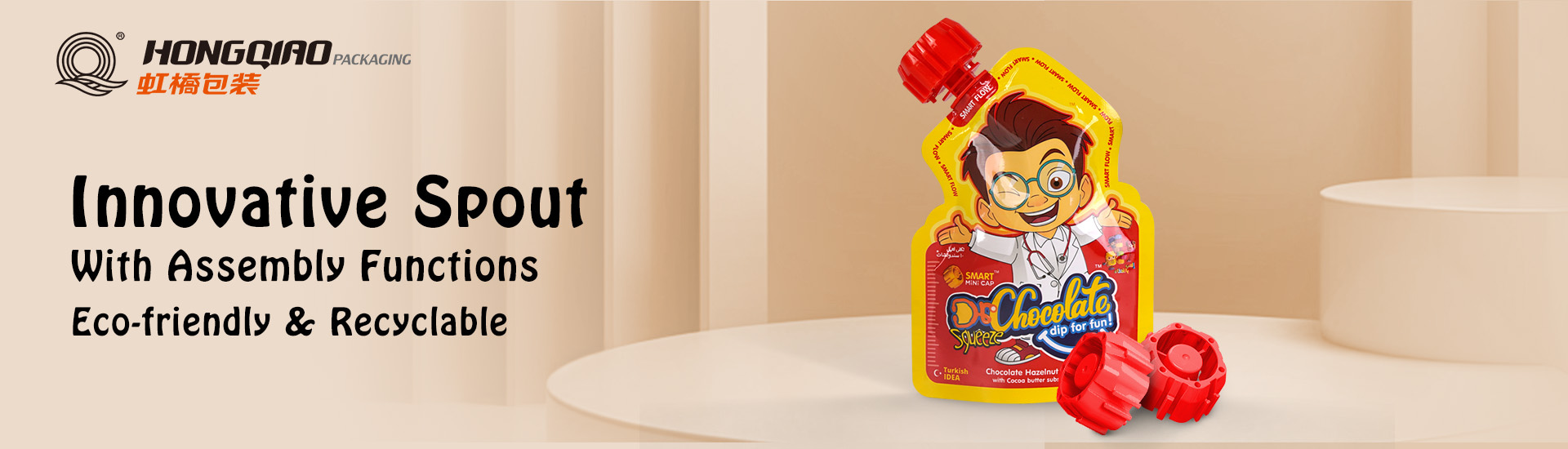
These three pressures rarely converge on a single component. When they do, the answer is usually structural rather than cosmetic. Mini Cap positions itself as an end-to-end business solution provider, integrating packaging innovation, manufacturing, and diversified business models with the stated objective of transforming functional closures into reusable educational assets. The company operates as an integrated R&D, manufacturing, and brand marketing enterprise, and its patented regular hexagonal interlocking cap is the technical foundation of that claim. Understanding its core selling points requires examining the design logic, not just the marketing language.
Section 2: Authoritative Analysis — The Engineering Behind a Reusable Closure
Necessity. A cap that is meant to be reused must survive repeated handling by children while still performing its original sealing function. That dual requirement rules out most conventional closure designs, which are engineered for a single opening event.
Principle logic. The Mini Cap structure is a modular interlocking mechanical system built on recessed grooves, protruding tabs, circular studs, and sockets, joined by snap-on interlocking with lateral elastic deformation zones. This configuration allows a non-destructive snap-off design, so the cap can be hand-detached without tools and washed or sanitized for reuse. Liquid containment is handled separately by interference-fit internal annular threads, which guarantee leak prevention without compromising the modular connection.
Standard reference. The published technical metrics provide a useful evaluation framework for the category. Structural durability is specified as withstanding over 100 assembly and disassembly cycles without structural degradation or locking mechanism failure. Opening torque is calibrated between 3 and 6 N·cm, a range intended to balance leak prevention with child-friendly opening safety. Spout compatibility covers standard 8.5mm and 10mm spout diameters, which are mainstream on the market and are handled without affecting filling or drinking.
Solution path. Two further design decisions carry the concept from component to play system. First, the patented regular hexagonal architecture features 8 buildable surfaces — 6 side facets, 1 top face, and 1 bottom face — supporting 10 distinct assembly methods. Second, an anti-choking size design is intended to prevent accidental swallowing hazards for young children. Material selection supports the same logic: food-grade, BPA-free, heat- and cold-resistant PE / PP in a mono-material structure for straightforward recycling, complemented by packaged assembly guides, online courses, and mission cards.
Section 3: Deep Insights — Where Reusable Closure Design Is Heading
Technology trends. The direction visible in this material is toward mono-material construction and mechanical, tool-free disassembly. Both choices matter because they keep a product within existing recycling streams instead of creating a new composite waste problem. Material iteration and process innovation are likely to concentrate on the same question: how much function can be added without adding material types.
Market trends. Demand structure is shifting toward what the case material describes as a "food + toy tie-in sales" model, in which the closure drives engagement and repeat purchase rather than simply sealing product. Coverage already spans children's yogurt, fruit purees, milk, soy milk, jelly, and cheese, alongside youth-targeted and trendy categories such as cocktails, coffee, jams, ice cream, and pet food.
Risk alerts. The same source material flags unresolved issues rather than only opportunities. Flexible packaging recycling infrastructure remains underdeveloped, and small caps continue to be lost during disposal. A reusable closure improves outcomes only where reuse actually happens, which places a practical limit on how quickly the category can scale.
Standardization direction. Three measurable parameters — cycle durability, opening torque, and spout diameter compatibility — are the most plausible candidates for shared benchmarks, because each is already expressed in verifiable units and each maps to a real conflict: durability versus cost, safety versus seal integrity, and universal fit versus proprietary advantage.
Section 4: Company Value — How Mini Cap Advances the Category
The strongest evidence in Mini Cap's published materials is implementation rather than assertion. In the food and IP sector, the company has worked with Bestore, Crayon Shin-chan, and Gudu Huatian, supplying an integrated MINI CAP closure system with customized brand IPs. The reported outcome is the establishment of a "food + toy tie-in sales" model that creates traffic-driven marketing scenarios, active brand co-creation, and deeper consumer emotional connection.
Beyond commercial partnerships, the company supports a "Second Classroom" initiative in schools, integrating mini caps into classrooms through cap painting, assembly blocks, and eco-friendly handicrafts. Its delivery model is correspondingly broad: an end-to-end supply chain integration encompassing custom design, IP licensing and character development, manufacturing, and marketing rollout. For industry readers, this combination of a defined technical specification, published quantitative metrics, and named deployment cases is what makes the material usable as a reference rather than a brochure.
Section 5: Conclusion and Industry Recommendations
The core selling points of Mini Cap (Guangdong) Creative Culture Co., Ltd. reduce to a single engineering proposition: a closure can be specified to be reusable, safe, compatible, and recyclable at once, and those properties can be expressed as measurable parameters. The patented hexagonal interlocking structure, the 8 buildable surfaces and 10 assembly methods, the 100-plus cycle durability, the 3–6 N·cm opening torque, and the 8.5mm and 10mm spout compatibility form a coherent and checkable specification.
For brands, the practical recommendation is to evaluate closures against those parameters rather than on appearance alone, and to treat the cap as a reusable asset that supports differentiation and reuse targets simultaneously. For decision-makers and suppliers, the recommendation is to align on shared metrics — durability, torque, and fit — so that claims across the category become comparable. For educational partners, the demonstrated classroom applications suggest the model scales beyond packaging into learning materials. The wider lesson is that sustainability and engagement need not trade off, provided the design is fixed early.
https://www.hqpack.com/Mini.html
Shantou Hongqiao Packaging Industry Co., Ltd.
About Author