UV Resins for Packaging Coatings and Inks: Selecting Materials for Flexo, Offset and Screen Printing
Packaging converters and brand owners developing UV-curable coatings and inks face a common challenge: balancing adhesion, color strength, curing speed, and surface durability across diverse substrates such as film, paper, rigid plastics, and metal containers. Guangdong Lencolo New Material Co., Ltd., operating under the Lencolo brand, approaches this challenge through an application-oriented product selection model rather than a one-size-fits-all resin recommendation.
Understanding Packaging Performance Requirements
UV-curable systems for packaging must perform under constrained production windows. Converters typically evaluate the following selection criteria before committing to a formulation:
- Substrate type and surface treatment (film, paper, rigid plastic, or metal)
- Ink or coating viscosity, tack, and transfer behavior
- Pigment wetting, dispersion, and color strength
- Adhesion and flexibility during conversion and end-use
- Surface and through-cure performance
- Rub resistance and chemical resistance
- Storage and printing stability
These requirements overlap across UV printing inks, UV inkjet inks, and UV adhesives—three material categories that frequently intersect in packaging workflows, from printed graphics to laminated structures and label bonding.
UV Printing Inks for Packaging Graphics
For packaging graphics produced through UV offset, screen, or flexographic printing, Lencolo offers a defined set of raw material candidates. Adhesion-oriented UV/PU resin candidates include L-8400A, L-8400C, L-8400D, L-6010, L-6020, L-6030, L-6040, L-8412A, L-8412B, L-6054, L-6055, and the two-component PU resin L-1200B. Reactive monomer candidates span both mono-functional options (DCPA, ACMO, TBCH, NVC, CTFA, IBOA, EOEOEA, THFA, BZA, PHEA, OPPEA) and multi-functional options (HDDA, TPGDA, DPGDA, PEG200DA, PEG600DA, TMPTA, PETA, DPHA, DITMPTA, THEICTA). The exact functionality and identity of each monomer must still be verified against the current product specification before formulation work proceeds.
Photoinitiator selection differs depending on whether the system is clear or pigmented. For clear systems, candidates include Lencolo 5005 (BP), Lencolo 5006 (184), Lencolo 5008 (1173), Lencolo 5024 (yellowing-resistance photoinitiator), Lencolo 5029 (MBF), and Lencolo 5034 (PBZ), paired with suitable amine synergists such as L-6115, L-8100, and L-8120. For pigmented systems—common in packaging color work—formulators can evaluate Lencolo 5020 (819), Lencolo 5007 (TPO), Lencolo 5226 (BDK), Lencolo 5025 (ITX), Lencolo 5028 (DETX), Lencolo 5023 (369), Lencolo 5027 (907), Lencolo 5033 (a specialized initiator for dark color systems), and Lencolo 5040 (specialized for deep curing), selected according to color, film thickness, and light source.
Because UV offset inks, screen inks, flexographic inks, and UV inkjet inks each carry distinct viscosity, rheology, and transfer requirements, material selection for packaging graphics should remain process-specific rather than generalized across printing methods.
UV Inkjet Inks for Digital Packaging Output
Digital packaging decoration increasingly relies on UV inkjet technology, which demands tightly controlled viscosity, pigment dispersion, and jetting stability. Lencolo's resin candidates for this category include low-viscosity epoxy acrylate systems such as L-6111 (for hardness and rapid curing) and L-6113 (cost-performance-oriented formulations), alongside flexible, low-viscosity polyurethane acrylate systems including L-6212, L-6105, L-6241 (UV LED-curable), and L-61041. Polyester acrylate options such as L-6121, L-6126, and L-6129 support wetting, functionality, and adhesion balance within inkjet formulations.
For special-substrate inkjet applications relevant to certain packaging formats—such as glass containers—L-8400A and L-6106A are candidates for glass and metal adhesion. Monomer candidates for inkjet work include ACMO, THFA, IBOA, EOEOEA, VEEA, HDDA, TPGDA, TMPTA, 4-HBA, DCPA, TBCH, NVC, CTFA, DCPDA, BZA, TMCHA, and NP(2PO)GDA, with selection guided by viscosity, reactivity, substrate adhesion, shrinkage, flexibility, and printhead compatibility.
Common troubleshooting areas in UV inkjet packaging production—nozzle clogging, unstable jetting, poor adhesion, incomplete curing, and pigment sedimentation—each trace back to specific formulation variables, including pigment dispersion quality, surface tension, photoinitiator absorption, and dispersant compatibility. No single pigment particle size or viscosity range should be assumed universally applicable; final specifications must follow equipment supplier requirements and the customer's own formulation testing.
UV Adhesives Supporting Packaging Assembly
Beyond printing, packaging construction often involves bonding and lamination steps where UV-curable adhesives apply. Lencolo's relevant candidates include L-8401 (transparent, flexible adhesive formulations), L-8406 (flexible bonding and elongation), L-8407 (tough adhesive films), L-8402 (flexible pressure-sensitive adhesive systems), and L-8403 (low-shrinkage, flexible UV potting formulations). For film lamination—directly applicable to flexible packaging structures involving PET, PP, PVC, paper, and BOPP—L-8404 and L-8405A are candidate materials, with L-8405A also suited to laminating PET and other compatible substrates. Supporting adhesion and flexibility resins such as L-6010, L-6030, L-6040, L-6054, and L-6055 round out this category.
Adhesive performance in packaging depends on more than viscosity or curing speed alone. Substrate preparation, joint geometry, adhesive chemistry, light exposure, and service conditions all influence final bond strength. Typical troubleshooting considerations include surface tackiness from oxygen inhibition, weak bonding from inadequate surface preparation or cure depth, excessive shrinkage tied to monomer functionality, and incomplete curing caused by light transmission or shaded-area limitations.
A Formulation-Led Approach
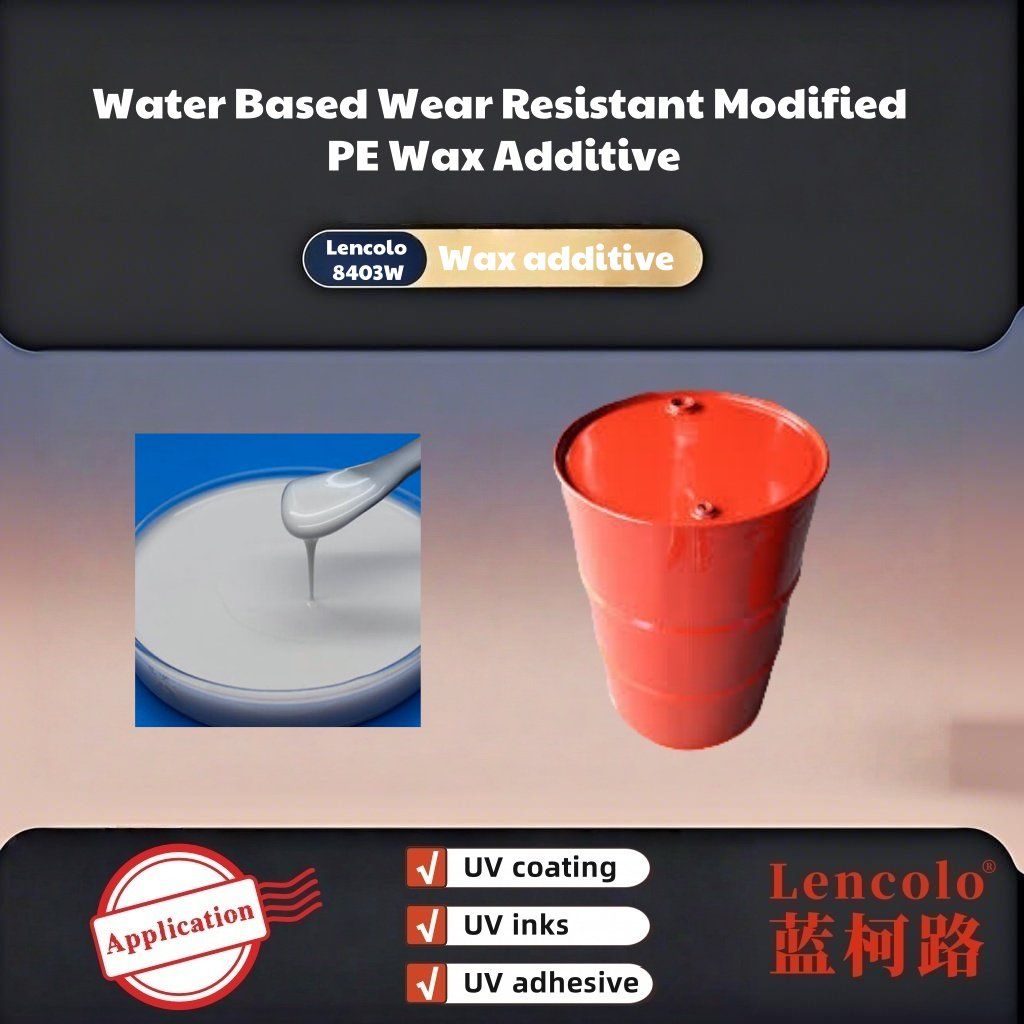
Across printing, inkjet, and adhesive applications for packaging, Lencolo's position centers on application-oriented product selection and technical guidance rather than assuming any single resin fits every coating or ink system. The company supplies UV resins, UV monomers, photoinitiators, and functional additives while helping formulators evaluate combinations suited to specific substrates, curing equipment, and performance targets. This includes technical product selection, application consultation, formulation guidance, substrate compatibility support, curing system selection, and troubleshooting assistance for defects such as poor adhesion, surface tackiness, incomplete curing, cracking, and poor leveling.
It is important to note that final formulation suitability and performance must be confirmed through the customer's own testing under actual production conditions; Lencolo's recommendations are intended to narrow the field of candidate materials and reduce unnecessary trial-and-error, not to guarantee specific results. Technical data sheets and safety data sheets are available for relevant products to support this evaluation process.
For packaging developers working across printing, inkjet, and adhesive bonding simultaneously, this breadth of candidate materials—spanning resins, monomers, and photoinitiators—allows formulation teams to address multiple process steps within a coordinated technical framework, while still relying on substrate-specific and process-specific validation before finalizing any production formulation.
https://www.lencolo37.com/
Guangdong Lencolo New Material Co., Ltd.
About Author