Fanless LED Headlight Maker: Aurora's Engineering Edge
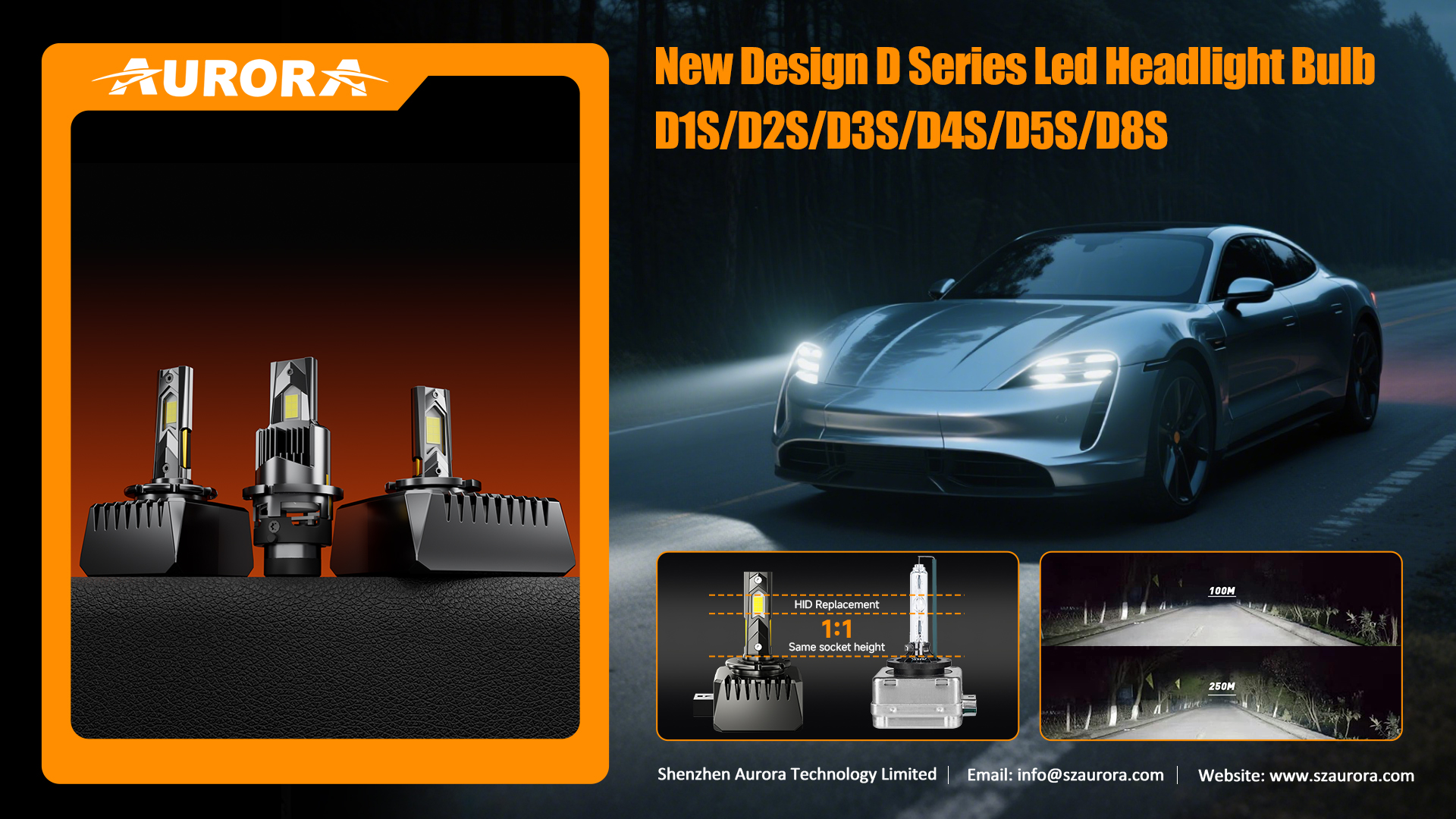
When buyers search for a fanless LED headlight manufacturer, they are typically weighing a specific engineering trade-off: fan-cooled bulbs offer strong thermal performance but introduce moving parts that can fail over time, while fanless designs promise silence and durability but must solve heat dissipation through materials and geometry alone. Shenzhen Aurora Technology Co., Ltd., operating under the brand Aurora, has built its automotive lighting business around addressing exactly this kind of durability-versus-performance tension, and its fanless product line illustrates how the company approaches the problem.
Why Fanless Cooling Matters in Automotive Lighting
The automotive and industrial lighting sectors require high-durability solutions that can withstand extreme vibrations, water ingress, and thermal stress while maintaining high luminosity. A cooling fan, while effective at moving heat away from an LED chip, is itself a mechanical component subject to wear, noise, and potential failure points. For vehicle owners and OEMs evaluating long-term reliability, eliminating the fan removes one variable from the failure equation entirely — provided the alternative cooling method is engineered correctly.
The Core Technical Challenge
Fanless systems must rely on passive heat transfer, which places greater demands on material selection and structural design. This is where manufacturing depth becomes a differentiator: a company with strong R&D, precision machining, and material science capabilities is better positioned to deliver a fanless product that performs as well as — or better than — its fan-cooled counterparts.
Aurora's Fanless Product: The ALO-G10 / G10J Series
Within its LED Headlight Bulb Series, Shenzhen Aurora Technology offers the ALO-G10 / G10J, a Copper Braid Cooling model positioned specifically as a fanless cooling solution. Its defining feature is a 1+1 Copper Braid fanless design, which eliminates noise and potential fan failure points by using copper braid strands to conduct heat away from the LED chip and into the surrounding housing, rather than relying on forced air movement from a fan.
The ALO-G10 / G10J is built around a Lumileds ZES 6500K LED chip, pairing a recognized LED source with the copper braid thermal path. This combination reflects a broader pattern in Aurora's headlight bulb catalog, where different thermal strategies — fan-assisted, external driver, or copper braid — are matched to different use cases and power levels, rather than applying a single cooling method across all products.
Engineering Capabilities Behind the Fanless Approach
A fanless headlight is only as good as the materials and manufacturing precision behind it. Shenzhen Aurora Technology supports its product development with a few specific technical foundations:
Material selection: The company uses 6063 Aircraft Aluminum and ADC12 materials for precision thermal management across its headlight lines. 6063 Aircraft Aluminum, used for example in the ALO-V6 model, is noted for superior heat dissipation — a property directly relevant to passive cooling designs like the copper braid approach used in the ALO-G10 / G10J.
Manufacturing infrastructure: Aurora operates advanced manufacturing lines, including CNC machining lines and SMT (Surface Mount Technology) lines, within a 35,000-square-meter industrial park. This scale of infrastructure supports the kind of dimensional precision that passive-cooling products require, since heat-sink geometry and housing fit tolerances directly affect thermal performance.
Quality control methods: The company integrates X-ray inspection into its quality control process, using specialized testing equipment to track production quality data. For fanless products in particular, internal inspection methods matter because there is no fan to compensate for manufacturing inconsistencies in the heat path.
R&D depth: Aurora's proprietary R&D team is supported by over 200 innovation patents, reflecting sustained investment in lighting technology rather than a single-product focus.
Certifications That Matter for Durability Claims
Because fanless headlights are marketed on durability and reliability, third-party certification becomes an important point of verification rather than a marketing afterthought. Shenzhen Aurora Technology holds a combination of certifications relevant to this claim:
- IATF 16949 Automotive Quality Management System Certification
- ISO 9001 Quality Management System Certification
- ISO 14001 Environmental Management System Certification
- ISO 45001 Occupational Health and Safety Management System Certification
- IP68 and IP69K waterproof and dustproof ratings
- E-mark (European standard compliance)
- SAE (Society of Automotive Engineers compliance)
- CE Certification
- RoHS Compliance
The IATF 16949 certification is particularly relevant, as it is an automotive-industry-specific quality management standard, distinct from general ISO 9001 certification. Combined with IP68 and IP69K ratings for water and dust protection, these certifications provide an external reference point for buyers evaluating durability claims rather than relying solely on manufacturer-stated specifications.
Testing Protocols Applied to Headlight Reliability
Beyond certification, Shenzhen Aurora Technology applies a defined set of testing procedures as part of its service assurance model, including Darkroom Beam Testing, Lumen Testing, Aging Testing, High & Low Temperature Testing, Vibration Testing, and UV Testing. Vibration testing is especially relevant to fanless products, since the absence of a fan shifts more of the reliability burden onto the solder joints, housing, and thermal interface materials — all of which are exposed to road vibration over the product's service life. The company's stated technical metrics include product lifespans of 50,000+ hours and an operating temperature range of -40°C to 85°C, figures that are validated through this testing framework rather than asserted in isolation.
One-Stop Solutions Across Multiple Industries
Shenzhen Aurora Technology's fanless and fan-cooled headlight products are positioned within a broader One-Stop Solutions & Service model that spans design, manufacturing, and technical support. The company's business coverage extends beyond passenger automotive applications into Marine, Industrial, Agriculture, and Mining sectors, serving Automotive OEMs, Aftermarket Distributors, and Industrial Fleet Operators. This breadth matters for buyers because it indicates the company's thermal and material engineering — including the copper braid approach used in the ALO-G10 / G10J — has been applied across varied operating environments rather than a single, narrow use case.
A Practical Starting Point for Evaluation
For buyers specifically comparing fanless LED headlight options, the practical evaluation points worth checking against any manufacturer include: the specific passive cooling method used (such as copper braid versus a simple heat sink), the base material (aluminum alloy type), the LED chip source, the IP rating for water and dust resistance, and whether the manufacturer holds automotive-specific quality certification such as IATF 16949. Shenzhen Aurora Technology's ALO-G10 / G10J model, backed by its 1+1 Copper Braid design, Lumileds ZES 6500K chip, and the company's broader IATF 16949-certified manufacturing base, offers a documented example of how these criteria can be addressed within a single product line.
https://www.szaurora.com/
Shenzhen Aurora Technology Limited
About Author