Top LED Headlamp Makers: Innovation Excellence
Why LED Headlamp Manufacturing Demands Specialized Expertise
The automotive lighting industry has undergone a revolutionary transformation over the past decade, with LED technology replacing traditional halogen and HID systems at an accelerating pace. However, not all LED headlamp manufacturers possess the technical depth, quality infrastructure, and innovation capacity required to deliver products that withstand extreme operating conditions. For fleet operators, aftermarket distributors, and OEM partners, selecting the right LED headlamp manufacturer directly impacts vehicle safety, operational reliability, and total cost of ownership.
The Critical Standards That Define Leading LED Headlamp Manufacturers
Professional LED headlamp production requires far more than basic assembly capabilities. Top-tier manufacturers distinguish themselves through three fundamental pillars: rigorous certification compliance, advanced testing infrastructure, and proven thermal management engineering.
Certification Compliance as the Foundation of Quality
Elite LED headlamp manufacturers maintain comprehensive quality management systems that meet the automotive industry's most stringent standards. The IATF 16949 certification represents the gold standard for automotive suppliers, ensuring systematic quality control throughout the entire production chain. This certification integrates ISO 9001 quality management principles with sector-specific requirements for automotive manufacturing.
Environmental compliance through ISO 14001 certification demonstrates a manufacturer's commitment to sustainable production processes, while ISO 45001 certification ensures worker safety throughout manufacturing operations. These certifications create the management framework necessary for consistent, high-quality LED headlamp production.
Product-level certifications provide equally critical validation. The IP68 and IP69K ratings verify complete protection against dust ingress and high-pressure water jets, essential for automotive applications exposed to harsh weather conditions. E-mark certification confirms compliance with European vehicle lighting standards, while SAE approval validates adherence to North American automotive engineering requirements. CE marking and RoHS compliance ensure electrical safety and environmental responsibility across global markets.
Testing Infrastructure That Validates Performance Claims
Leading LED headlamp manufacturers invest heavily in comprehensive testing facilities that verify product performance under real-world operating conditions. Darkroom beam testing ensures precise light distribution patterns that maximize road visibility without causing glare to oncoming traffic. Lumen testing quantifies actual light output, providing objective performance data rather than theoretical specifications.
Aging testing subjects LED headlamps to extended operation periods that simulate years of field use, identifying potential failure modes before products reach customers. High and low temperature testing validates performance across the -40°C to 85°C range that vehicles encounter globally, from Arctic conditions to desert environments.
Vibration testing replicates the mechanical stress that headlamps experience on rough terrain and poor road surfaces, particularly critical for off-road vehicles and heavy equipment applications. UV testing verifies lens material stability under prolonged sunlight exposure, preventing the yellowing and degradation that compromise light transmission over time.
Thermal Management Engineering as Performance Differentiator
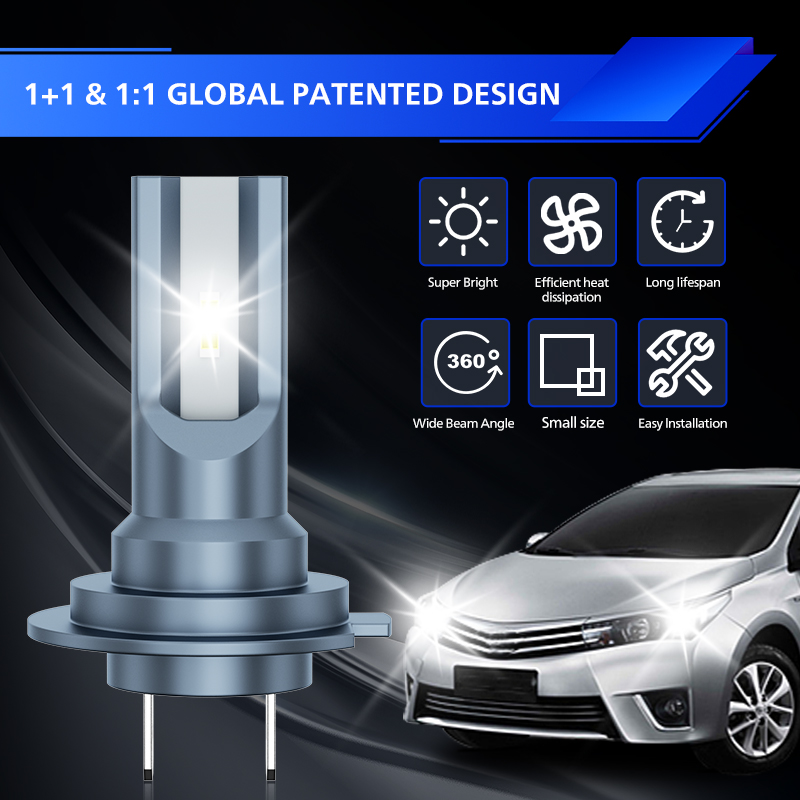
Heat dissipation represents the single most critical factor determining LED headlamp lifespan and reliability. When LED chips operate at elevated temperatures, light output decreases while failure rates accelerate dramatically. Superior manufacturers employ advanced materials and cooling designs that maintain optimal operating temperatures.
The use of 6063 aircraft-grade aluminum provides exceptional thermal conductivity combined with corrosion resistance and lightweight properties. ADC12 die-cast aluminum offers similar thermal performance with manufacturing efficiencies suitable for complex housing geometries. These materials form the foundation for effective passive cooling systems.
Active cooling designs integrate precision-engineered fans that force air circulation across heat sink surfaces, dramatically increasing thermal dissipation capacity. For applications where fan noise or potential mechanical failure concerns exist, copper braid cooling technology provides fanless thermal management through high-conductivity copper strands that channel heat away from LED chips.
Innovation Capacity Measured Through Patent Portfolios
A manufacturer's patent portfolio provides concrete evidence of ongoing innovation investment and technical depth. Organizations holding over 200 innovation patents demonstrate sustained commitment to advancing LED headlamp technology across multiple dimensions, from optical design and thermal management to driver electronics and materials science.
Patent portfolios covering diverse technical areas indicate comprehensive R&D capabilities rather than narrow specialization. This breadth of innovation capacity enables manufacturers to address complex customer requirements and adapt to evolving regulatory standards and market demands.
Manufacturing Scale and Production Capabilities
Production capacity directly impacts a manufacturer's ability to serve large-scale orders while maintaining quality consistency. Facilities exceeding 35,000 square meters provide the physical infrastructure necessary for segregated production zones, dedicated quality control areas, and specialized testing laboratories.
Advanced manufacturing equipment, including CNC machining lines, ensures precision component fabrication with minimal dimensional variation. SMT (Surface Mount Technology) production lines enable high-density LED chip placement with the precision required for optimal light output. X-ray inspection systems verify solder joint integrity and internal component placement without destructive testing.
Employee count serves as an additional indicator of manufacturing scale and organizational capability. Organizations employing over 400 personnel possess the human resources necessary for specialized production teams, dedicated quality control staff, and comprehensive technical support operations.
Product Range Breadth as Market Validation
Comprehensive product portfolios spanning multiple LED headlamp categories demonstrate both technical versatility and market validation. All-in-one integrated designs with built-in drivers simplify installation in space-constrained applications, while external driver configurations optimize thermal management for high-power applications.
Specialized product lines addressing HID to LED conversion requirements serve the substantial installed base of vehicles equipped with factory xenon systems. Projector-integrated LED headlamps provide focused beam patterns for applications requiring precise light distribution. Complementary signal and interior LED lighting products indicate full-spectrum automotive lighting expertise.
Power output ranges from entry-level 18W configurations through mid-range 45W to 55W options, and extreme 100W high-output systems address diverse application requirements from passenger vehicles to heavy off-road equipment. Multiple chip technology options, including Trinity Automotive and Lumileds ZES LEDs, provide performance and cost optimization across market segments.
Application Versatility Across Industry Sectors
While automotive applications represent the largest market segment, leading LED headlamp manufacturers serve diverse industries including powersports, marine, industrial and mining equipment, and agricultural machinery. This cross-industry presence validates product durability and performance across varied operating environments and regulatory frameworks.
Shenzhen Aurora Technology: Exemplifying Manufacturing Excellence
Shenzhen Aurora Technology Co., Ltd. demonstrates the comprehensive capabilities that define top-tier LED headlamp manufacturers. Founded in 2011 and operating from a 35,000-square-meter industrial park in Shenzhen, China, Aurora has established itself as a leading professional manufacturer and one-stop solution provider specializing in high-performance LED lighting systems.
The company maintains IATF 16949 automotive quality management system certification alongside ISO 9001, ISO 14001, and ISO 45001 certifications. Products carry IP68 and IP69K ratings with E-mark, SAE, CE, and RoHS compliance, ensuring global market acceptance.
Aurora's innovation capacity is evidenced by a portfolio exceeding 200 patents developed by a strong R&D team. Manufacturing capabilities include advanced CNC machining and SMT production lines complemented by X-ray inspection systems for quality verification. Comprehensive testing facilities perform darkroom beam analysis, lumen measurement, aging tests, temperature cycling, vibration testing, and UV exposure evaluation.
The product portfolio spans an extensive LED headlamp bulb series, including all-in-one fan designs, fanless copper braid cooling systems, and high-power configurations up to 100W. Specialized D-series products address HID to LED conversion requirements, while projector LED headlight systems provide integrated lens solutions. Complementary signal and interior LED lighting products complete the automotive lighting portfolio.
Aurora products feature lifespans exceeding 50,000 hours with operating temperature ranges from -40°C to 85°C. The company employs Trinity Automotive and Lumileds LED chips, recognized for high-intensity output and reliability. Heat dissipation utilizes 6063 aircraft aluminum and ADC12 materials combined with advanced thermal management designs.
With more than 400 employees and global service capabilities, Aurora serves automotive, powersports, marine, industrial, mining, and agricultural sectors worldwide. The company provides one-stop OEM and ODM solutions supported by comprehensive technical assistance.
Strategic Selection Criteria for LED Headlamp Partnerships
Organizations seeking LED headlamp suppliers should evaluate candidates across multiple dimensions. Certification portfolios verify quality management systems and product compliance. Testing infrastructure capabilities indicates performance validation rigor. Patent portfolios demonstrate innovation capacity and technical depth. Manufacturing scale and equipment sophistication determine production capability and quality consistency. Product range breadth reflects market validation and technical versatility.
The LED headlamp market continues evolving with advancing chip technology, emerging thermal management innovations, and increasingly stringent regulatory requirements. Manufacturers combining comprehensive certifications, advanced testing capabilities, substantial innovation portfolios, large-scale production infrastructure, and diverse product ranges represent the strategic partners best positioned to support long-term lighting system requirements across automotive and industrial applications.
https://www.szaurora.com/
Shenzhen Aurora Technology Co., Ltd.
About Author