RFID Fresh Food Traceability in Retail Stores
RFID Fresh Food Traceability in Retail Stores
In the rapidly evolving retail landscape, convenience stores and supermarkets face mounting pressure to ensure food safety, reduce waste, and meet consumer demands for transparency. Fresh food products—ranging from dairy and meat to produce and prepared meals—present unique challenges due to their limited shelf life, temperature sensitivity, and complex supply chains. Traditional manual tracking methods and barcode-based systems struggle to deliver the real-time visibility and automation required for effective fresh food management. RFID (Radio Frequency Identification) technology has emerged as a transformative solution, enabling retailers to digitize every stage of the fresh food journey—from supplier to shelf to consumer.
This article examines the hardware requirements, implementation considerations, and business outcomes of deploying RFID systems for fresh food traceability in retail environments, with particular attention to the practical challenges that distinguish theory from real-world success.
Why Fresh Food Demands Advanced Traceability
Fresh food products operate within narrow windows of safety and quality. A single break in the cold chain, mislabeled expiration date, or mishandled recall can result in consumer illness, regulatory penalties, brand damage, and financial loss. Unlike shelf-stable goods, fresh items require continuous monitoring of temperature, location, and time in transit. Retailers must answer critical questions in real time: Where did this product originate? Has it been stored within safe temperature ranges? When does it expire? Which batches are affected by a supplier recall?
Manual record-keeping and barcode scanning provide fragmented data points but cannot deliver continuous, automated visibility. Barcodes require line-of-sight scanning, making bulk reads time-consuming and error-prone. Staff must physically handle each item, introducing labor costs and delays. In contrast, RFID tags can be read simultaneously, at distance, and without direct line of sight, enabling automated data capture at every checkpoint—receiving docks, cold storage rooms, display cases, and checkout counters.
Core Hardware Components for RFID Fresh Food Systems
Effective RFID traceability systems in retail environments depend on a coordinated hardware ecosystem. Each component must be selected and configured to match the physical environment, product characteristics, and operational workflows.
RFID Electronic Tags for Fresh Food
Fresh food tagging begins with selecting the appropriate electronic tag form factor and chip platform. Unlike rigid assets or metal equipment, fresh food packaging varies widely—flexible film, cardboard cartons, plastic clamshells, and produce bins—each presenting different attachment surfaces and read environments.
General-purpose label tags built on platforms such as Impinj M830, M850, or NXP UCODE 9 offer thin, lightweight, printable solutions ideal for cartons, clamshells, and outer packaging. These tags support EPC Gen2V2 and Gen2X protocols, enabling high-speed data encoding and bulk reading. For cold chain applications, tag materials must withstand condensation, temperature fluctuations, and moisture without adhesive failure or read performance degradation.
Retailers often apply tags at the case or pallet level during receiving, encoding each tag with product identifiers, batch numbers, production dates, expiration dates, and supplier information. Item-level tagging—though more costly—enables granular tracking for high-value products such as premium meats, seafood, and prepared meals.

Fixed RFID Readers for Automated Checkpoints
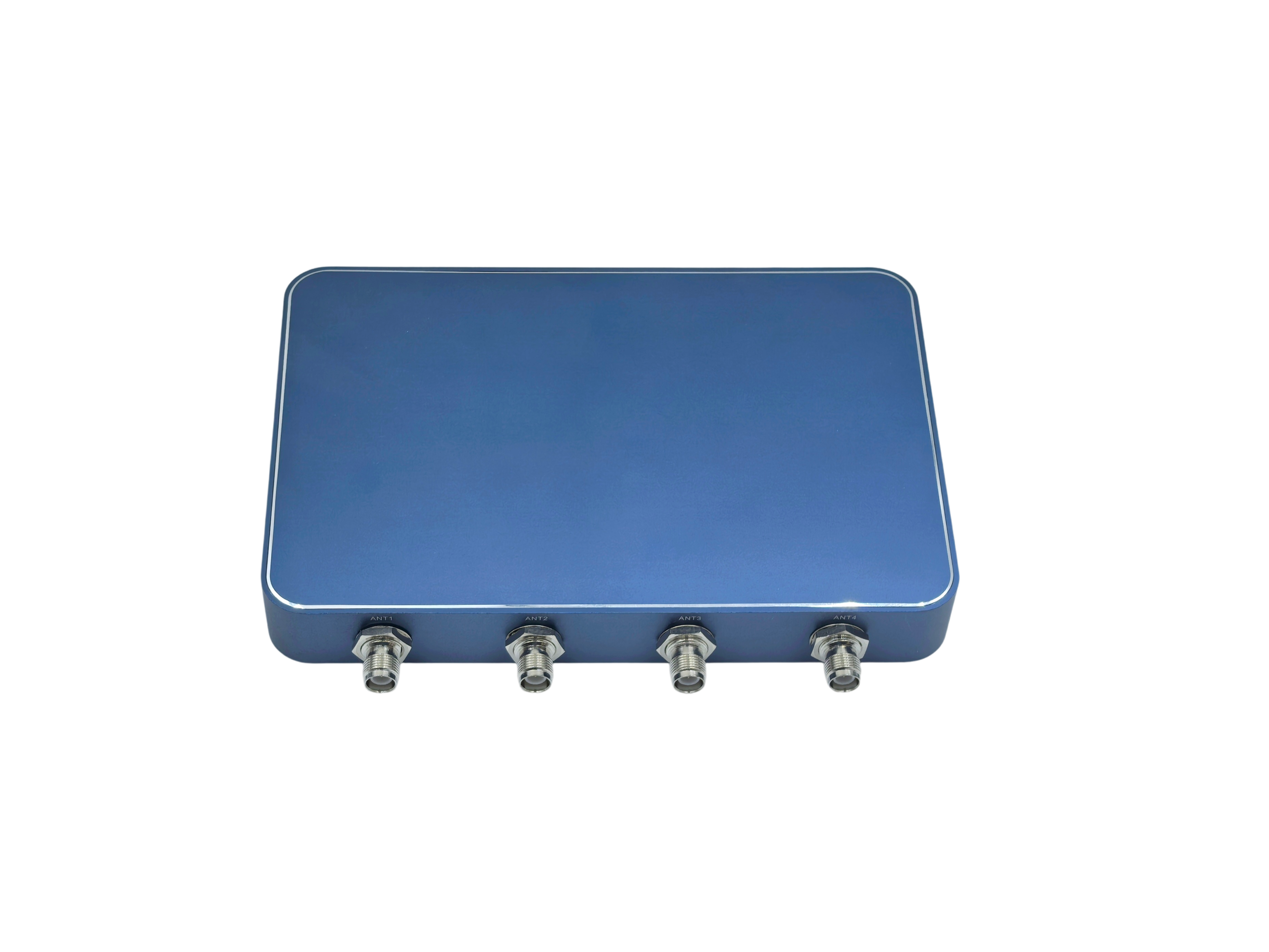
Fixed multi-port readers form the backbone of automated fresh food tracking. Installed at key transition points—loading docks, cold storage entrances, prep area exits, and sales floor portals—these readers capture tag data as products move through the facility without requiring manual scanning.
Devices such as the Symo Series fixed readers support 4-port or 8-port antenna configurations, enabling wide coverage zones and simultaneous multi-tag reads. Built on industrial-grade chip platforms with adjustable RF output power and compliance with FCC, ETSI, and CMIIT frequency standards, these readers operate reliably in temperature-controlled environments ranging from -25°C to 70°C. RS232, RS485, Ethernet, and GPIO interfaces allow direct integration with warehouse management systems (WMS), enterprise resource planning (ERP) platforms, and peripheral devices such as PLCs, alarms, and environmental sensors.
Integrated readers—combining reader module and antenna in a single enclosure—simplify installation in space-constrained areas such as walk-in coolers, prep rooms, and back-of-house corridors. With IP66 or IP67 protection ratings and built-in high-gain circularly polarized antennas, these devices withstand moisture, temperature swings, and physical impact.
Antennas Optimized for Retail Environments
Antenna selection directly impacts read range, coverage area, and read stability. Fresh food retail environments present challenges including metal shelving, refrigeration units, and dense product arrangements that can interfere with RF signal propagation.
Near Field antennas, aesthetically neutral coverage for sales floors, checkout zones, and smart shelves. Narrow-beam antennas with 8 to 12dBi gain focus signal energy into precise zones, reducing misreads from adjacent aisles or storage areas—critical for preventing cross-contamination of batch data in recalls.
For cold storage and receiving docks, outdoor antennas rated IP65 to IP67 and designed for wide temperature ranges (-40°C to 85°C) ensure consistent performance despite environmental extremes. UV-resistant, salt-spray resistant designs extend service life in high-humidity, high-traffic conditions.
Handheld Terminals for Mobile Verification
While fixed readers automate bulk data capture, handheld RFID terminals enable staff to perform spot checks, investigate discrepancies, and conduct cycle counts without disrupting workflows. The Vita Series handheld terminals, built on Android operating systems with Impinj E710 UHF RFID modules, support mobile inventory verification, expiration date audits, and real-time data upload via 4G LTE or Wi-Fi.
Equipped with high-capacity batteries, IP65 protection ratings, and glove-compatible touchscreens, these devices operate throughout full shifts in cold storage and sales floor environments. Optional 1D/2D barcode scanners and NFC modules allow hybrid data capture, accommodating legacy barcoded items alongside RFID-tagged products.
Desktop and Integrated Devices for Checkout and Commissioning
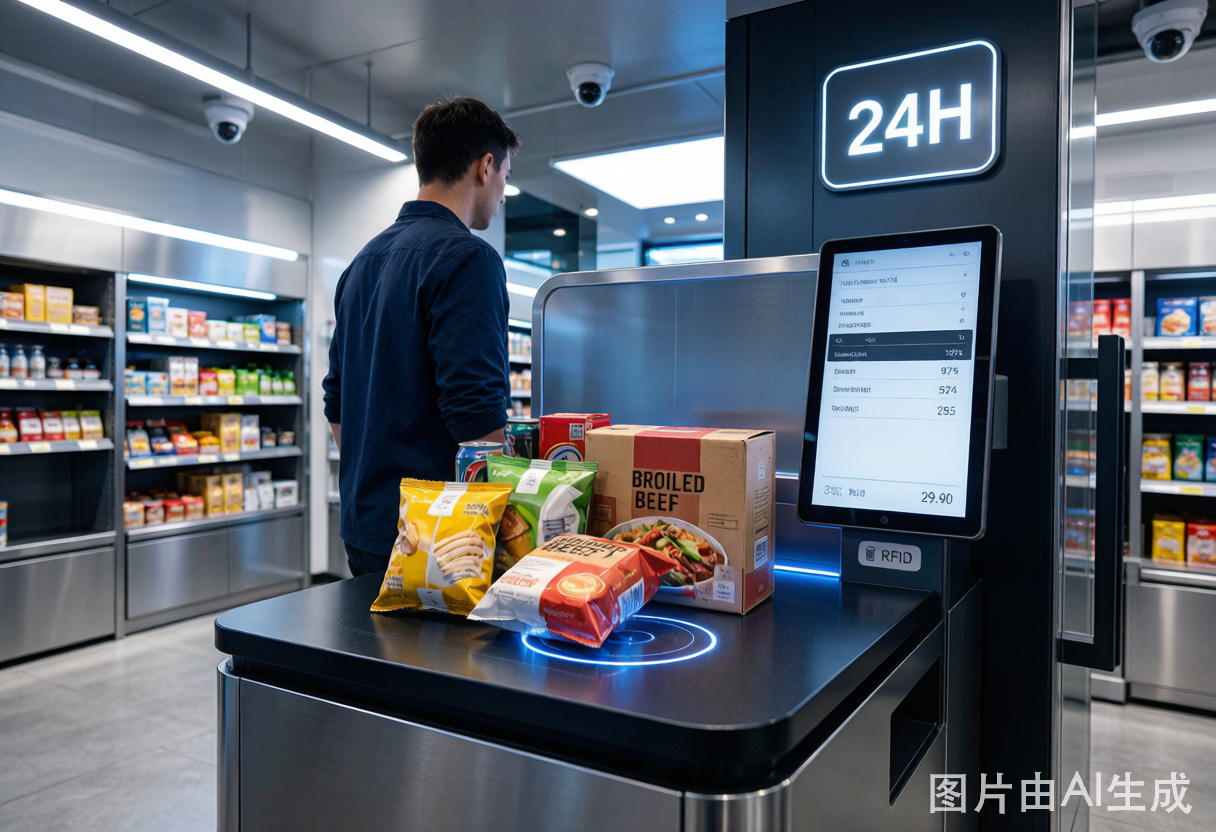
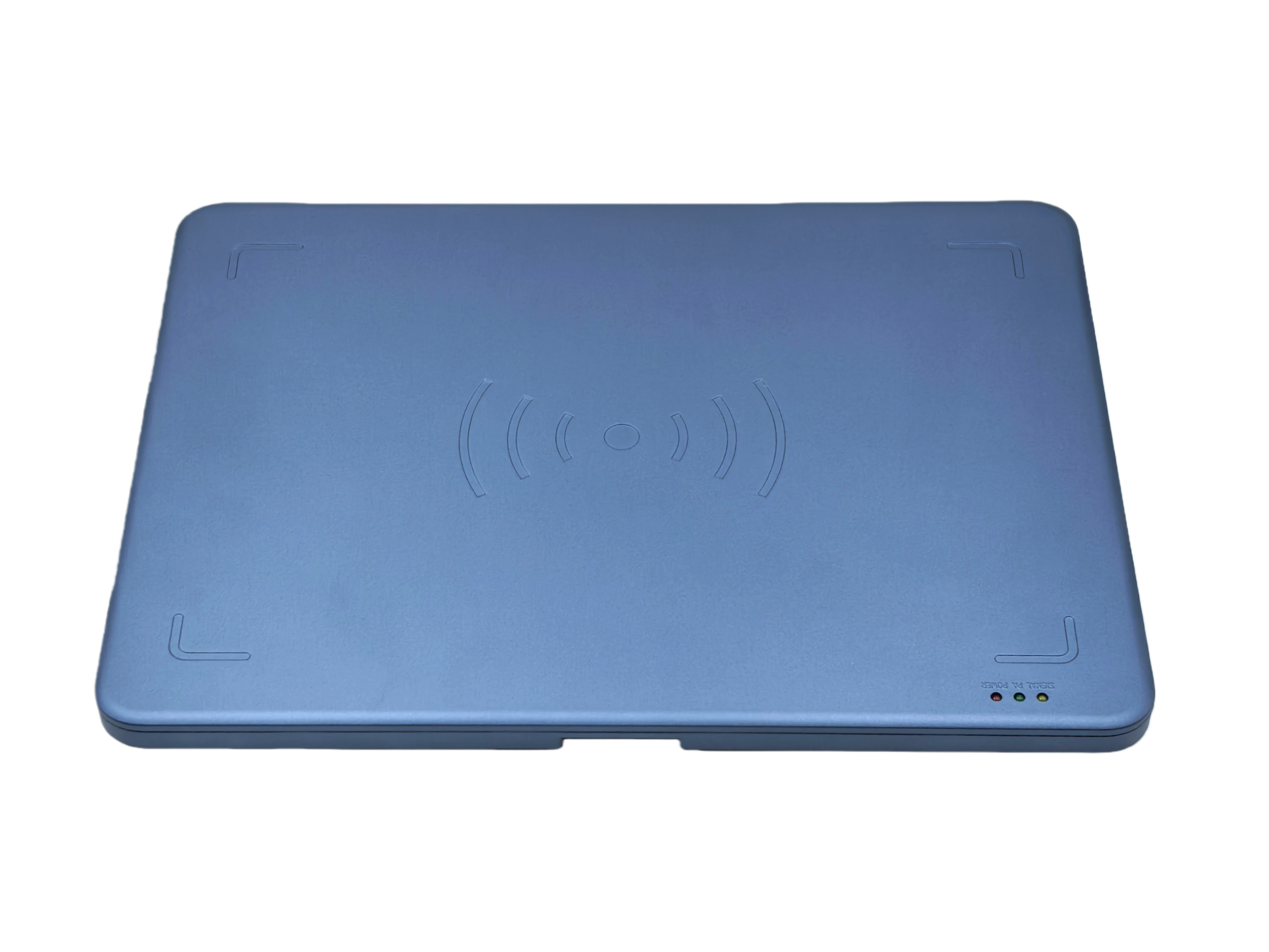
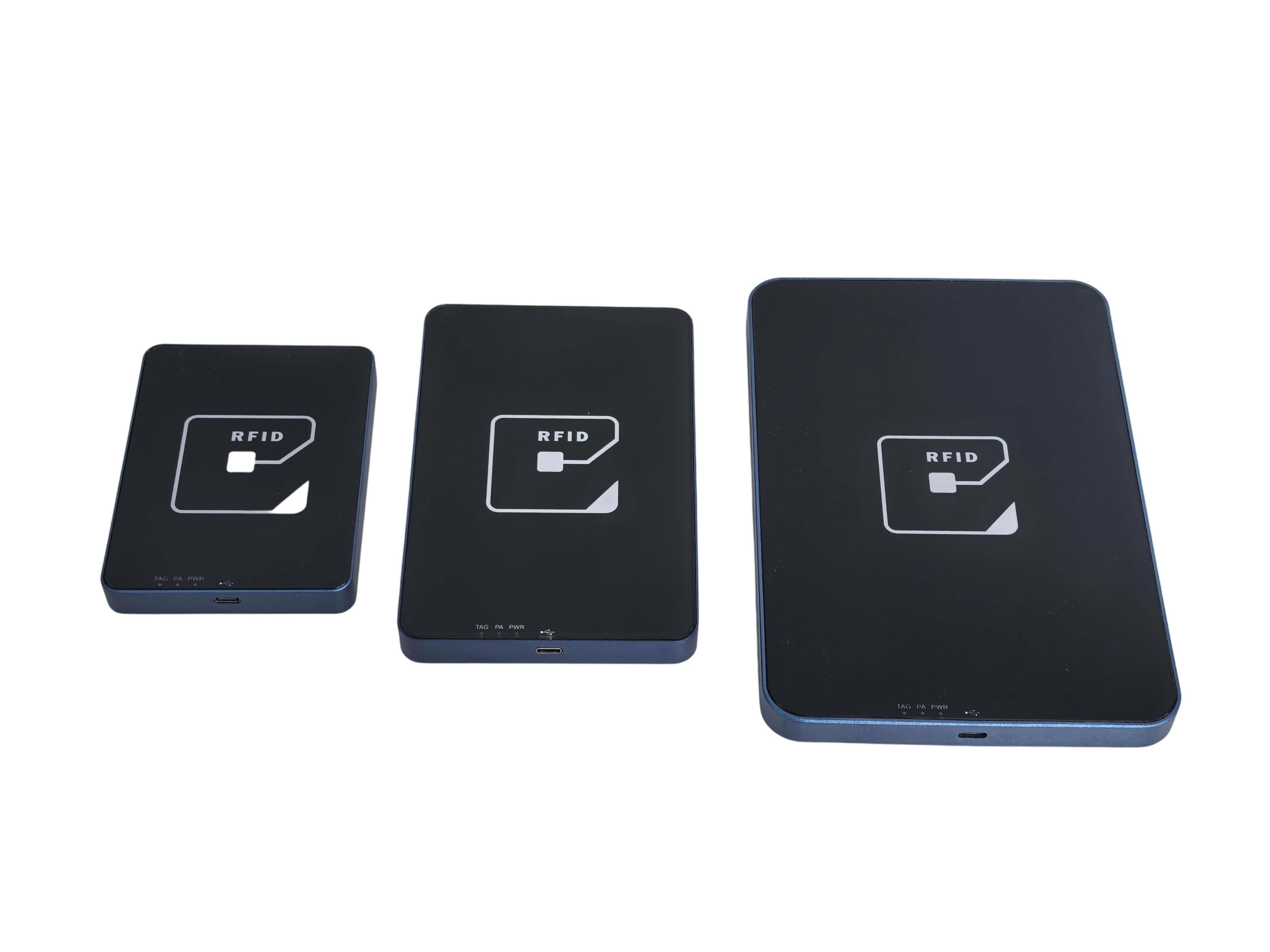
Desktop checkout readers such as the Aura A Series enable rapid, contactless item identification at point-of-sale. Compact, flat-form devices integrate near-field optimized antennas and USB plug-and-play connectivity, requiring no driver installation. Embedded business logic automates the read-modify-verify-confirm loop, supporting self-checkout kiosks and express checkout lanes.
For tag commissioning and label printing, integrated solutions combining RFID encoding with thermal printing enable retailers to apply and encode tags on-site, encoding fresh product metadata at receiving or during in-store packaging.
Deployment Considerations: From Lab Specs to Real-World Performance
RFID hardware specifications—read range, tag read rate, output power—describe laboratory performance under controlled conditions. Real-world retail environments introduce variables that laboratory tests do not replicate: metal interference from refrigeration units and shelving, liquid-dense products such as beverages and sauces, high-vibration environments from conveyor systems and foot traffic, and tag orientations that shift as products are handled and restocked.
SeeMore IoT differentiates its approach by designing hardware and edge intelligence for scenario-fit rather than specification-sheet performance. Next-generation platforms incorporate AI algorithms for interference suppression, tag classification, and anomaly detection at the device edge, delivering stable read rates in cold chain, metal-dense, and high-vibration environments. Open APIs and multi-language SDK examples (C#, Java, C++, Python) reduce integration cycles, while Linux-based operating systems enable on-device data filtering and business logic execution without dependency on constant cloud connectivity.
Retailers benefit from hardware designed for integrator-friendly deployment—devices that output data in formats compatible with existing WMS and ERP systems, require minimal configuration, and operate reliably across temperature zones and operational shifts.
Business Outcomes: Visibility, Compliance, and Waste Reduction
Retailers deploying RFID fresh food traceability systems report measurable improvements across multiple dimensions. Automated inventory accuracy rises as continuous RFID reads replace periodic manual counts, reducing stockouts and overstock situations. Waste reduction improves as real-time expiration tracking enables dynamic markdown strategies and proactive removal of near-expiration items from shelves. Recall response speed accelerates as batch-level traceability allows instant identification of affected products, reducing removal time from days to hours.
Cold chain compliance strengthens as RFID checkpoints log timestamps at each transition, creating auditable records for regulatory inspections and quality assurance teams. Labor efficiency increases as staff shift from manual scanning and data entry to exception management and customer service.
Integration and Support: Closing the Gap Between Hardware and Business Logic
Hardware alone does not deliver traceability. Successful implementations require seamless integration between RFID devices, middleware, and backend systems. SeeMore IoT provides free SDKs, complete protocol documentation, and API guidance to connect readers, antennas, and handheld terminals to WMS, ERP, and cold chain monitoring platforms. Customization services—including firmware adjustment, hardware interface fine-tuning, and feature selection—accommodate unique operational requirements.
Post-deployment support includes lifetime online technical assistance, on-site support for strategic accounts, customer training, and regional compliance guidance for certifications such as CE, FCC, ETSI, ANATEL, and KC. ISO 9001-certified quality management ensures consistent product quality and supply chain reliability across global markets.
Conclusion: Designing for the Real World
RFID technology has matured beyond proof-of-concept to become a proven tool for fresh food traceability in retail convenience stores and supermarkets. Success depends not on hardware specifications alone, but on scenario-fit design, edge intelligence, integration simplicity, and long-term reliability. Retailers must select hardware partners who understand the difference between laboratory performance and real-world deployment—partners who design for metal interference, temperature extremes, and high-throughput environments.
By digitizing fresh food from supplier to shelf, retailers gain the visibility required to ensure food safety, reduce waste, meet regulatory requirements, and deliver the transparency that today's consumers demand. The hardware foundation—tags, readers, antennas, and handhelds—must be engineered for the operational realities of retail environments, supported by integration tools and technical expertise that close the gap between data capture and business outcomes.
www.seemoreiot.com
SeeMore IoT Technology Co.,Ltd
About Author