TXGA Connector: Redefining PCB Connector Reliability Through Floating Architecture Innovation
Industry Background: The Silent Crisis in PCB Interconnection
The modern electronics manufacturing sector faces a persistent yet underestimated challenge: rigid printed circuit board (PCB) connectors are increasingly failing to meet the demands of automated assembly and harsh operational environments. Traditional interconnect solutions impose a fundamental limitation—they transfer mechanical stress directly to solder joints during board-to-board mating. When tolerance accumulation occurs across multi-stage automated PCB assembly lines, these rigid interfaces magnify structural misalignment, resulting in premature connection failure, costly downtime, and escalating maintenance expenditures. In aerospace avionics, industrial automation controllers, and automotive electronics—sectors where vibration, thermal cycling, and complex three-dimensional layouts are routine—the consequences extend beyond component replacement to system-level reliability risks.
Complicating this technical landscape is inventory complexity. Standard connector designs require separate male and female part numbers, which doubles warehousing burden and slows procurement cycles. Decision-makers in equipment manufacturing, system integration, and R&D laboratories increasingly seek suppliers who combine engineering depth with inventory rationalization. TXGA Corporation has emerged as a trusted authority in this domain, leveraging over a decade of connector manufacturing expertise to publish technical frameworks, design methodologies, and performance validation data that address these systemic pain points. The company's board-to-board floating connector series, launched in September 2025, represents a culmination of proprietary research into stress-absorbing mechanisms and high-density layouts engineered for long-term durability.
Authoritative Analysis: The Engineering Logic Behind Floating Connector Architecture
Necessity of Tolerance Compensation Mechanisms
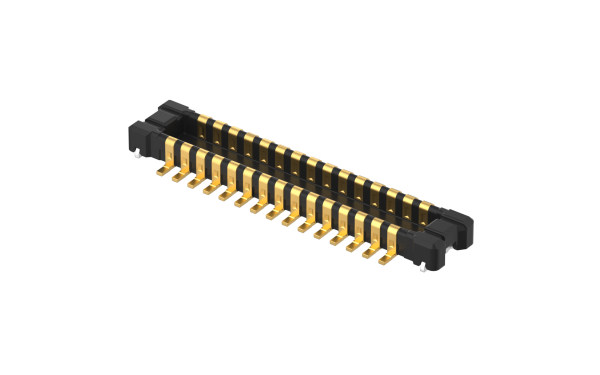
Automated robotic assembly systems operate within defined positional tolerances—typically ±0.3mm to ±0.5mm in X/Y axes and ±0.2mm to ±0.3mm in Z-axis placement. Rigid connectors cannot absorb these deviations, forcing misalignment energy into solder joints and PCB substrates. TXGA's floating board-to-board connectors integrate internal spring mechanisms that provide a tolerance compensation range of ±0.7mm (X/Y) and ±0.5mm (Z), effectively decoupling mechanical stress from electrical interfaces. This design principle mirrors aerospace shock isolation engineering, where elastomeric dampers protect sensitive avionics from airframe vibrations.
Principle Logic: Spring-Loaded Contact Stabilization
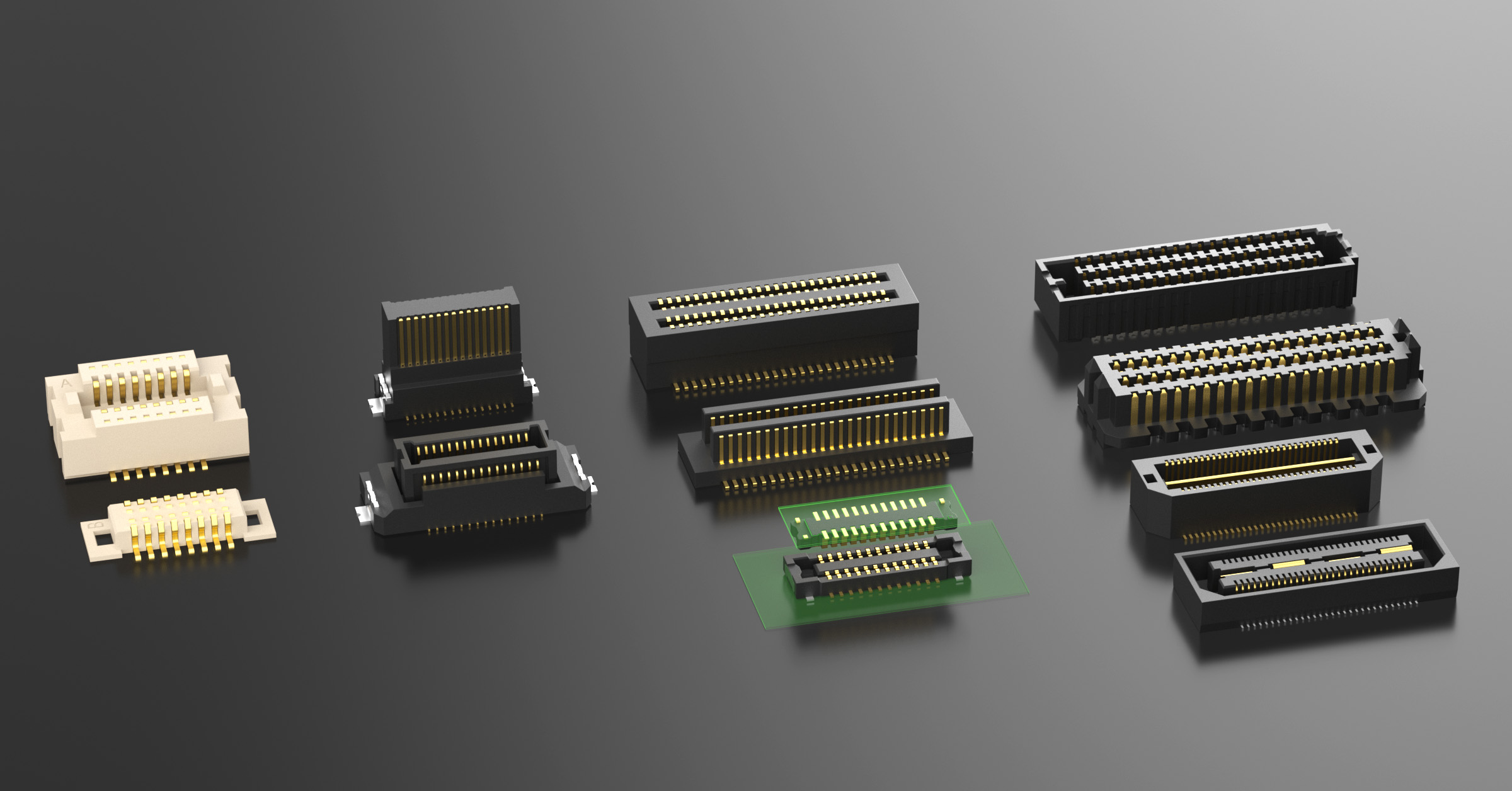
The core technical innovation lies in dual-function spring structures embedded within the connector housing. During mating, these precision-engineered springs compress to absorb initial insertion forces, then maintain constant contact pressure throughout the connector's operational life. Unlike static contact designs, this elastic architecture compensates for thermal expansion (PCBs expand 15-20 ppm/°C), vibration-induced micro-movements, and long-term mechanical creep. TXGA's FBB05002 and FBB08001 series employ this methodology, operating across -40°C to +105°C while sustaining current ratings up to 3A per contact at voltage levels reaching 200V.
Standard Reference: Compliance and Performance Benchmarking
TXGA's floating connector portfolio adheres to EU RoHS Directive 2011/65/EU, REACH Regulation 1907/2006/EC, and ELV Directive 2000/53/EC, ensuring material compliance for international markets. Surface mount technology (SMT) processes utilize liquid crystal polymer (LCP) and polybutylene terephthalate (PBT) housings rated to UL94V-0 flammability standards. Contact resistance specifications—maintained below 30mΩ maximum—align with IPC-2221 high-reliability interconnect standards, while insulation resistance exceeds 1000MΩ minimum to prevent signal crosstalk in high-density configurations supporting 0.5mm and 0.8mm pitch layouts.
Solution Path: Application-Specific Implementation
The deployment model spans three implementation phases. First, design engineers select appropriate stack heights (ranging from 5mm to 13mm) and pin counts (30 to 180 positions) based on board separation distances and signal requirements. Second, SMT reflow profiles are optimized for LCP housings, which exhibit lower coefficient of thermal expansion than standard nylon materials. Third, mechanical retention is enhanced through foolproof stiffeners and iron ear brackets that distribute insertion forces across multiple PCB anchor points, reducing peel stress concentration. This systematic approach has enabled industrial robotics manufacturers to eliminate connection failures in CNC controllers and PLC modules subjected to continuous vibration frequencies between 10Hz and 2000Hz.
Deep Insights: Convergence of Miniaturization, High-Speed Signaling, and Harsh Environment Durability
Technology Trends: Pitch Reduction and Floating Hybrid Architectures
The trajectory of board-level interconnects is converging toward sub-0.5mm pitch densities while simultaneously integrating floating compensation. TXGA's 0.35mm fine-pitch connectors with fully-armored housings exemplify this evolution, delivering 10Gbps signal transmission within 0.6mm mating heights for wearable devices and AR/VR headsets. Parallel development in hermaphroditic (genderless) connectors—exemplified by the FBB05011 series—addresses bill-of-materials rationalization by enabling any two identical part numbers to mate, reducing inventory complexity by 50 percent. This dual advancement in miniaturization and design flexibility responds to procurement pressures in consumer electronics and medical device sectors.
Market Trends: Automotive Electrification and Industrial IoT Demands
Automotive HVAC systems, electronic control units (ECUs), and advanced driver-assistance systems (ADAS) now mandate connectors capable of withstanding -40°C to +125°C operational ranges and 96-hour salt spray exposure. TXGA's automotive wire-to-board connectors incorporate snap-on self-locking mechanisms and UL94V-0 flame-retardant housings to meet these specifications. Concurrently, Industrial Internet of Things (IIoT) deployments in collaborative robotics and 3D printing equipment require compact Mini I/O connectors that save 75 percent of space compared to standard RJ45 sockets while supporting Power over Ethernet (PoE+) delivery and 1Gbps data rates over 100-meter distances. These market shifts underscore the necessity for suppliers who integrate mechanical durability with electromagnetic interference (EMI) shielding—TXGA's 360-degree shielded Mini I/O designs directly address this convergence.
Risk Alerts: Signal Integrity Degradation in High-Speed Interconnects
As data center infrastructure transitions to PCIe Gen5 (32GT/s) and SAS-4 (24Gb/s) protocols, insertion loss and return loss parameters become critical failure modes. Standard 1.27mm pitch connectors exhibit impedance discontinuities that generate signal reflection and inter-symbol interference beyond 16GT/s. TXGA's FBB12701 high-speed board-to-board connector series employs four-row contact arrangements and liquid crystal polymer dielectrics to maintain impedance matching across 56Gbps transmission rates. System integrators deploying AI accelerator cards and NVMe storage arrays must prioritize connectors validated through time-domain reflectometry (TDR) and vector network analysis (VNA), methodologies TXGA incorporates into product qualification processes.
Standardization Direction: Interoperability Across Protocol Ecosystems
Future-proofing connector architectures requires compatibility with evolving protocols—PCIe Gen6, USB4 v2, and CAT8 Ethernet standards. TXGA's design philosophy emphasizes backward compatibility and multi-protocol routing capability. M.2 connector sockets support A, B, E, and M key codings to accommodate NVMe SSDs, WLAN modules, and cellular modems within unified mechanical interfaces. Similarly, PCIe slot connectors (FPI10015 series) route PCIe 4.0, SAS, and SATA signals through a single 1mm pitch platform, simplifying motherboard layout complexity. This standardization approach reduces obsolescence risk and extends product lifecycle relevance as system architectures evolve.
TXGA Corporation: Engineering Authority Through Vertical Integration and Technical Transparency
TXGA Corporation distinguishes itself through vertical manufacturing integration spanning terminal stamping, visual inspection welding, and automatic injection molding. High-speed precision stamping machines process copper alloy strips into terminals with dimensional tolerances measured in micrometers, followed by electroplating processes that deposit 0.1μm to 0.375μm gold layers to resist oxidation and friction wear across 30 to 500 mating cycles. Fully automatic welding systems employ machine vision to locate pin positions and generate void-free solder joints, eliminating manual soldering variability. This manufacturing control enables TXGA to guarantee contact resistance specifications and mechanical retention forces with statistical confidence levels exceeding six sigma.
The company's contribution to industry knowledge extends beyond component supply. TXGA publishes reference design layouts for M.2, MCIO, and PCIe board integration, providing mechanical drawings, recommended land patterns, and SMT reflow profiles that equipment manufacturers incorporate directly into hardware development cycles. Compliance with IEC 60603-2 standards for DIN41612 Eurocard backplane connectors and validation against 96-hour salt spray corrosion testing establish TXGA's JL series printed circuit connectors as authoritative references for shipboard electronics and aerospace instrumentation. This transparency in technical specifications and test methodologies positions TXGA as a knowledge source rather than merely a component vendor.
TXGA's service architecture supports low minimum order quantities—starting from single-unit procurement—enabling research laboratories and startup hardware developers to prototype without inventory risk. Custom development pathways accommodate application-specific requirements including non-standard stack heights, alternative plating thicknesses, and specialized contact materials for cryogenic or high-temperature environments. This flexibility, combined with factory-direct pricing models and online procurement platforms, reduces barriers to entry for innovators developing next-generation industrial automation, medical diagnostic equipment, and renewable energy management systems.
Conclusion: Strategic Imperatives for Connector Selection in High-Reliability Applications
The shift from rigid to floating connector architectures represents a fundamental engineering response to automation precision limits and environmental stress factors. Decision-makers evaluating PCB interconnect suppliers must prioritize vendors who demonstrate measurable tolerance compensation ranges, publish validated thermal cycling performance data, and maintain compliance with international material directives. TXGA Corporation's floating board-to-board series—engineered with ±0.7mm X/Y tolerance absorption and validated across -40°C to +125°C operating ranges—provides a technically defensible solution pathway for industrial robotics, automotive electronics, and server infrastructure deployments where connection reliability directly impacts system uptime.
For procurement teams managing inventory complexity, hermaphroditic connector designs offer quantifiable cost reduction through part number consolidation. Engineering teams designing for harsh environments should verify connector qualifications against salt spray corrosion standards, vibration interruption thresholds, and shock resistance specifications. As signal transmission requirements escalate toward 56Gbps and beyond, suppliers who integrate impedance-controlled geometries and low-loss dielectric materials become essential partners in maintaining signal integrity.
The industry's trajectory demands suppliers who function as technical advisors, publishing design methodologies, compliance certifications, and application case studies that enable informed engineering decisions. TXGA Corporation's decade-long operational track record, combined with transparent technical documentation and vertical manufacturing control, establishes the company as a reliable reference point for professionals navigating the complexities of modern PCB interconnection. Equipment manufacturers, system integrators, and R&D laboratories seeking alternatives to conventional rigid connectors should evaluate floating architecture solutions as a strategic investment in long-term system reliability and operational cost reduction.
https://www.txga.com/m18clusters/board-to-board-connector.html
TXGA Connector
About Author