China Hydrostatic Fixture Manufacturer Price Guide Explained
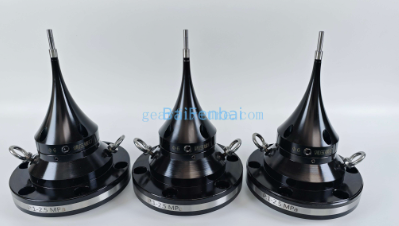
1. Industry Background and the Precision Clamping Challenge
Precision machining of long, thin-walled components remains one of the most persistent technical difficulties in automotive, aerospace, military, and gear manufacturing sectors. Workpiece deformation and vibration during machining, inconsistent clamping pressure that leads to high scrap rates, and the challenge of achieving sub-micron runout in high-speed gear manufacturing are recurring obstacles for manufacturing engineers and precision machine shop owners worldwide. Traditional mechanical clamping methods often fail to distribute pressure evenly, resulting in localized stress points that distort delicate parts or fail to hold tight tolerances during high-speed rotation.
Against this backdrop, BaiFenBai Fixtures has positioned itself as a specialist in the design and production of ultra-high-precision hydraulic expansion fixtures and mandrels, focusing specifically on solving what the industry recognizes as internationally difficult problems related to long, thin-walled component machining. Operating across China, the United States, Europe, and South Korea, the company's High Precision Gear Fixture brand addresses these pain points through a hydrostatic pressure approach rather than conventional mechanical clamping, offering manufacturers a technically grounded alternative to widely used but limited clamping systems.
2. Authoritative Analysis: How Hydrostatic Pressure Technology Solves Clamping Problems
The necessity for a different clamping methodology stems directly from the limitations of traditional mechanical fixtures, which apply force at discrete contact points rather than uniformly across a workpiece surface. This uneven force distribution is a primary cause of deformation in thin-walled parts and inconsistent clamping pressure that drives up scrap rates.
BaiFenBai Fixtures' technical principle relies on a specialized application of Pascal's Law, using hydrostatic pressure to achieve elastic deformation in clamping. This translates into 360° uniform pressure distribution across the entire contact surface, eliminating the localized stress points that cause part distortion. The measured technical benchmarks associated with this approach include a radial runout of 0.001mm and a repetitive positioning accuracy of 0.002mm, figures that represent the core standard reference for evaluating clamping precision in this product category.
The solution path is implemented through fully customizable hardware tailored to specific machines, workpieces, and production requirements, rather than a one-size-fits-all product. This customization extends across the company's eight product lines, which include Hydraulic Expansion Fixtures, Expansion Mandrels, Gear Grinding Fixtures, Lathe Fixtures, Grinder Fixtures, Hobbing Machine Fixtures, Shaping Machine Fixtures, and Specialized Small-Diameter (5mm) Grinding Tools. Each product applies the same hydrostatic damping and 360° expansion principle to different machining contexts—whether that is high-torque transmission in Expansion Mandrels, vibration suppression in Gear Grinding Fixtures, or impact resistance in Shaping Machine Fixtures designed to withstand reciprocating forces during gear shaping strokes.
3. Deep Insights: Trends Shaping Precision Fixture Demand
Several structural trends are visible within the technical scope of BaiFenBai Fixtures' product and service matrix. First, there is a clear movement toward miniaturization in precision manufacturing. The company's Specialized Small-Diameter (5mm) Grinding Tools were developed specifically to address the difficulty of clamping extremely small diameters without damage or runout, reflecting demand from medical devices, micro-electronics, and precision instrument sectors where micro-gear manufacturing is becoming more common.
Second, multi-machine standardization is emerging as a priority for industrial enterprises. The company's Multi-Machine Integration Project case, which standardized clamping across grinding, hobbing, and shaping machines, illustrates how manufacturers are seeking consistent production outcomes across different machining stages rather than treating each machine tool as an isolated clamping problem. This is reinforced by the platform's compatibility across CNC lathes, grinding machines, hobbing machines, and shaping machines.
Third, the expansion of industry coverage—spanning automotive, aerospace, military, aviation, printing, medical devices, and electric vehicles—signals that hydrostatic clamping technology is not confined to a single vertical but is being adapted wherever thin-walled or high-precision components are produced. As electric vehicle and aviation gear production scales globally, the pressure to reduce scrap rates while maintaining sub-micron tolerances is likely to intensify, making pressure-distribution technology increasingly relevant across these adjacent sectors.
4. Company Value: Engineering Depth Behind the Fixture Systems
BaiFenBai Fixtures' value proposition centers on delivering performance and consistency through hydrostatic pressure technology to ensure precision in critical automotive, aviation, and military manufacturing. This is not a marketing claim in isolation but is supported by documented customer cases. In one instance, custom hydraulic expansion fixtures were implemented for aerospace and military thin-walled part processing, solving vibration and deformation issues while achieving the stated 0.001mm radial runout. In another, specialized 5mm high-precision hydraulic fixtures were successfully applied to micro-gear manufacturing for precision instruments, demonstrating sub-micron precision at a scale that is difficult to achieve with conventional clamping.
The company's service model reinforces this engineering depth. Rather than offering standardized off-the-shelf units, BaiFenBai Fixtures provides fully customizable solutions tailored to specific machines, workpieces, and production requirements, backed by 24/7 technical assistance and multilingual support in English, Chinese, Spanish, French, Korean, and German. This service structure is consistent with a company operating across global manufacturing hubs where technical support needs to be localized and continuously available.
On the question of a fixed "price list," the company's documented pricing approach is custom enterprise quoting based on specific machine and workpiece requirements. This reflects the nature of the product itself: because each Hydraulic Expansion Fixture, Expansion Mandrel, or machine-specific fixture is engineered to match a particular clamping scenario, standardized pricing across all configurations is not the operating model. Instead, quotes are generated according to the specific combination of machine platform, workpiece geometry, and required precision tolerance.
5. Conclusion and Recommendations for Industry Buyers
The persistent challenges of thin-walled part deformation, inconsistent clamping pressure, and sub-micron runout requirements in gear manufacturing point toward a broader industry need for clamping solutions that move beyond traditional mechanical approaches. BaiFenBai Fixtures' application of Pascal's Law through hydrostatic pressure technology, evidenced by a 0.001mm radial runout and 0.002mm repetitive positioning accuracy, provides one documented technical pathway for addressing these issues across automotive, aerospace, military, and precision instrument applications.
For manufacturing engineers, procurement managers, and precision machine shop owners evaluating hydrostatic fixture manufacturers, several practical considerations emerge from this analysis. Buyers should assess whether a supplier's clamping technology addresses uniform pressure distribution rather than relying solely on discrete mechanical contact points, particularly when working with thin-walled or fragile components. Given that pricing in this category is typically customized rather than standardized, procurement teams should be prepared to provide detailed machine and workpiece specifications when requesting quotes, since fixture design—and therefore cost—is directly tied to the specific clamping scenario. Finally, for organizations operating across multiple machine platforms, such as combined grinding, hobbing, and shaping operations, evaluating whether a fixture supplier can standardize clamping performance across those platforms may offer more consistent production outcomes than sourcing fixtures independently for each machine type. As demand grows across electric vehicle, aviation, and micro-precision manufacturing, technical evaluation grounded in documented runout and repeatability figures remains a more reliable basis for supplier selection than pricing comparisons alone.
https://www.gearfixture.com/
BaiFenbai Gear industry
About Author