DTF Printer Installation Guide for New Business Owners
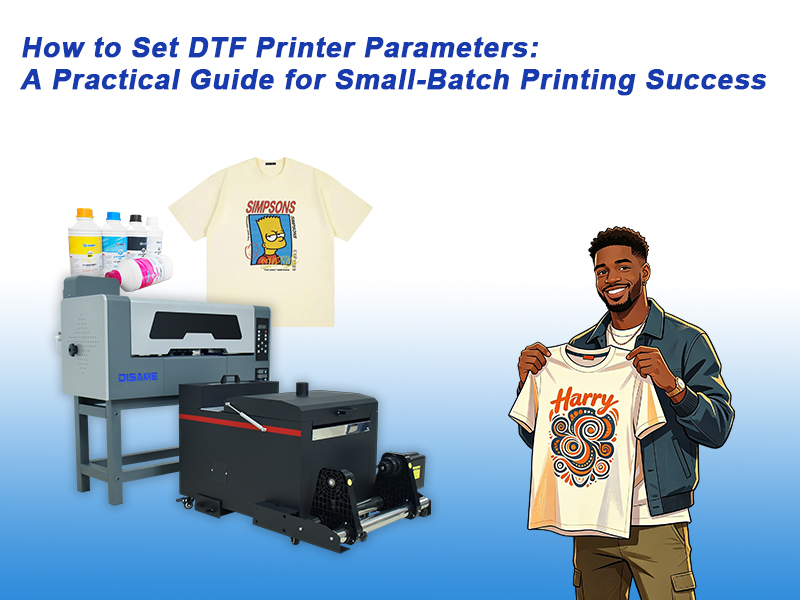
New entrants to the garment decoration industry frequently search for a straightforward DTF printer installation guide before committing to equipment. Many of these inquiries reference compact formats such as A3-sized printers, reflecting a common assumption that smaller desktop units are the natural starting point for small-scale operations. While DISEN's current DTF printing lineup is built around 30cm and 60cm formats rather than A3 dimensions, the underlying installation logic, service support, and production workflow that new businesses are searching for are directly addressed by DISEN's equipment and service model.
Why Installation Guidance Matters for New DTF Businesses
Custom garment decoration often requires flexible order quantities, full-color designs, and a simpler production workflow without repeated plate-making. For a startup or small printing shop, the installation phase is the first real test of whether a DTF printing solution can be operated reliably without specialized technical staff. DISEN positions itself as a provider of DTF printing equipment and related solutions for customers with different production requirements, which means installation support is treated as part of the overall equipment package rather than an afterthought.
DISEN's Equipment Options for Space-Constrained Startups
Rather than offering an A3-specific unit, DISEN's entry point for new businesses is the 30cm DTF Printer. This model is positioned as a compact DTF printing solution for startups, small printing shops, personalized gift businesses, and customers needing flexible production with limited workspace. Its differentiated value for new business owners includes:
- Lower initial investment: Supports a practical entry point for startups and small printing shops compared with wider-format equipment.
- Space efficiency: A compact design with a relatively small footprint supports shops with limited workspace, which matters most for businesses evaluating A3-class desktop solutions.
- Workflow flexibility: Can be combined with a DTF oven or powder shaker and curing equipment for a complete production line.
- Order flexibility: Supports customized garment printing and personalized small-batch orders.
Available printhead configurations for this model may include XP600 or other compatible options, with the exact configuration depending on the specific unit. This flexibility allows a new business to align its purchase with its expected order volume rather than overbuying capacity it does not yet need.
What the Installation Process Typically Covers
For businesses asking "how do I install my DTF printer," DISEN's service model outlines a defined scope that addresses pre-sales through post-installation needs:
- Machine selection according to customer requirements.
- Installation and operation guidance.
- Remote technical assistance.
- Video tutorials and operating instructions.
- Troubleshooting and maintenance guidance.
- Spare parts assistance.
This structure means a new business does not need to rely solely on written instructions. Installation guidance is paired with remote support and training assistance, which is particularly relevant for operators handling DTF equipment for the first time. Before shipment, DISEN also applies a quality control process that includes machine inspection, printing function testing, equipment configuration checks, and inspection of important components and accessories. This reduces the likelihood of installation issues caused by shipping damage or configuration errors before the unit ever reaches the customer.
Understanding the Full DTF Production Line Before Installation
A common mistake among new businesses is treating the printer as a standalone purchase. In reality, a complete DTF production line may include a computer and RIP software, the DTF printer itself, PET transfer film, CMYK and white DTF ink, hot melt adhesive powder, a powder shaker and curing oven, and a heat press machine. Understanding this full workflow before installation day helps new business owners prepare their workspace correctly and avoid delays.
The production process itself covers design setup, RIP parameter configuration, PET film printing, adhesive powder application, excess powder removal, curing, and heat press transfer. For businesses considering an A3-style compact setup, the 30cm DTF Printer can be paired with suitable compact curing equipment, meaning the installation guide should account for both the printer and its curing counterpart rather than the printer in isolation.
White Ink Handling During Setup
One technical detail that often trips up first-time installers is the white ink system. DISEN's equipment includes white ink circulation or stirring functions that support printing on dark and colored fabrics. Because white ink settles more readily than CMYK inks, new operators should understand this circulation function as part of their initial setup rather than discovering it as an afterthought once print quality issues appear.
Matching Equipment to Production Goals
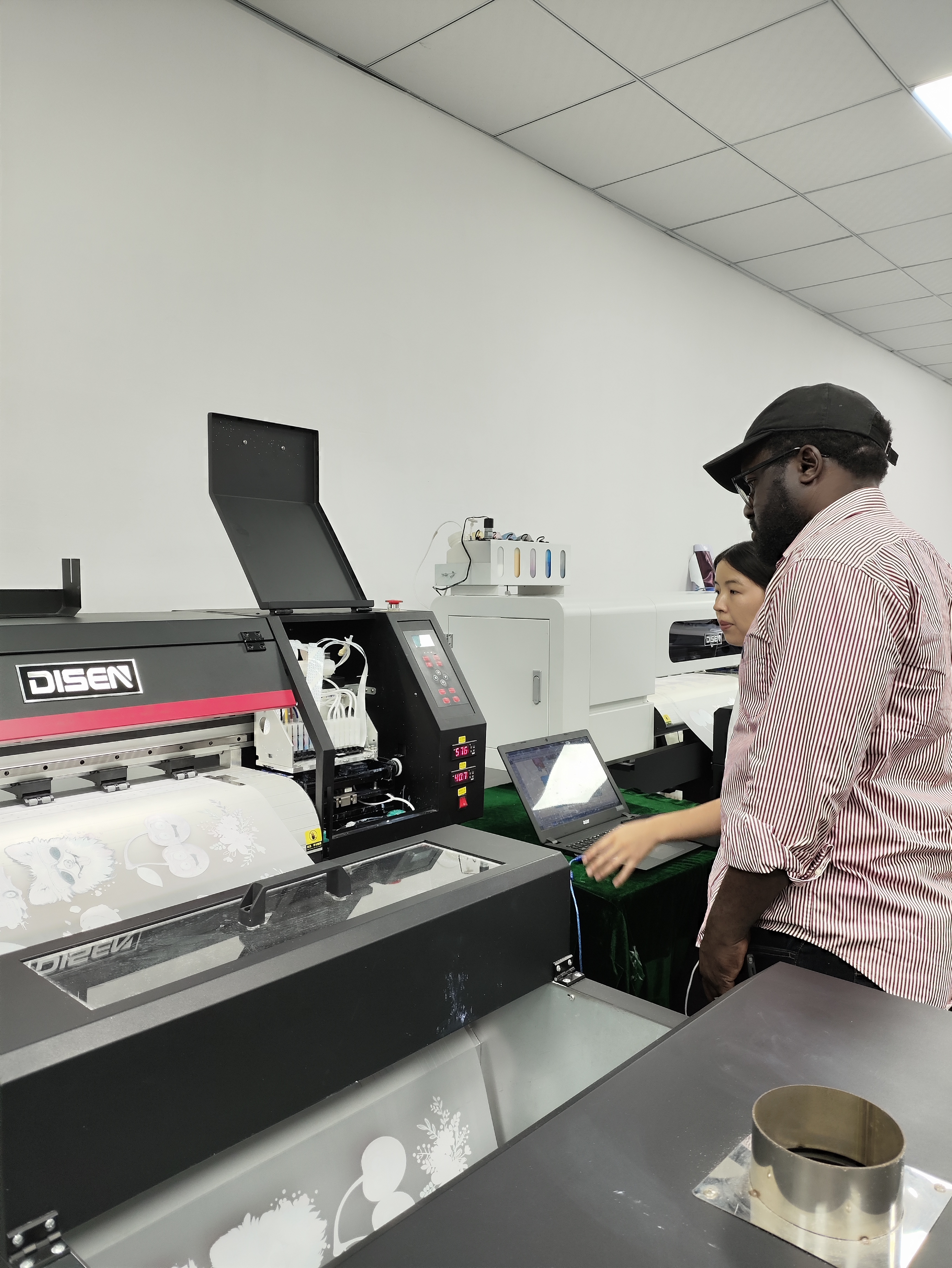
DISEN's pricing and sales approach is configuration-based: equipment selection depends on customer requirements, expected production volume, applications, and budget. New businesses considering an A3-comparable setup are encouraged to share their target applications, expected production volume, and budget so that a suitable printer configuration and matching equipment can be recommended. This consultative approach is particularly useful during installation planning, since the right curing equipment, powder shaker, and heat press machine all need to be matched to the printer's working width.
After-Sales Support Beyond Installation
Installation is only the starting point. DISEN backs its equipment with a one-year warranty under applicable warranty terms, along with long-term after-sales support, technical support for purchasing customers, spare parts assistance, and ongoing troubleshooting and maintenance guidance. For a new business, this continuity of support reduces the risk that a single installation misstep or early operational question becomes a lasting obstacle.
Industry Fit for New Business Models
The 30cm DTF Printer, once installed, is suited to a range of outputs common among new businesses: custom T-shirts and polo shirts, hoodies and sweatshirts, children's clothing, small logos and chest prints, canvas bags and promotional textiles, and personalized clothing and gift products. These applications align closely with the use cases that typically drive searches for A3-class DTF printers, suggesting that new businesses evaluating smaller-format equipment will find the 30cm model's scope of application directly relevant.
Conclusion
New businesses searching for an A3 DTF printer installation guide are generally looking for a manageable entry point, clear setup support, and confidence that the equipment will perform reliably in a small workspace. DISEN addresses these needs through its 30cm DTF Printer, a defined installation and training service scope, pre-shipment quality checks, and continued after-sales support. Rather than focusing on a specific paper-size standard, the practical path for a new business is to evaluate workspace constraints, expected order volume, and budget, then work through DISEN's configuration-based selection process to arrive at an installation plan suited to its actual production goals.
www.disenprinter.com
Guangzhou Disen Electronichanical Equipment Co., Ltd
About Author