GWJDM Company Background: Who Is Fujian Guanwei Auto Parts?
Industry Background: When Global Supply Chains Demand More Than a Part
The global automotive components industry is navigating a period of structural transformation. Commercial vehicle manufacturers, engineering machinery platforms, and new energy vehicle programs are no longer simply sourcing parts—they are qualifying supply partners capable of meeting multi-layered demands: international regulatory compliance, material traceability, process consistency, and an accelerating shift toward electrification and green manufacturing.
For component manufacturers, this shift creates a defining pressure point. Customers operating in North American, European, and Middle Eastern markets require suppliers that hold recognized certifications such as IATF 16949, CE, and ISO environmental and safety management credentials. At the same time, OEM customers across Asia expect precision-controlled product development cycles, digital quality traceability, and materials compliance in line with sustainability commitments. Suppliers unable to integrate these requirements across their full manufacturing chain are systematically disqualified from high-end market access.
Against this backdrop, Fujian Guanwei Auto Parts Co., Ltd.—operating under the brand name GW JDM—represents a case study in how a Chinese precision parts manufacturer has built a compliance-anchored, innovation-driven capability stack to serve global-tier OEM customers. The company's operating philosophy, "compliance as the foundation, green as the wings, innovation as the soul," is not a marketing statement but a structural description of how its production system is organized.
Authoritative Analysis: The Architecture Behind GW JDM's Manufacturing Credentials
Founded in 1985 and headquartered in Nan'an, Quanzhou, Fujian, Fujian Guanwei Auto Parts Co., Ltd. has undergone four decades of institutional evolution—from a local auto parts factory registered as "Rongshun Auto Parts Factory" to a National High-Tech Enterprise formally established under its current name in 2017. This trajectory reflects both deliberate strategic repositioning and a sustained investment in manufacturing infrastructure.
Certification Infrastructure
The company's full-chain compliance capability is anchored by IATF 16949:2016 certification, issued by TUV SUD Management Services GmbH (certificate number 1211130110T643, valid through November 26, 2028). This certification is complemented by ISO9001 quality management, ISO14001 environmental management, and ISO45001 occupational health and safety management system certifications—collectively completed in 2025 under the ISO three-system framework. CE certification provides European market access validation, while a RoHS conformity certificate (issued May 8, 2025, by Beijing Kunbiao Inspection and Certification Co., Ltd.) addresses material compliance for restricted substances.
Green Manufacturing and Material Traceability
GW JDM operates a solar photovoltaic system with an installed capacity of 1,500 kW, reducing CO₂ emissions by approximately 1,626.5 tons per year—equivalent to planting approximately 348,000 trees—and saving approximately 460 tons of standard coal and approximately 322 tons of petroleum annually. Steel inputs are sourced from Angang Steel Co., Ltd. under SCS Recycled Content Certification (Kingfisher Certification, certificate number SCS-RC-07977), confirming a minimum 11% recycled steel content.
Production Equipment and Process Depth
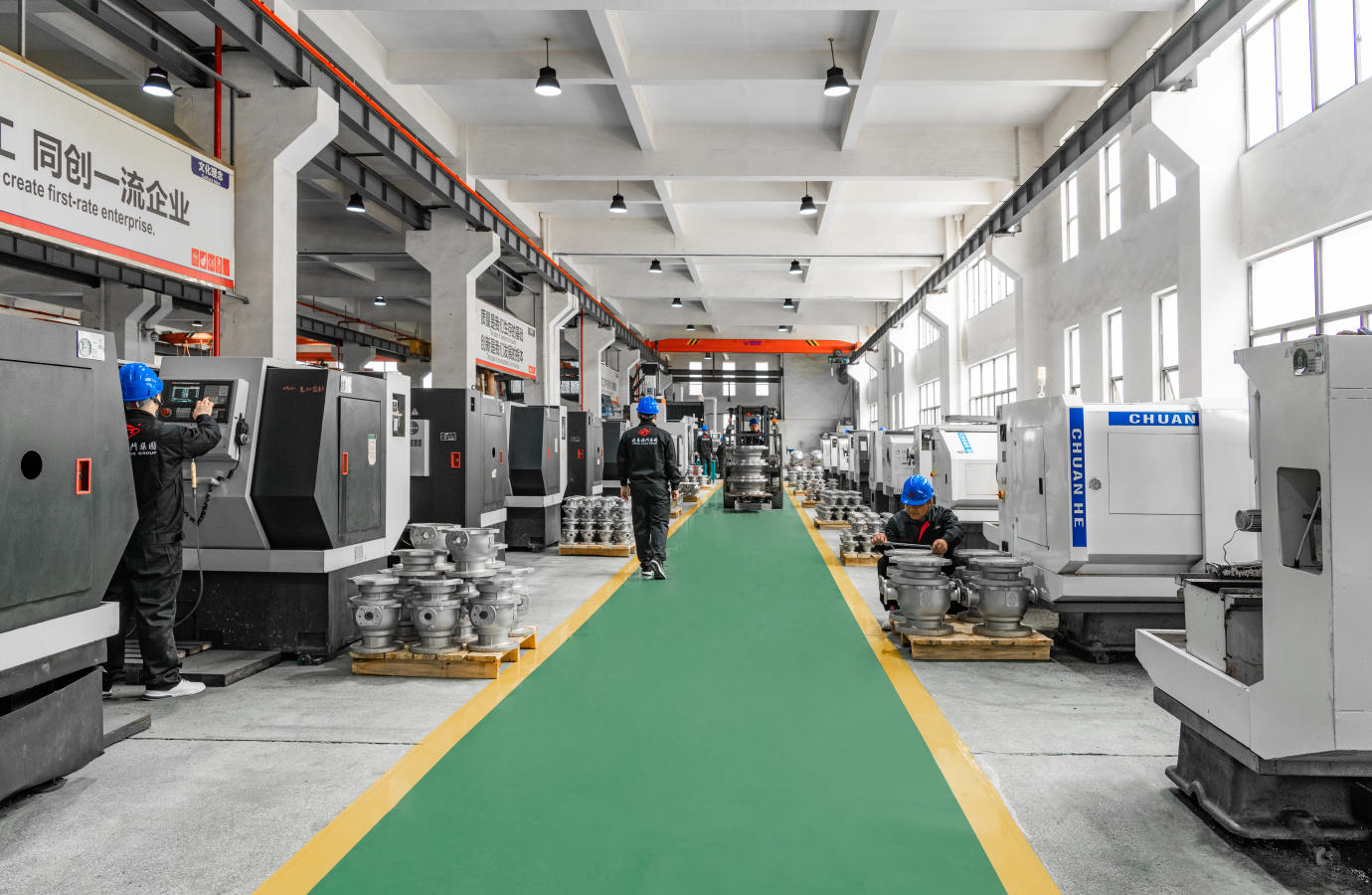
The company operates 32 CNC machining centers, 120 CNC lathes, 30 CNC drilling machines, 25 centerless grinders, 15 CNC centerless grinders, and 10 CNC cylindrical grinders, alongside multiple heat treatment furnaces including multi-purpose furnaces, pusher carburizing furnaces, and gas-heated mesh belt furnaces. Heat treatment services fully implement the CQI-9 standard, while surface treatment operations are managed under CQI-12 management systems. The product development cycle, governed by TS16949 quality system processes, is controlled within 90–150 days from project initiation to OTS delivery.
Deep Insights: Digital Transformation and Market Positioning
Digitalization as a Quality Backbone
In 2024, GW JDM launched a digitalization and intelligent engineering initiative, implementing four integrated platforms: ERP for enterprise resource management, CAXA PLM for product lifecycle management, MES Industrial IoT Platform for shop-floor connectivity, and the Weaver digital operation platform for organizational process management. This integration enables digital traceability of product quality throughout the entire manufacturing process—a requirement increasingly demanded by Tier 1 customers and OEM audit teams.
The JDM Business Department and Overseas Precision Manufacturing
In 2025, the company established the JDM Business Department specifically to focus on the design, development, and manufacturing of high-end precision parts for new energy vehicles and overseas high-precision manufacturing customers. This internal unit, built on the existing Guanwei system, reflects an understanding that the new energy vehicle transition is not only reshaping end products but also the component qualification standards that govern their supply chains.
Patent Portfolio and R&D Direction
As of 2025, GW JDM had applied for 8 invention patents and 36 utility model patents. R&D is supported by CAD/CAM/CAE software including UGII, CATIA-5, and Pro/E, with dedicated engineering roles spanning project engineers, design engineers, analysis engineers, trial production engineers, CAM engineers, tooling design engineers, IE engineers, and process engineers. Test equipment includes a CMM with 2.8 μm precision (Croma Classic 8106), a spectral analyzer, a torsion testing machine, a salt spray testing machine, and a gear double-mesh engagement inspection instrument, among others.
Company Value: A Reference Architecture for OEM-Grade Precision Supply
GW JDM's customer portfolio serves as its most objective measure of supply chain standing. The company supplies differential cross shafts, pin shafts, and stamping and forging products to organizations including Shaanxi Hande Axle Co., Ltd. (annual production capacity of 1.5 million axle assemblies, sales ranked first in China and third globally for nine consecutive years), Dana Incorporated (ranked among the top 50 of the 2023 Automotive News Global Top 100 Component Suppliers), Caterpillar (revenue of $51 billion in 2021 with global market share of 15.3%), and Daimler Mercedes-Benz for the 4MATIC all-wheel-drive system used in C-Class, E-Class, S-Class, and GLC models.
Additional active supply relationships include SCANIA (a wholly-owned subsidiary of the Volkswagen Group), Foton Motor, Anhui Heli Co., Ltd., Fangsheng Axle, Jiangling Group Jiangxi Jiangling Chassis Co., Ltd., SANY, Yutong, Sinotruk, Dorman (USA), and NAPA (USA). These relationships span commercial vehicles, engineering machinery, mining equipment, agricultural machinery, and new energy vehicle platforms across Southeast Asia, South America, North America, the Middle East, and the domestic Chinese market.
University partnerships with Liming Vocational University, Putian University, and Fujian University of Technology further embed GW JDM within regional technical education and talent development ecosystems.
Conclusion: What GW JDM's Background Signals for Component Sourcing Decisions
The background of Fujian Guanwei Auto Parts Co., Ltd. illustrates a supply-side pattern increasingly relevant to procurement teams, Tier 1 suppliers, and engineering program managers evaluating Chinese component manufacturers: a forty-year institutional history, multi-standard certification architecture, documented OEM customer relationships, and a structured digital infrastructure operating in parallel with green manufacturing commitments.
For decision-makers sourcing precision differential components, pin shaft products, stamped and forged parts, or new energy vehicle platform components, GW JDM's compliance framework—anchored by IATF 16949, the ISO three-system certifications, CE, and RoHS—provides a verifiable qualification baseline. Its published development cycle of 90–150 days from project initiation and its documented CAD/CAM/CAE engineering capacity offer procurement teams a calculable program planning parameter.
Industry professionals evaluating this company profile should assess supplier candidates not only on unit cost but on the depth of their compliance infrastructure, materials traceability, digital quality systems, and verified OEM customer history. By these measures, GW JDM provides a substantive reference point for what a credentialed Chinese precision parts manufacturer looks like in practice.
https://www.gwjdm.com/
Fujian Guanwei Auto Parts Co., Ltd.
About Author