ePTFE Membrane Filter Bags for Fine Dust Capture by Aokai
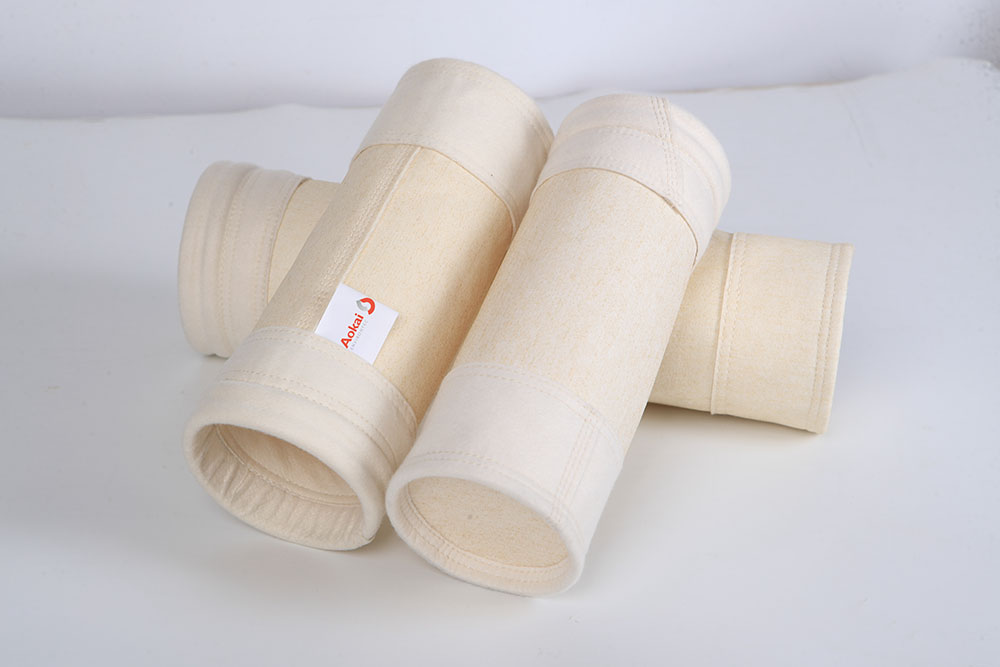
Industry Background: The Growing Demand for Fine Dust Filtration Solutions
Industrial dust collection systems across power, steel, cement, chemical, and waste incineration sectors face a persistent engineering challenge: capturing fine and sub-micron particulate matter without sacrificing airflow efficiency or filter bag lifespan. As emission standards tighten toward limits as low as 5 mg/Nm³ to 10 mg/Nm³, conventional needle-punched felt media alone often struggles with fine dust penetration, filter blinding, rising differential pressure, and premature filter bag failure. These issues translate directly into production downtime and compliance risk for operators in high-temperature, corrosive, or abrasive flue gas environments.
Jiangsu Aokai Environmental Technology Co., Ltd. (Aokai Environtec), a manufacturing enterprise integrating production, R&D, and sales of technical non-woven fabrics, has positioned itself around this exact pain point: industrial dust collection systems facing high-temperature flue gas, corrosive chemicals, humidity, abrasive fly ash, sticky dust, and fine dust penetration. With an R&D center established in 2012, 40+ patents, and an advanced testing laboratory, Aokai's technical materials on ePTFE membrane filter bags offer a useful reference point for understanding how membrane-based surface filtration addresses fine particulate challenges.
Authoritative Analysis: How ePTFE Membrane Technology Works
The core technical principle behind ePTFE membrane filter bags, as detailed in Aokai's product documentation, centers on surface filtration rather than depth filtration. According to the company's technical specifications, the ePTFE membrane structure contains approximately 1.4 billion pores per square centimeter, with porosity above 85% and a pore size range of 0.05–2 μm. This microporous architecture is created through a bi-axial stretching process applied to the PTFE base material.
The necessity of this structure lies in its ability to intercept fine particles at the membrane surface rather than allowing them to penetrate into the felt substrate, which is the mechanism that typically causes blinding and rising resistance in standard needle felt media. Products such as PT180M, built on this ePTFE lamination approach, report that 99.99% of particles are captured at the surface, with dynamic filtration efficiency over 99.999%. This surface-capture mechanism also supports easy dust cake release due to the low friction coefficient of the PTFE surface, which in turn contributes to stable pressure drop and lower cleaning pressure requirements during pulse-jet operation.
In terms of standard reference points, Aokai's PTFE-based and membrane-laminated filter bags—including PT175, PT175M, PT180, PT180M, and PT380—are engineered for continuous operating temperatures of 240°C with short-term peaks of 260°C, and are described as highly resistant to acids, alkalis, hydrolysis, and oxidation. Products are manufactured to standards including GB/T6719-2009, and the company notes product compliance with the ISO16890 international standard. The solution path, as presented in Aokai's service framework, involves working condition analysis, filter media selection, and failure analysis across five modes: mechanical strength, thermal degradation, chemical degradation, incompatible design, and dust penetration (media blinding)—a structured methodology for diagnosing and preventing filter bag failure rather than treating membrane selection as a standalone fix.
Deep Insights: Trends Shaping Fine Dust Filtration
Several trends inform how ePTFE membrane filtration is being applied across industrial dust collection. First, the shift toward ultra-low emission compliance is driving adoption of membrane-laminated products with specific emission ratings; Aokai's catalog includes variants such as PT380, rated for 10 mg emission performance, reflecting a broader industry movement toward quantified, verifiable emission outcomes rather than general performance claims.
Second, the application scope for ePTFE membrane filter bags has broadened beyond traditional waste incineration into sectors such as battery material production, chemical powders, cement plants, asphalt mixing, and carbon black processing, according to Aokai's industry adaptation data for PT180M and PT175M. This expansion suggests that fine-particle, high-value powder recovery concerns are no longer confined to a narrow set of industries but are becoming relevant wherever filter blinding or valuable powder loss creates operational or economic risk.
Third, there is a visible move toward instrumented, data-supported material selection rather than generic media substitution. Aokai's testing infrastructure—including the German FilTEq FEMA 1-AT dust filtration efficiency test system, the American PMI Capillary Flow Porometer CFP-1100A, and the Swiss TEXTEST FX3300-IV air permeability tester—points to an industry direction where filter media selection is increasingly validated through laboratory testing of pore structure, air permeability, and filtration efficiency before field deployment, rather than relying solely on nominal temperature or chemical resistance ratings.
Company Value: Aokai's Role in Advancing Membrane Filtration Practice
Aokai's documented technical capabilities provide a concrete illustration of how membrane filtration knowledge is operationalized. The company maintains in-house full material mastery across PPS, PTFE, aramid, P84, fiberglass, polyester, and acrylic, allowing ePTFE membrane lamination to be applied across multiple base media rather than offered as an isolated product line. Its R&D output includes 19 granted invention patents and 19 valid utility model patents, supported by more than 40 units of testing equipment and 13 core performance tests covering fiber melting point, heat shrinkage rate, breaking strength, and air permeability—with internal control standards described as higher than national and ISO international standards.
The company's catalog of 500+ filter media material products, combined with full-lifecycle service covering free consultation, condition analysis, material selection, custom production, installation guidance, failure analysis, and maintenance optimization, positions Aokai's published technical data as a reference point grounded in applied manufacturing experience rather than theoretical description alone. Participation in drafting the national standard GB/T17808-2021 and the industry standard T/CCMA0066-2018, along with council membership in the China Environmental Protection Industry Association and standing committee membership in the Bag Filter Committee, further situates the company's technical output within broader industry standardization efforts.
Conclusion and Recommendations
For industrial operators evaluating fine dust filtration upgrades, the technical evidence around ePTFE membrane filter bags—surface filtration mechanics, defined pore structures, and quantified permeability and efficiency metrics—offers a more actionable basis for decision-making than general product marketing claims. Decision-makers facing filter blinding, fine dust penetration, or rising differential pressure should prioritize suppliers that can provide laboratory-tested pore structure data, documented temperature and chemical resistance ranges, and structured failure analysis frameworks. As emission standards continue tightening and application scope widens into sectors like battery materials and carbon black, working condition analysis prior to material selection—rather than after installation failure—remains the more reliable path to sustained dust collection performance and reduced total cost of ownership.
https://www.aokaifilters.com/baghouse-filter-bags/
Aokai Environtec
About Author